europese bondgenoten distantiëren zich van amerikaanse aanval op iran
Brussel, zondag, 1 maart 2026.
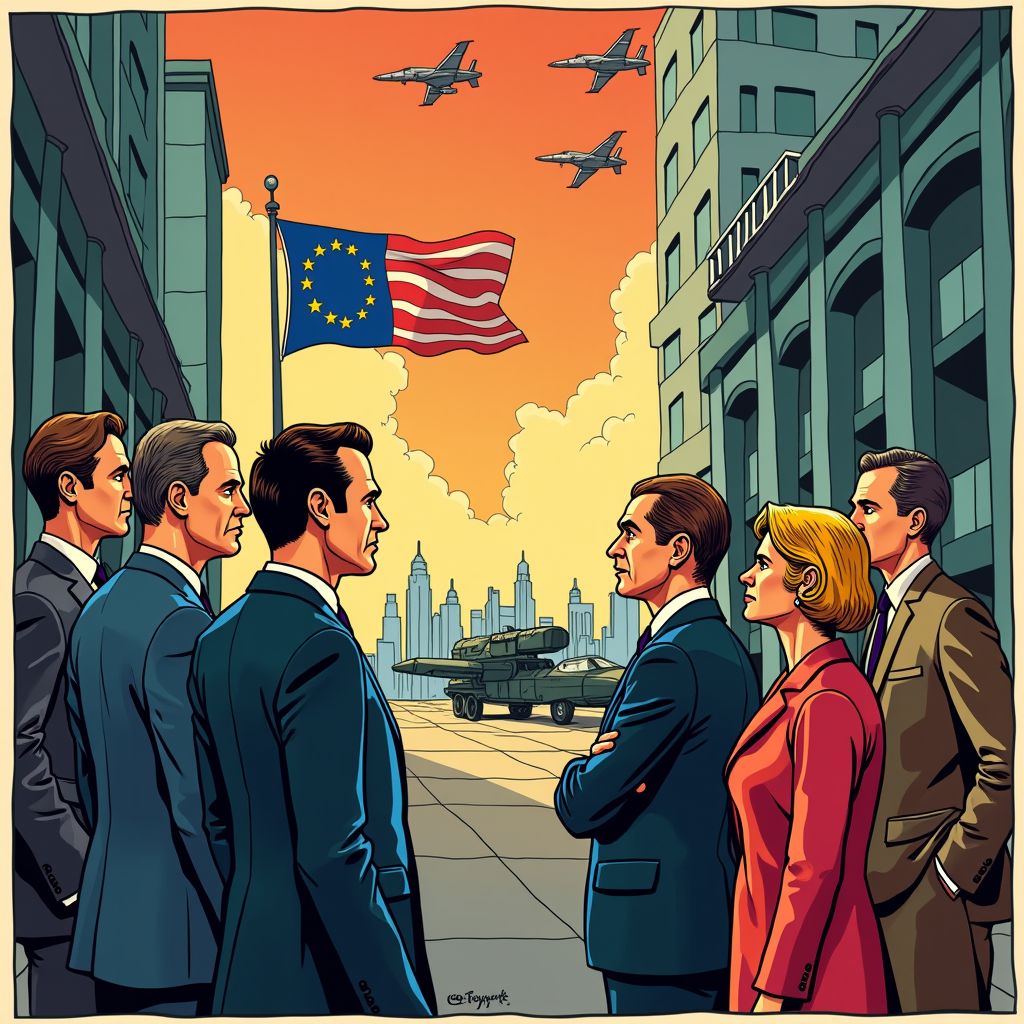
Grote europese mogendheden hebben zaterdag duidelijk gemaakt dat ze niet deelnamen aan de gezamenlijke amerikaanse en israëlische aanval op militaire doelwitten in iran. De uitspraken komen in een poging spanningen te verminderen. Er is zorg over de destabilisering van de regio. Leiders vrezen dat het conflict kan overslaan naar bredere geopolitieke onrust. De veiligheid in europa staat hierdoor onder druk. Sommige officiëlen lijken wel discreet steun te betuigen aan de actie. De balans tussen loyaliteit en principes wordt zwaar op de proef gesteld. Een breed scala aan diplomatieke signalen verspreidt verwarring. De situatie blijft instabiel. Internationale veroordeling loopt op. Mensen vragen zich af wat de consequenties zullen zijn.
european powers clarify non-participation in us-israel strikes
Major european nations emphasized their non-involvement in the u.s.-israeli military action against iran on february 28, 2026. french president emmanuel macron confirmed france was neither informed nor involved in the operation [1]. germany and the united kingdom echoed this stance, stressing coordination with allies without active participation [2]. the joint statement by macron, uk prime minister keir starmer, and german chancellor friedrich merz explicitly noted they did not take part in the strikes [3]. this clarification came amid heightened regional tensions following the assault on multiple iranian sites [4].
diplomatic balancing amid escalating regional tensions
While distancing themselves from the military action, european leaders expressed concerns over regional stability. the joint statement from france, germany, and the uk strongly condemned iranian retaliatory attacks on neighboring countries [2]. president macron called for an urgent un security council meeting to address the crisis [3]. european union foreign policy chief kaja kallas reiterated the need to protect civilians and uphold international humanitarian law [5]. despite rejecting direct involvement, european powers acknowledged the threat posed by iran’s ballistic missile program and regional activities [6].
concerns grow over potential wider conflict
leaders across europe voiced alarm over the possibility of a broader regional war. russian ambassador vasily nebenzia warned the aggression against iran could escalate beyond the region [7]. spanish prime minister pedro sánchez rejected the unilateral military action by the u.s. and israel, calling it an escalation [8]. hungarian pm victor orbán highlighted the potential impact on oil prices and energy security [9]. the czech republic joined other eu members in urging maximum restraint from all parties involved [10].
eu strengthens defensive posture without joining offensive
although not participating in the offensive strikes, europe enhanced its defensive measures. the eu’s aspides naval mission increased readiness in the red sea to secure shipping lanes [3]. greece advised vessels flying its flag to avoid certain high-risk routes near the persian gulf [11]. the european commission extended the mandate of operation aspides until 2027 to safeguard freedom of navigation [12]. meanwhile, the uk convened its cobra emergency committee to coordinate response strategies [3]. these moves signaled vigilance without direct military alignment with u.s. objectives [13].
divergent international reactions shape diplomatic landscape
global responses to the strikes varied sharply among western allies. canada’s prime minister mark carney supported the u.s. position, viewing iran as a source of regional instability [8]. australia’s anthony albanese backed actions preventing iran from obtaining nuclear weapons [2]. in contrast, ireland’s michael martin prioritized civilian protection across the region [14]. norway’s foreign minister questioned the legality of what he termed a preventive strike [15]. such divisions revealed challenges in forming a unified western front regarding iran policy [16].
legal and ethical debates intensify over military intervention
the legitimacy of the u.s.-israel operation sparked intense legal debate. un human rights commissioner volker türk reminded parties that civilians often bear the highest cost in conflicts [8]. the norwegian foreign ministry argued the attack did not align with international law principles [15]. legal experts pointed out that article 51 of the un charter permits self-defense only after an armed attack occurs, raising questions about preemptive justification [17]. meanwhile, iran declared all american and israeli assets in the middle east as legitimate targets going forward [18].
uncertain aftermath leaves room for continued escalation
with supreme leader ayatollah ali khamenei believed dead following the strikes, iran’s future remains unclear [19]. the u.s. framed the operation as creating opportunity for iranian citizens to reclaim governance [20]. however, senior iranian officials vowed retaliation against any american or israeli interests in the region [18]. the red cross warned of a dangerous chain reaction of military escalation unfolding [2]. nato has not invoked collective defense mechanisms, leaving responses fragmented [21]. the situation remains fluid with high stakes for global security [22].
Bronnen
- www.washingtonpost.com
- www.bbc.com
- www.theguardian.com
- time.com
- thehill.com
- www.aljazeera.com
- www.washingtonpost.com
- time.com
- time.com
- www.bbc.com
- www.reuters.com
- www.consilium.europa.eu
- www.theguardian.com
- time.com
- www.aljazeera.com
- www.bbc.com
- thehill.com
- www.aljazeera.com
- time.com
- www.bbc.com
- www.washingtonpost.com
- time.com