vk laat dierenwelzijnsplicht vallen voor eu-handelsdeal
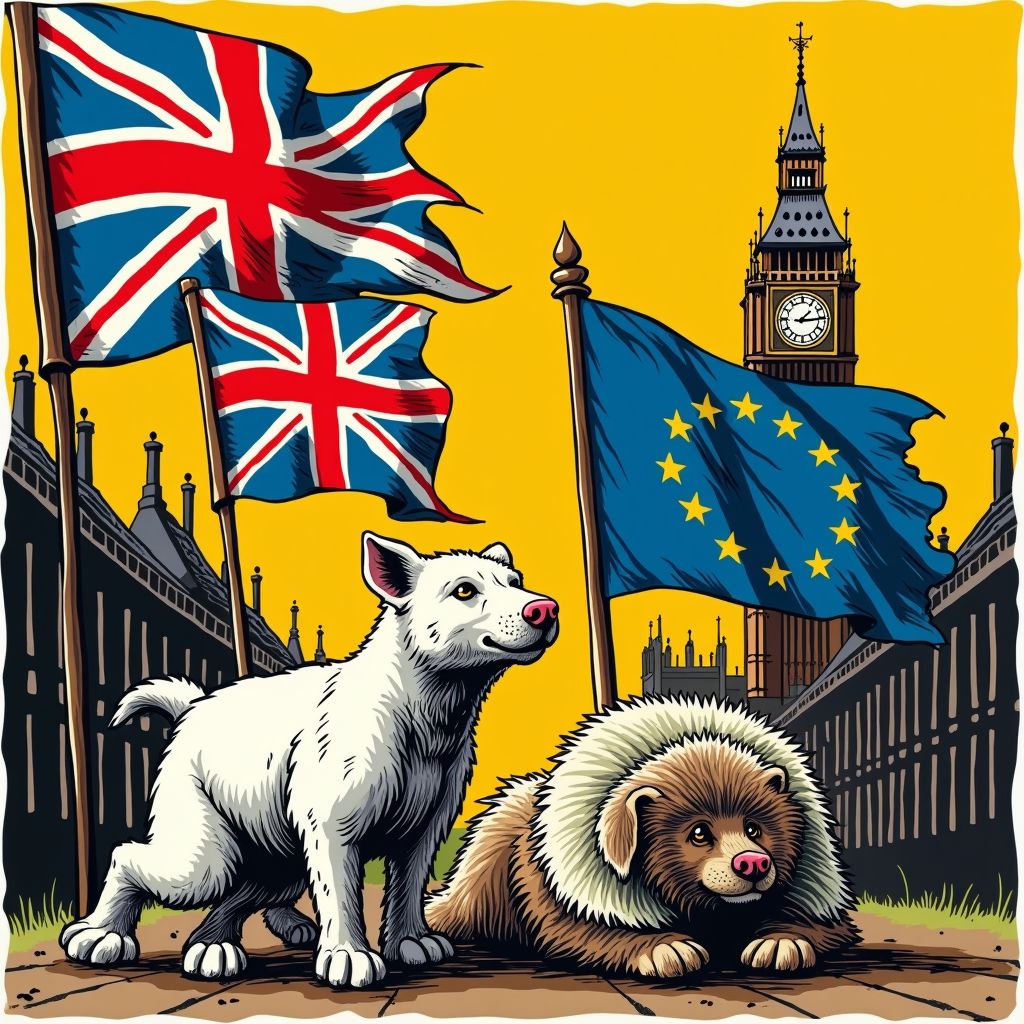
Londen, woensdag, 8 april 2026.
Het Verenigd Koninkrijk stapt terug op zijn campagneplicht om de invoer van foie gras en bont te verbieden. Deze ethische belofte wordt nu opgeofferd voor een handelsakkoord met de Europese Unie. De EU had deze kwestie tot een rode lijn verklaard. Mensenrechtengroeperingen spreken van een diepe teleurstelling. Ze noemen het een gebrek aan integriteit. Hoewel de productie van beide items al lang verboden is in het VK, bleef invoer toegestaan. Nu blijkt dat economische belangen zwaarder wegen dan dierprotection.
uk steps back on animal welfare promises for trade deal
The United Kingdom has reversed its election pledge to ban imports of foie gras and fur products, prioritizing trade negotiations with the European Union [1]. The EU designated these issues as a ‘red line,’ making compromise essential for a new trade agreement [1]. Animal welfare groups express deep disappointment, calling the reversal a betrayal of ethical commitments [1]. While both products are already banned from domestic production—foie gras since 2007 and fur farming since 2000—their import remained legal [4].
eu resistance and uk political balancing act
The European Union opposes unilateral bans on agricultural products based on animal welfare grounds among member states [4]. Since Brexit, the UK technically gained authority to restrict such imports from the EU [1]. However, imposing a ban now would require an exemption under upcoming trade arrangements [1]. Former Shadow Environment Secretary Steve Reed previously promised a Labour government would prohibit commercial foie gras imports due to force-feeding practices [4]. Current officials argue other priorities, like precision breeding regulations, offer greater economic benefits [1].
industry and activist responses intensify
Animal protection organizations criticize the government’s shift in policy. David Bowles, public affairs director at the RSPCA, expressed strong disappointment over the lack of action on fur sales and imports [4]. He acknowledged minor progress but stressed stricter measures are necessary [4]. Claire Bass from Humane Society International called it unethical to allow sales sourced from cruel overseas farms [1]. Meanwhile, restaurateur Alexis Gaultier condemned abandoning animal welfare principles, blaming weak negotiation strategies [1]. The government maintains pride in high animal welfare standards [4].
economic considerations override ethical pledges
Officials justify the policy reversal by emphasizing broader economic gains expected from enhanced EU trade relations [1]. Discussions focus on several sector-specific agreements, including food and drink standards and sanitary controls [2]. A new UK-EU Sanitary and Phytosanitary (SPS) Agreement aims to reduce red tape and boost exports by mid-2027 [3]. Though 97% of respondents in a government consultation opposed killing animals solely for fur, policymakers opted against immediate restrictions [1]. Instead, a working group will examine the fur trade further [1].
negotiation timeline and wider implications
Trade talks are accelerating ahead of a planned summit in summer 2026, where UK proposals will undergo scrutiny [2]. The EU expects concrete initiatives from the UK, keeping diplomatic pressure high [2]. Beyond food and agriculture, negotiations cover electricity market integration and regional funding contributions [5]. For now, foie gras remains available in British restaurants and stores despite longstanding ethical objections [1]. Critics argue that sacrificing campaign promises undermines trust in governmental integrity and compassion toward animals [1].