von der leyen reageert scherp op rutte tijdens münchner conferentie
München, zaterdag, 14 februari 2026.
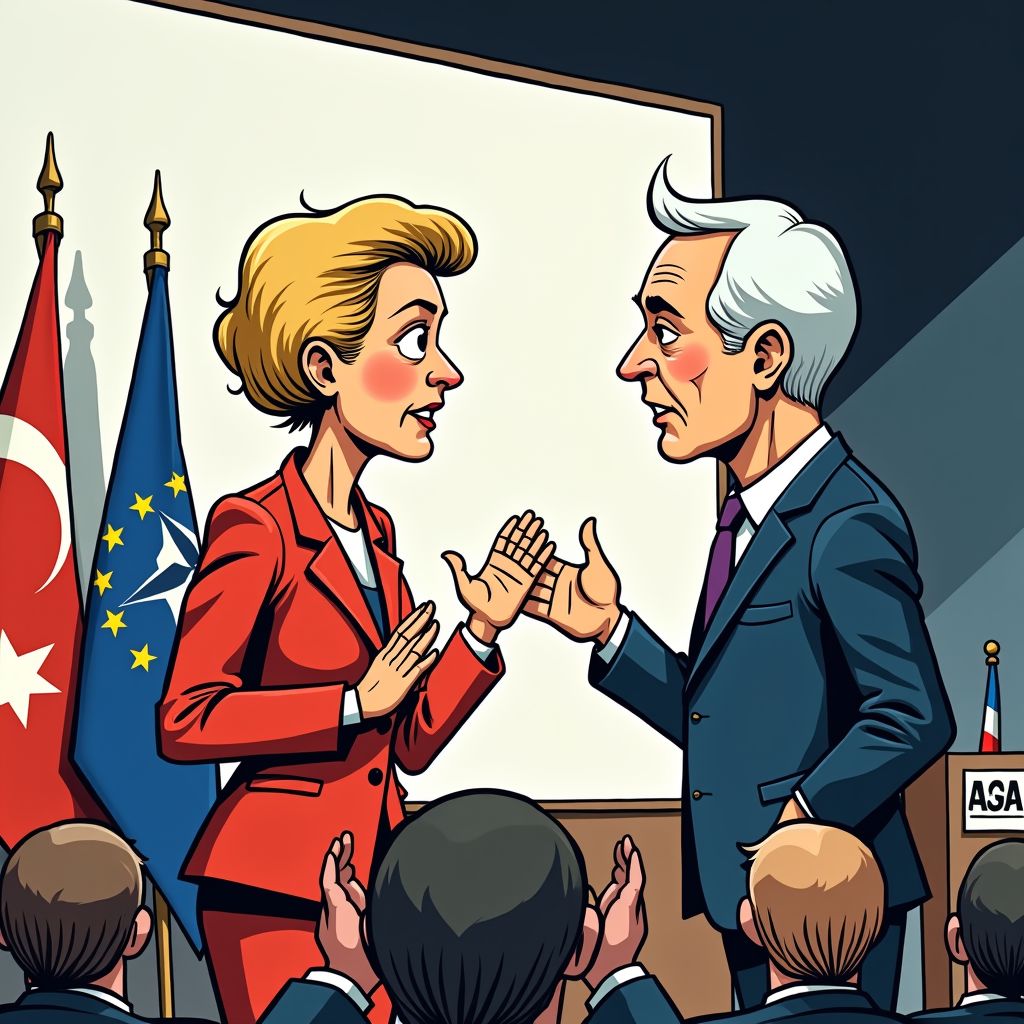
Tijdens de veiligheidsconferentie in München heeft EU-commissievoorzitter Ursula von der Leyen duidelijkheid gegeven over de toekomst van Europese defensie. Ze reageerde op de uitspraken van NAVO-secretaris generaal Mark Rutte, die stelde dat Europa niet zonder de VS kan. Vanaf het podium richtte ze zich rechtstreeks tot hem: „Nee, mijn beste vriend.“ Ze benadrukte dat een echt onafhankelijk Europa moet groeien zonder steeds op anderen te leunen. Haar pleidooi voor een autonome Europese verdedigingsstrategie werd in de zaal met applaus ontvangen. Terwijl de VS via minister Marco Rubio de wens uitsprak voor een sterk Europa binnen de alliantie, laat Brussel weten dat zelfstandig durven nu prioriteit heeft.
tensions rise in munich over european defense autonomy
During the Munich Security Conference on Saturday, 14 February 2026, European Commission President Ursula von der Leyen directly challenged NATO Secretary General Mark Rutte’s assertion that Europe cannot defend itself without the United States [1]. Responding to his earlier comment—“dream on” if Europe thinks it can stand alone—Von der Leyen retorted from the podium: “No, my dear friend.” She stressed the need for Europe to develop its strength independently, stating, “An independent Europe means developing our power without constantly relying on others” [2]. Her remarks drew applause from attendees.
transatlantic reassurance amid strategic divergence
Von der Leyen expressed being “very much reassured” by the conciliatory tone of U.S. Secretary of State Marco Rubio during his keynote address [3]. Rubio affirmed the U.S. commitment to a strong Europe within the alliance, saying, “We want a strong Europe inside the alliance,” which Von der Leyen described as a clear signal of partnership [1]. Despite welcoming these assurances, she underscored that European strategic autonomy remains essential [4]. This balancing act reflects growing consensus among EU leaders that while transatlantic ties are vital, Europe must bolster its own defense capabilities to meet evolving global threats [5].
push for activating eu mutual defense clause
In her speech, Von der Leyen called for turning the EU’s collective defense principle into reality, advocating for the activation of Article 42.7 of the Treaty on European Union—the bloc’s mutual defense clause [2]. Though currently overshadowed by NATO’s Article 5, she argued that a more autonomous European defense posture would strengthen rather than weaken the transatlantic alliance [5]. French President Emmanuel Macron echoed similar sentiments ahead of the conference, calling for a “bold Europe” capable of acting independently in matters of security [6]. The push signals a deeper strategic shift toward reducing reliance on U.S. military guarantees, particularly amid political fluctuations in Washington [7].
rutte defends nato centrality amidst criticism
Mark Rutte reiterated his position that the U.S. nuclear umbrella remains the ultimate guarantee of European security, dismissing notions of full European self-reliance as unrealistic [8]. Speaking shortly after Von der Leyen’s rebuttal, Rutte maintained that NATO must remain the cornerstone of continental defense, emphasizing sustained American troop presence across Europe [8]. However, his comments sparked backlash from several EU officials who argue that changing geopolitical realities demand greater European initiative [9]. With approximately 80,000 U.S. troops stationed in Europe, the debate centers not on rejecting American support but on whether Europe is doing enough to complement it through credible indigenous defense structures [10].
eu seeks faster decision-making in crisis response
Beyond structural reforms, Von der Leyen advocated for accelerating EU decision-making processes in foreign and defense policy, proposing a move away from unanimous voting toward qualified majority voting [6]. Such a change could enable quicker responses to emerging conflicts, bypassing potential vetoes from individual member states [9]. This reform effort aligns with broader initiatives such as the proposed EU version of NATO’s Article 5 and enhanced joint procurement programs [6]. Leaders including German Chancellor Friedrich Merz and British Prime Minister Keir Starmer have voiced support for strengthening European defense integration, albeit cautioning against duplicating existing NATO frameworks [11]. The momentum suggests incremental progress toward a more assertive European security identity [12].
Bronnen
- www.gelderlander.nl
- nu.nl
- www.instagram.com
- www.ed.nl
- www.dw.com
- www.nu.nl
- www.dw.com
- www.nu.nl
- www.gelderlander.nl
- www.nu.nl
- www.dw.com
- www.nu.nl