nuclear escalation feared as russian missiles move closer to eu border
Minsk, dinsdag, 17 februari 2026.
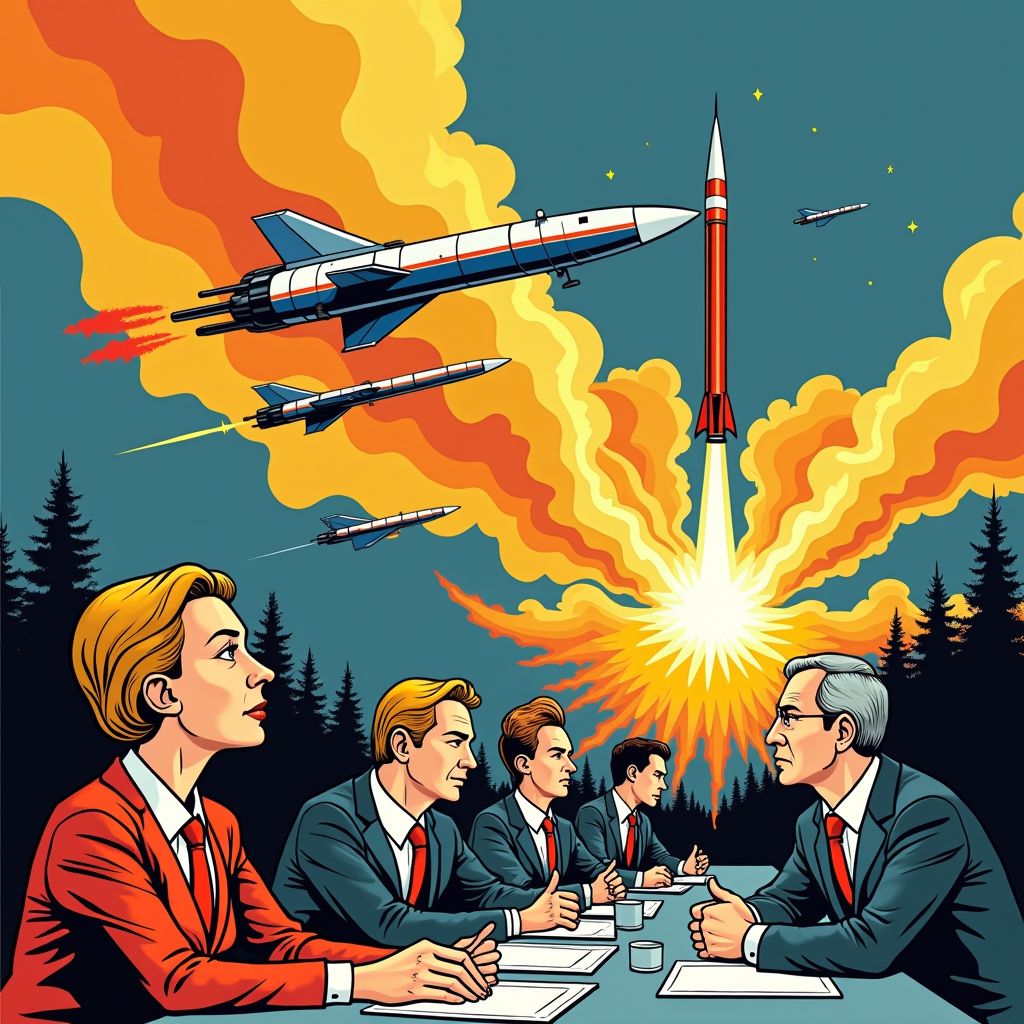
belarus is becoming a frontline in europe’s growing security crisis. opposition leader svetlana tichanovskaja warns that russian nuclear-capable hypersonic missiles are being deployed just kilometers from the eu border. satellite images confirm construction at a site near krychau in eastern belarus, where ten oresjnik systems are planned. these weapons can strike western europe in minutes. around 300 belarussian companies now support russia’s war industry. tichanovskaja urges european leaders to act before the shift becomes irreversible. the west faces a stark choice: adapt or risk being outranged.
belarus becomes frontline in europe’s security crisis
Belarus is emerging as a critical flashpoint amid rising tensions between Russia and the West. Opposition leader Svetlana Tichanovskaja warns that Russian nuclear-capable hypersonic missiles are being positioned dangerously close to the EU border [1]. She asserts that Belarus, under President Aleksandr Loekasjenko, is deepening its military collaboration with Moscow [2]. This alignment threatens regional stability and intensifies fears of broader conflict. The developments underscore a significant shift in Eastern Europe’s geopolitical landscape.
deployment of oresjnik missiles confirmed near krychau
Satellite imagery reveals active construction at a site near Krychau in eastern Belarus, indicating preparations for missile deployment [3]. Ten Oresjnik systems, capable of carrying nuclear warheads, are expected to be stationed there [1]. These hypersonic missiles can reach targets in Western Europe within minutes, significantly reducing response times [4]. Analysts identify the location as strategically vital due to its proximity to NATO borders [5]. Such positioning marks a substantial escalation in military posture.
300 belarussian firms support russia’s war effort
Approximately 300 Belarusian companies are actively contributing to Russia’s military industrial complex [1]. Their involvement ranges from manufacturing drones and weapons to enabling sanctions evasion through logistics and financing [6]. This collaboration strengthens Russia’s capacity to sustain prolonged warfare despite international restrictions [6]. Evidence compiled by watchdog groups indicates deliberate coordination between Minsk and Moscow [6]. Economic interdependence now extends into wartime production capabilities.
tichanovskaja calls for urgent european action
Svetlana Tichanovskaja urges European leaders to recognize the gravity of developments in Belarus [2]. She emphasizes that ignoring these shifts may lead to irreversible consequences for continental security [1]. According to her, Vladimir Zelensky has already acknowledged the transnational nature of this threat [3]. Preventive diplomacy and reinforced deterrence are necessary before further militarization occurs [2]. Her appeals come during heightened diplomatic activity surrounding the Munich Security Conference [7].
experts assess continuity versus escalation
While some analysts downplay the strategic novelty of relocating weapons to Belarus, others stress the psychological impact [3]. Former U.S. Special Envoy Kurt Volker argues that command and control remains under Russian authority regardless of geography [3]. He notes the fundamental threat does not change merely because systems are moved forward [3]. However, shorter flight times increase pressure on early-warning systems [4]. This dynamic alters crisis decision-making timelines across Europe [GPT].