sanne wevers' quiet quest for a rotterdam comeback
Rotterdam, zaterdag, 18 april 2026.
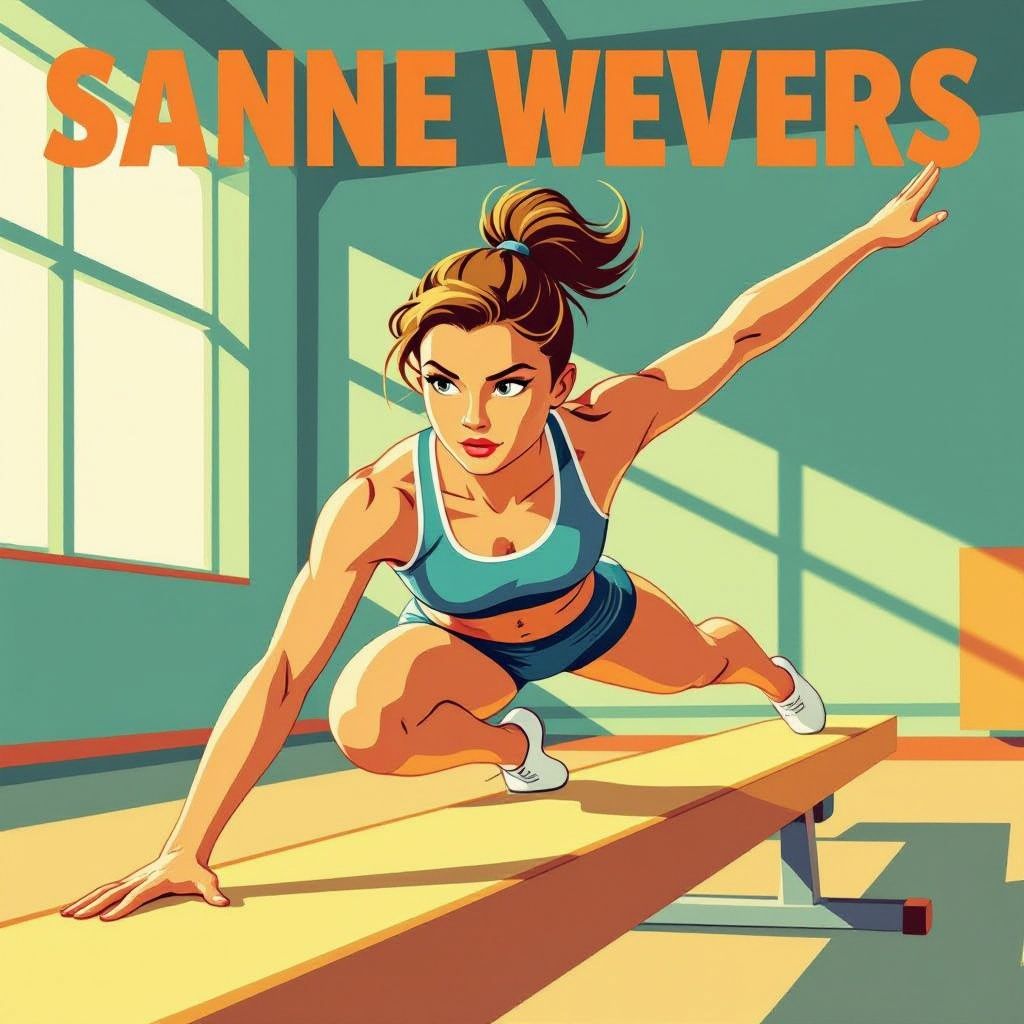
olympic champion sanne wevers is chasing a new dream: competing at the 2026 world championships in rotterdam. sixteen years after her first appearance at ahoy, she returns not just for medals, but for meaning. at 34, her journey back began after a grueling nine-month recovery from injury. now she trains alone in her personal gym, away from pressure and spotlight. guided by neurobiologist ronald siecker, she focuses on mental strength as much as physical form. her goal isn’t just qualification—it’s rediscovery. “can you still believe in something you can’t see?” she asks. this comeback isn’t about proving others wrong. it’s about choosing every day to push forward, unsure of the outcome. if she stands on that beam in october, it won’t just be a routine. it’ll be a statement forged in patience, doubt, and quiet determination. the world watches, not for perfection, but for courage.
a personal sanctuary for professional growth
Sanne Wevers trains in her private 110 m² facility in Duiven, calling it her ‘eigen bubbel’ [1]. This dedicated space allows her autonomy in training decisions, free from institutional constraints [2]. She emphasizes self-directed progress toward a major international event [3]. Working closely with neurobioloog Ronald Siecker, she addresses psychological aspects of elite performance [1]. His observation confirms her strong mentality: ‘Je ziet dat jij geen faalangst hebt’ [1]. The environment supports deep self-reflection essential for her comeback [2].
the significance of ahoy
The upcoming world championships in Rotterdam mark a full-circle moment for Wevers [1]. She previously competed at Ahoy during the 2010 edition, placing ninth with the national team [2]. Now, 16 = 16 years later, she aims to return to the same venue [3]. Describing the prospect as ‘supervet’, she expresses emotional attachment to the location [2]. Competing domestically adds symbolic value to her potential performance [1]. Her iconic ‘Wevers’ element debuted internationally in 2010 and remains part of her repertoire [3].
mental fortitude and physical preparation
Wevers identifies as a ‘finale-turnster’, focused on reaching the highest stage of competition [1]. Her daily training centers on incremental improvement: ‘waar kan ik vandaag een klein verschil maken?’ [3]. This mindset reflects disciplined professionalism cultivated over years at the elite level [2]. Under the guidance of her coach and father Vincent Wevers, she structures her program independently [2]. Mental conditioning with Siecker ensures resilience against setbacks [1]. Consistent effort replaces fixation on outcomes [3].
the road to recovery and redemption
After the 2024 Paris Olympics, Wevers entered a nine-month revalidatie period following an elbow injury sustained shortly before competition [2]. Though she participated, pain prevented progression to the final round [3]. That experience intensified her longing to fully commit to training again [1]. ‘Ik miste heel erg dat ik mezelf tot het uiterste moest drijven’, she stated [2]. Returning healthy offers renewed purpose beyond medal pursuit [3]. Physical healing enabled her current campaign [2].
family ties and sporting legacy
Vincent Wevers acts as his daughter’s coach, combining familial trust with technical expertise [2]. The presence of her twin sister Lieke, a three-time Olympian, reinforces a home environment steeped in elite discipline [3]. Shared experiences strengthen their mutual understanding of athletic demands [3]. Family support provides stability amid uncertain outcomes [1]. Sanne leverages this foundation while forging her own path post-retirement [2]. Her identity extends beyond bloodlines to personal perseverance [3].