protest art sparks debate outside us consulate in amsterdam
Amsterdam, dinsdag, 10 februari 2026.
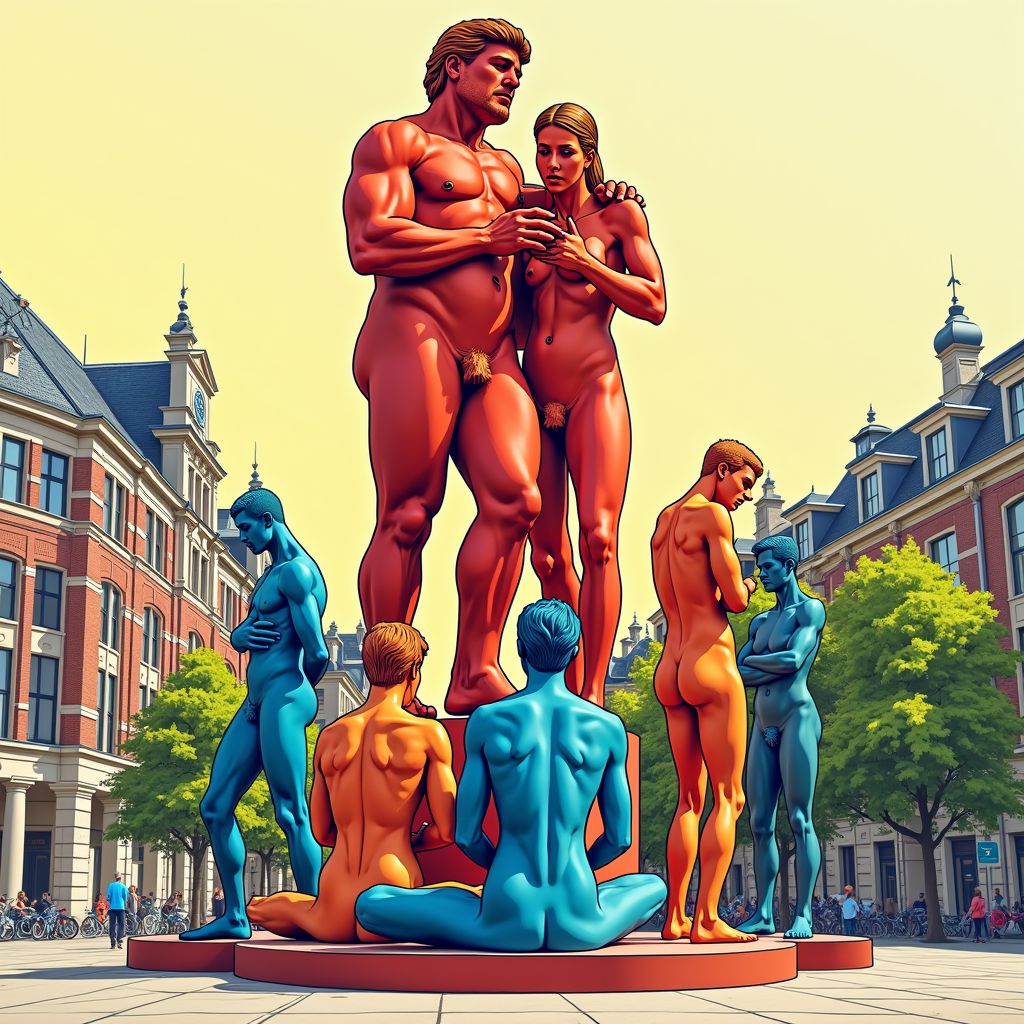
a stark sculpture stands opposite the american consulate on museumplein. created by artist sazza, it protests trumps immigration policies and ice enforcement actions. the artwork shows naked figures crouched in vulnerability, stripped of the protective heart-shaped hands from earlier versions. this raw form highlights human fragility amid harsh border practices. amsterdam authorities are reviewing whether the installation complies with permit regulations. originally approved for a different design, the current display may breach public space rules. the city now weighs artistic expression against legal boundaries. residents support the message as peaceful dissent. the piece remains on view until february 20.
protest art installed near us consulate
A new protest artwork has been placed directly opposite the United States consulate on Museumplein in Amsterdam [1]. Created by artist SAZZA, also known as Saskia Stolz, the installation features nude sculptures curled in vulnerable positions [2]. This version differs from previous iterations by omitting the surrounding protective hands shaped into a heart, emphasizing exposure and fragility [2]. The work serves as a political statement against the immigration policies of former President Donald Trump and the conduct of the U.S. Immigration and Customs Enforcement agency (ICE) [2][3].
authorities review permit compliance
The City of Amsterdam is currently assessing whether the artwork aligns with its original permit conditions [2]. According to a spokesperson for the South district, the approved application described a fundamentally different piece—one featuring a heart formed by hands [2]. Because the installed artwork deviates significantly in character from what was authorized, officials are investigating if the placement remains lawful and appropriate under local regulations [2]. The municipality has initiated a formal check on whether the exhibition meets the necessary permitting standards for public installations [2].
public supports artistic dissent
Local residents passing through Museumplein have expressed support for the artwork and its underlying message [2]. One woman described it as a powerful yet quiet form of protest, calling it a ‘silent demonstration’ [2]. Two other bystanders affirmed that such expressions belong naturally on the square, noting its historical role as a starting point for demonstrations [2]. Many interpret the presence of the sculpture as an exercise of freedom of expression, a right protected both nationally and within European frameworks [GPT]. Public sentiment largely favors allowing the artwork to remain despite regulatory questions [2].
artist responds to controversy
Artist SAZZA confirmed the deliberate decision to remove the protective hands from the original design, stating it reflects the reality faced by migrants subjected to aggressive enforcement tactics [3]. In a social media post dated February 10, 2026, she questioned how a country could champion liberty and justice while simultaneously dehumanizing individuals [3]. By stripping away symbolic protection, the artwork forces viewers to confront systemic vulnerability [3]. SAZZA intends for the installation to remain in place until February 20, 2026, regardless of ongoing administrative scrutiny [2].
legal framework shapes debate
Under Dutch law, public manifestations including art installations require permits when occupying municipal space [GPT]. Amendments to the Public Demonstrations Act introduced restrictions on face-covering clothing during protests but also uphold broad protections for expressive acts [4]. Local authorities retain discretion to evaluate whether temporary artworks comply with urban planning and safety codes [2]. While freedom of speech is constitutionally guaranteed, municipalities may impose reasonable limitations concerning location, duration, and form [GPT]. This case tests those boundaries amidst heightened sensitivity around migration politics [2].