parlement debatteert over gezondheids- en defensiebegroting
Den Haag, vrijdag, 27 februari 2026.
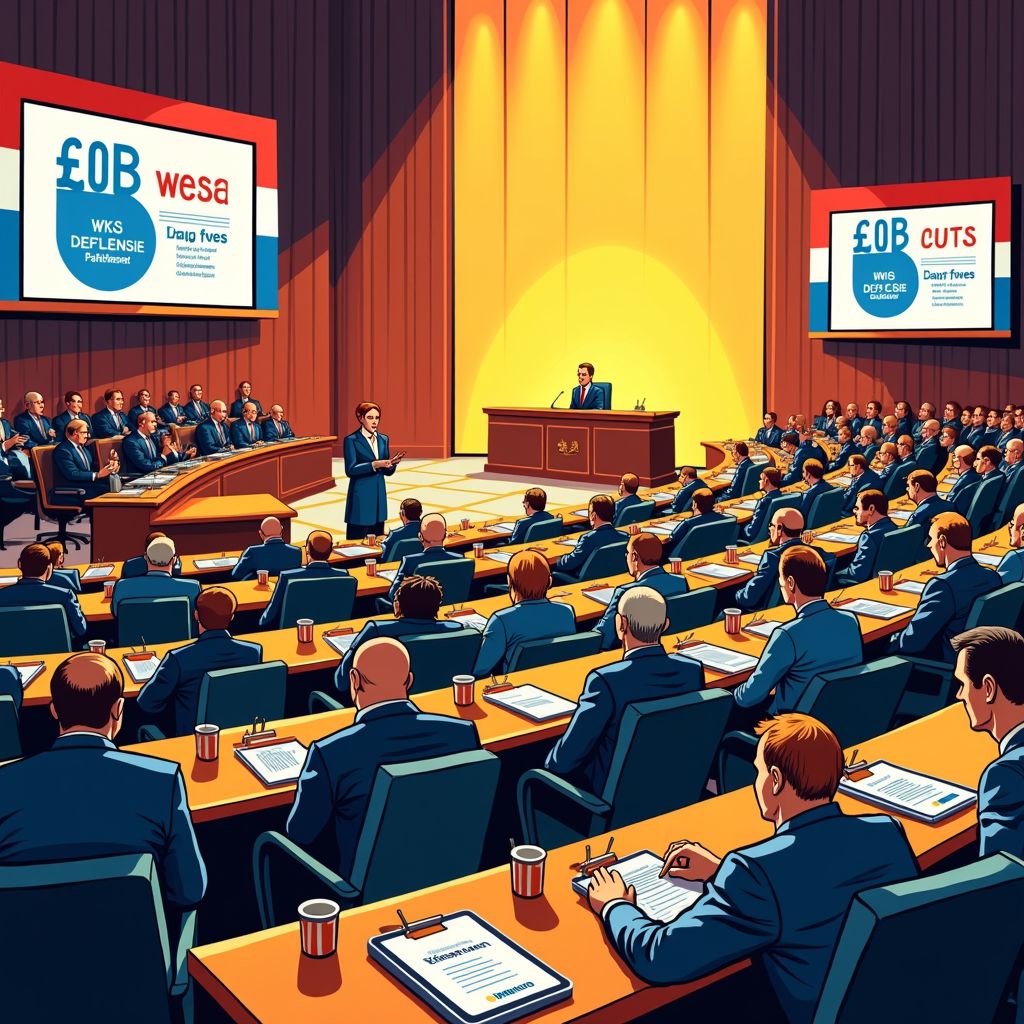
De Tweede Kamer buigt zich volgende week over de begrotingen van Volksgezondheid, Welzijn en Sport en Defensie. De debatten vinden plaats op 3, 4 en 5 maart in de plenaire zaal. Dit zijn cruciale momenten voor de Nederlandse beleidsvorming. De begroting van VWS staat onder druk door plannen om het eigen risico te verhogen. Minister Sophie Hermans moet 10 miljard euro bezuinigen. Bij Defensie ligt de nadruk op verdedigingsinvesteringen in een tijd van internationale onzekerheid. Beide debatten zijn live te volgen via Debat Direct. Kijkers zien een kamer met 17 fracties, verdeeld over een breed politiek spectrum. Steun voor het minderheidskabinet is niet gegarandeerd. De uitkomst van de debatten beïnvloedt direct de toekomst van overheidsuitgaven. Burgers kunnen de discussies digitaal volgen, terwijl lobbyisten en media de spanning closely monitoren.
upcoming budget debates in the second chamber
The Tweede Kamer will hold debates on the budgets of Volksgezondheid, Welzijn en Sport (VWS) and Defensie next week. The session for VWS starts on March 3 at 17:05, with a continuation on March 5 at 10:15 [1]. The discussion on Defensie begins on March 4 at 10:45, followed by a continuation on March 5 at 17:00 [1]. Both sessions take place in the plenary hall and are accessible through Debat Direct, which provides live streaming and automatic subtitles [1].
health ministry faces major cost-cutting demands
Minister Sophie Hermans of VWS must cut 10 billion euros from the health budget [2]. A key measure involves raising the patient’s own risk contribution, known as het eigen risico, from €385 in 2026 to €460 in 2027 [2]. This represents an increase of approximately 19.48% 19.481. The adjustment aims to reduce public spending while managing healthcare costs amid rising demand [2]. Political support remains uncertain as opposition parties express concerns over affordability [2].
defense spending under scrutiny amid global tensions
Defensie’s budget review comes at a time of heightened geopolitical instability [2]. Investments focus on strengthening military capabilities and meeting NATO commitments [2]. The government emphasizes long-term security needs, including continued support for Ukraine [2]. With international threats evolving, funding decisions will shape defense readiness for years ahead [2]. The coalition relies on ad hoc political agreements to secure majority approval for its expenditures [3].
political landscape complicates budget negotiations
The current cabinet operates as a minority government led by Prime Minister Rob Jetten, representing D66 alongside VVD and CDA [4]. It holds 66 out of 150 seats, making parliamentary support essential [4]. The Tweede Kamer now includes 17 factions following splits such as Mona Keijzer leaving BBB [3]. Securing votes requires negotiation across party lines, especially with PVV, GroenLinks-PvdA, and SP opposing certain measures [2]. This fragmented environment increases legislative complexity [3].
public access and transparency during proceedings
All budget debates are publicly available via Debat Direct, offering real-time coverage and archived recordings [1]. Citizens, lobbyists, and journalists can monitor discussions remotely [1]. The platform ensures transparency in decision-making processes involving critical national funds [1]. Automatic subtitling enhances accessibility for viewers with hearing impairments or non-native speakers [1]. Digital participation allows broad civic engagement despite physical distance from parliament [1].