spaceX beursgang maakt elon musk misschien de eerste trillionair
New York, vrijdag, 5 juni 2026.
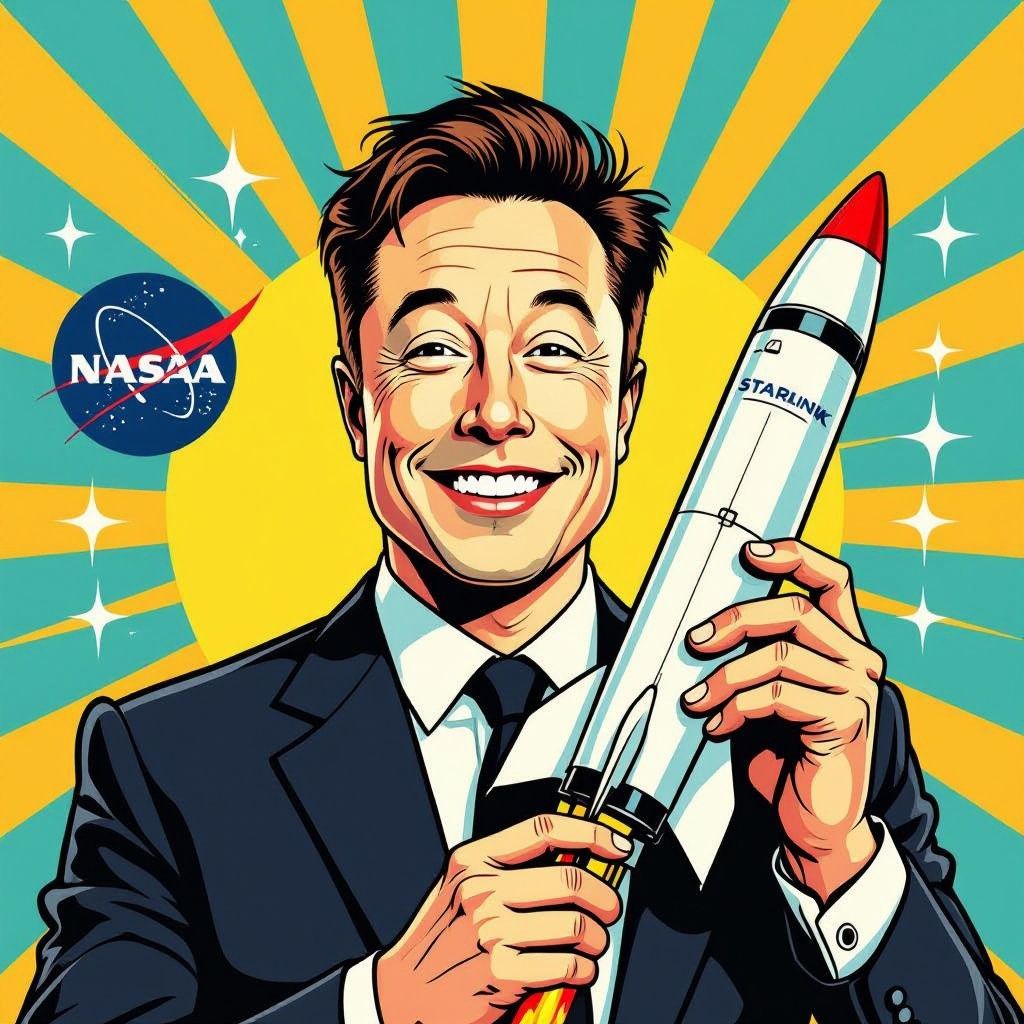
SpaceX start op 12 juni 2026 met de beursgang op de Nasdaq. Elk aandeel kost 135 dollar. Dat brengt zo’n 75 miljard dollar binnen. De waardebepaling ligt op 1,77 biljoen dollar. Daarmee is het de grootste beursgang ooit. Elon Musk zou hierdoor de werelds eerste trillionair worden. Maar analisten waarschuwen. SpaceX boekte vorig jaar bijna vijf miljard dollar verlies. Alleen Starlink draait winst. De rest van de divisies, zoals AI en ruimtevaart, verliest veel geld. Ondanks de hoge verwachtingen blijft het risico groot. Toch zien experts een zware invloed op techbeurzen. En soms rijst de vraag: is dit een bubbelspel?
historic ipo launch at nasdaq
SpaceX officially launched its initial public offering on the Nasdaq on June 12, 2026, pricing shares at $135 each [1]. The IPO aims to raise approximately $75 billion by issuing 555.6 million shares [1]. This marks the largest IPO in history, surpassing Saudi Aramco’s 2019 debut valued at $1.7 trillion [2]. The company’s total valuation reached $1.77 trillion, reflecting strong investor interest despite underlying financial risks [2]. The move solidifies private space companies’ growing influence on global capital markets [3].
financial performance raises concerns
Despite the massive valuation, SpaceX reported a net loss of $4.94 billion in 2025 and $4.28 billion in the latest quarter [3]. Its space division lost $619 million, while the AI segment posted a $2.5 billion deficit [3]. Only Starlink remained profitable, contributing 69% of Q1 2026 revenues [3]. This imbalance highlights heavy reliance on satellite services amid costly innovation in rocketry and artificial intelligence [3]. Analysts warn that sustained losses could pressure shareholder returns long term [4].
valuation multiples spark debate
At $1.77 trillion, SpaceX’s valuation is 93.158 times its 2025 revenue of $19 billion, roughly 9,365% [3]. For comparison, 2024’s largest IPO, Lineage, had a valuation 240% above revenue [3]. Medline’s 2025 debut carried a 116% premium [3]. Such extreme ratios fuel skepticism among analysts [4]. Morningstar labeled the company ‘significantly overvalued,’ citing dependence on unproven technologies [4]. Critics argue future profitability hinges on scaling Starship and expanding AI infrastructure globally [3].
retail access opens amid warnings
Approximately 30% of IPO shares were allocated to retail investors through platforms like Charles Schwab, Fidelity, Robinhood, SoFi, and E*Trade [1]. Fidelity reduced its minimum investment to $2,000, down from $100,000 previously [1]. Schwab requires clients to hold accounts exceeding $100,000 [1]. While Robinhood and SoFi impose no formal thresholds, participation may be restricted for those selling prior IPO stocks within 30 days [1]. Analyst Rupert Mitchell cautioned against large-scale retail exposure, calling it ‘worrying’ given the stock’s complexity and volatility outlook [5].
market impact and analyst sentiment
Analysts expect significant ripple effects across the Nasdaq and S&P 500 indices due to SpaceX’s sizeable footprint [5]. Truist analysts anticipate high initial volatility as traders assess sector positioning [2]. Jay Ritter of the University of Florida attributes part of the demand surge to the ‘Elon Musk effect,’ which boosts visibility but adds governance risks due to his controlling vote share [2]. Franco Granda from PitchBook predicts trading patterns similar to Tesla, ‘on steroids’ [2]. Despite enthusiasm, historical trends show recent IPOs lagging behind broad market gains [2].
elon musk’s path to becoming a trillionaire
Elon Musk holds a 42% stake in SpaceX, equivalent to 4.8 million shares, plus 350 million stock options exercisable at $8.39 [2]. At the IPO price of $135 per share, his direct holdings amount to nearly $688 million pre-exercise [2]. Once vested, his ownership could propel his net worth past $1 trillion, making him the world’s first documented trillionaire [2]. This milestone depends heavily on sustained market confidence and continued technological breakthroughs in reusable rockets and broadband constellations [3]. Forbes notes the achievement would mark a turning point in wealth concentration dynamics [2].
strategic ambitions beyond low earth orbit
Proceeds from the IPO are earmarked for next-generation projects including Mars colonization missions and expanded AI development [6]. SpaceX completed a strategic restructuring in December 2025 involving asset bundles worth $120 billion to prepare for public listing [6]. A pre-IPO funding round secured $50 billion from international institutional investors in April 2026 [6]. Internal discussions about merging with Tesla intensify speculation about synergistic plays in autonomous systems and energy networks [6]. While no official timeline exists, betting markets assign 52% odds to a merger by May 1, 2027 [2].
Bronnen
- www.forbes.com
- www.nbcnews.com
- www.youtube.com
- aswathdamodaran.blogspot.com
- www.cnbc.com
- pages.stern.nyu.edu