Extreme rain disrupts fresh produce supply to Dutch supermarkets
Spanje, woensdag, 4 februari 2026.
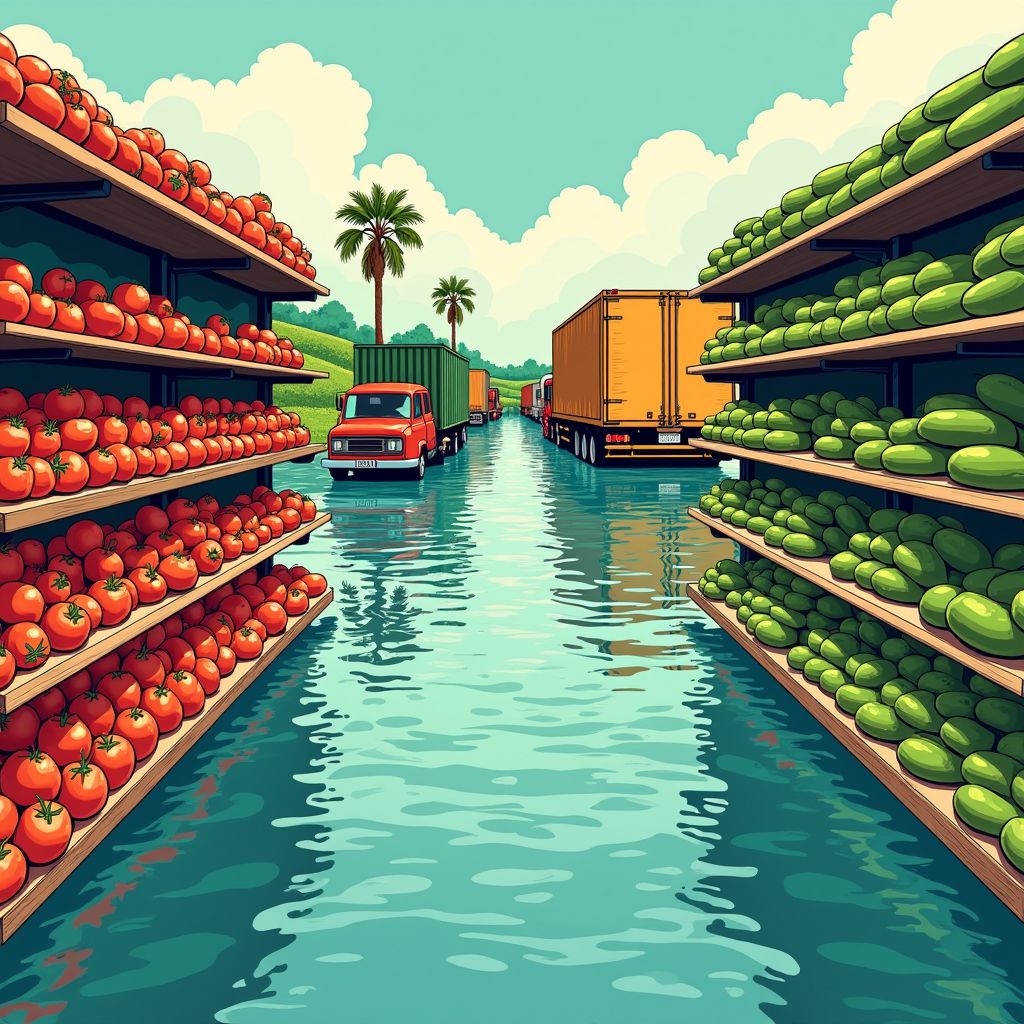
Heavy rainfall in Morocco and Spain is severely impacting vegetable and fruit supplies to the Netherlands. Key growing regions faced flooding, damaged harvests and logistical delays. Dutch supermarkets see reduced stock of tomatoes, berries, herbs and cucumbers. Production drops due to saturated fields and disrupted transport. Shelves are sparser than usual. While temporary, the situation may lead to lower quality offerings and potential price rises. Most affected items come from southern Europe and North Africa where abnormal rains persisted over weeks. One month saw more than 40 millimeters of rain fall in a single day. Upcoming weeks could bring further disruption as forecasts predict continued downpours in major production zones.
heavy rain disrupts supply chains from mediterranean growers
Unusually heavy rainfall in northern Morocco and southern Spain has led to significant disruptions in the supply of fresh produce to Dutch supermarkets. Growers in these regions report flooded fields and damaged crops, particularly affecting tomatoes, berries, herbs and cucumbers. Logistical networks face delays due to unsafe road conditions and overwhelmed distribution centers. The persistent wet weather has prevented harvesting operations for extended periods, reducing available stock destined for the Netherlands [1]. These countries are vital suppliers during winter months.
dutch retailers adapt to shrinking inventory
Major supermarket chains such as Albert Heijn confirm that shelves are less fully stocked than normal. Items most affected include soft fruits, herbs, legumes and tomatoes sourced directly from Mediterranean growing areas [2]. Retailers acknowledge the challenge but emphasize ongoing coordination with farmers and logistics partners to minimize customer impact. Stock shortages are expected to persist through February and possibly March, according to sector reports [3]. Limited availability may also affect product quality and pricing temporarily.
weather patterns intensify agricultural pressure
Meteorological data shows rainfall amounts far exceeding seasonal averages across key agricultural zones. Northern Morocco recorded over 40 millimeters of rain in a single day, causing rivers to overflow and submerge villages including Ksar el-Kebir [1]. Southern Spain’s Costa del Sol faces additional precipitation forecasts ranging from 90 to 200 millimeters in the coming week—significantly above its typical monthly average of 50 to 60 millimeters [1]. Such prolonged saturation damages root systems and promotes crop disease, further diminishing yields [4].
sector outlook remains cautious amid ongoing storms
Industry analysts warn of sustained supply constraints following back-to-back climatic shocks. Severe storms earlier in January already impacted Huelva and Almería, damaging infrastructure and interrupting harvest cycles [4]. With similar adverse weather predicted for upcoming weeks, recovery timelines remain uncertain. Although Dutch domestic greenhouse production provides some buffer, it cannot immediately compensate for missing imports [3]. Stakeholders await clearer meteorological stability before assessing full economic consequences [1][3].