vanavond ontluikt het hemelse vuurwerk van de lyriden
Nederland, donderdag, 23 april 2026.
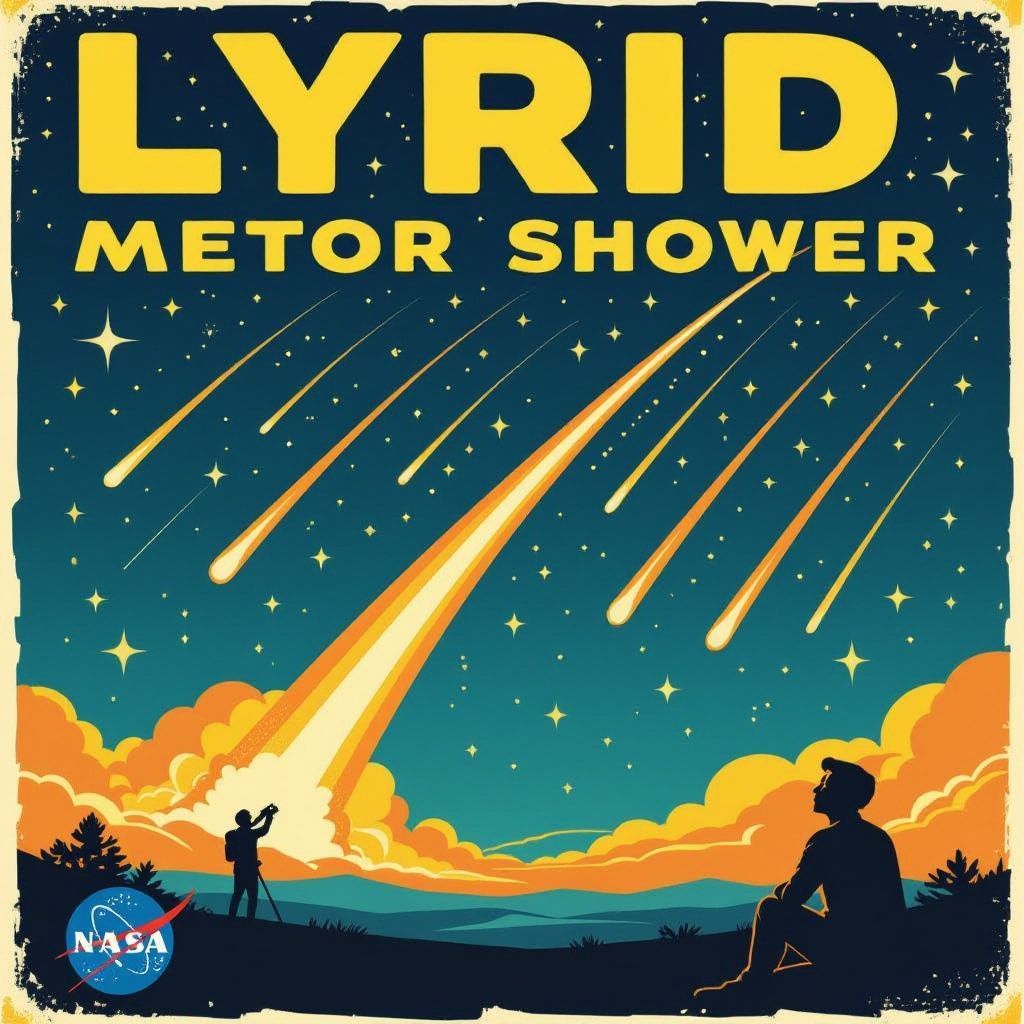
vanavond bereikt de lyriden-meteorenzwerm zijn hoogtepunt. liefhebbers kunnen tot twintig vallende sterren per uur zien. dit oude fenomeen komt van stofdeeltjes van komeet thacher. de eerste waarnemingen dateren uit 687 voor christus. het is een van de oudste bekende meteorenzwermen ter wereld. de aarde raast door het stofveld met 168.480 kilometer per uur. heldere nachten en donkere locaties verhogen de zichtbaarheid. experts raden aan om richting het zuidoosten te kijken. nasa benadrukt dat zelfs zwakkere meteoren nu zichtbaar kunnen zijn. de kans op een verrassing is reëel. soms schiet de activiteit plots omhoog. wie snel is, geniet van een natuurtruc die millennia oud is.
the lyrids reach their peak above the netherlands
Tonight, 23 April 2026, marks the peak of the annual Lyrid meteor shower above the Netherlands. Skywatchers can expect to see up to 18–20 meteors per hour under optimal conditions [1]. The Lyrids originate from dust particles shed by comet C/1861 G1 Thatcher, which orbits the Sun every 415 years [3]. This meteor shower is one of the oldest recorded, with observations dating back to 687 BCE by Chinese astronomers [3]. As Earth passes through the debris trail, particles enter the atmosphere at 47 kilometers per second, creating luminous streaks commonly called falling stars [1].
optimal viewing conditions forecast across most regions
Weather forecasts indicate clear skies over much of the country during peak activity, enhancing visibility [1]. Meteorologist Jordi Huirne from Buienradar confirms that cloud cover will remain minimal in central and southern provinces including North Brabant, Gelderland, and Utrecht [1]. However, northern areas may experience partial fog and cloudiness, reducing chances of observation there [1]. The absence of strong moonlight due to a waxing crescent phase further improves viewing quality [4]. With little artificial interference and low lunar brightness, even fainter meteors become detectable [3]. Temperatures are expected to drop close to freezing inland, prompting recommendations for warm clothing [1].
experts advise best practices for skywatching
To maximize sightings, observers are advised to locate themselves far from urban lighting [2]. Rural darkness increases observable meteors significantly—up to three or four times more than within cities [2][1]. Experts recommend allowing eyes 20–30 minutes to adjust fully to darkness [1]. Viewers should focus toward the southeastern sky, where the radiant point lies near the constellation Lyra and its bright star Vega [4]. Comfort measures such as reclining chairs and blankets improve prolonged watching experiences [1]. According to NASA’s Bill Cooke, atmospheric clarity could reveal subtle structures within the meteor stream normally unseen [3].
potential for unexpected outbursts remains open
While typical rates hover around 15–20 meteors per hour, historical records show occasional surges exceeding 100 per hour, notably observed in 1982 [3]. Such outbursts occur unpredictably when Earth encounters denser clumps of cometary debris [3]. Robert Lunsford of the American Meteor Society notes that although normal behavior is anticipated, sudden spikes cannot be ruled out [3]. Future displays are projected to intensify, particularly around 2040, based on orbital modeling [3]. For now, the Lyrids remain active until 30 April 2026, though diminishing rapidly after tonight’s climax [3]. Upcoming showers include the Eta Aquariids in early May 2026 [3].