novonordisk drug loses ground to eli lilly in weight loss trial
Kopenhagen, maandag, 23 februari 2026.
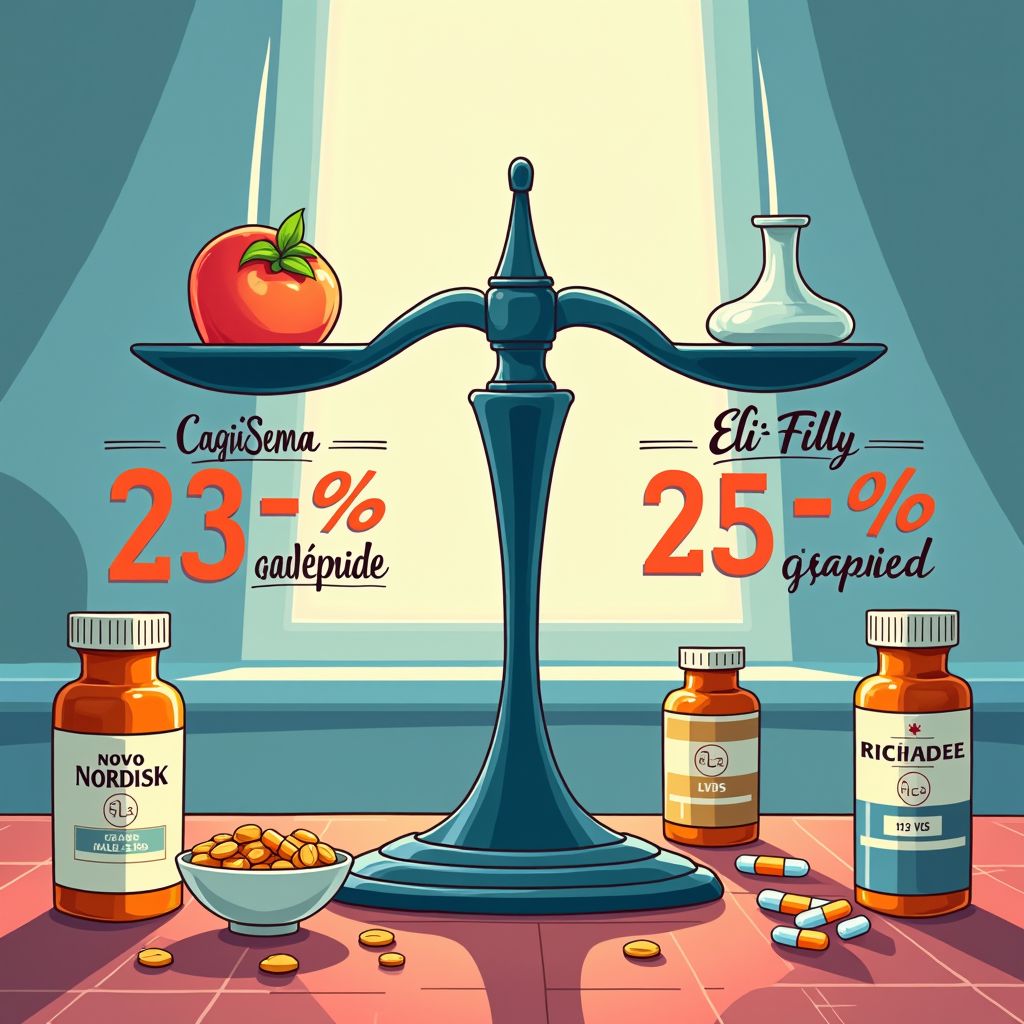
Novo Nordisk shares dropped sharply after its new weight loss drug CagriSema underperformed against Eli Lilly’s tirzepatide in a major clinical trial. Patients using CagriSema lost 23% of their body weight over 84 weeks, falling short of the 25.5% achieved with tirzepatide. This result missed the trial’s main goal of proving equal effectiveness. The setback shakes Novo Nordisk’s position in the competitive obesity treatment market. Despite the outcome, the company sees promise in CagriSema and plans higher-dose trials. The drug combines semaglutide and cagrilintide, aiming to offer better results than GLP-1 drugs alone. Regulatory decisions on CagriSema are expected by late 2026.
sharp drop in novonordisk shares after trial results
Novo Nordisk’s stock fell 15 percent during trading in Copenhagen following disappointing results from its CagriSema weight loss trial [1]. The company confirmed that CagriSema failed to meet its primary endpoint of non-inferiority compared to Eli Lilly’s tirzepatide [5]. Shares hit their lowest point since June 2021, dropping to 256 Danish kroner [1]. Market analysts described the outcome as a worst-case scenario for Novo Nordisk’s obesity franchise [4]. The sharp decline reflects investor concerns about the company’s competitive position in the rapidly evolving anti-obesity medication sector [1][4].
clinical performance of cagrisema versus tirzepatide
In the REDEFINE 4 phase 3 trial, patients receiving CagriSema achieved a 23.0 percent weight loss over 84 weeks [5]. This result fell short of the 25.5 percent weight reduction observed in participants treated with tirzepatide [5]. The study involved 809 individuals with an average starting weight of 114.2 kilograms [5]. While CagriSema demonstrated a safe profile with mostly mild-to-moderate gastrointestinal side effects, it did not prove non-inferior as defined by the trial’s primary endpoint [5]. These findings directly compare the experimental therapy against an established competitor already available through brands like Zepbound and Mounjaro [1][3].
strategic implications for the obesity treatment market
The trial outcome represents a significant setback for Novo Nordisk in the race for dominance in obesity therapeutics [3]. Eli Lilly’s shares rose 3.5 percent in premarket trading, highlighting the market’s shift in sentiment [1]. Analysts suggest the data raises questions about CagriSema’s future market positioning and the long-term value of Novo Nordisk’s obesity portfolio [4]. With previous expectations of declining sales growth between 5 and 13 percent in 2026, the company now faces intensified pressure [1]. Competition extends beyond traditional pharmaceutical rivals to include telehealth providers offering alternative treatments [4].
ongoing development and regulatory timeline
Despite missing its primary endpoint, Novo Nordisk maintains confidence in CagriSema’s potential as the first GLP-1/amylin combination therapy for obesity [5]. Executive Vice President and Chief Scientific Officer Martin Holst Lange stated that cagrilintide adds clinically meaningful weight loss beyond GLP-1 mechanisms alone [5]. The company continues to pursue regulatory approval, having submitted CagriSema to the U.S. FDA in December 2025 for weight management indication [5]. A decision is anticipated by late 2026 [5]. Additional trials, including higher-dose formulations such as CagriSema 2.4/7.2 mg, are scheduled to begin in the second half of 2026 [5].