former lawyer held 8 months on terror wing despite no charges
Vught, maandag, 27 april 2026.
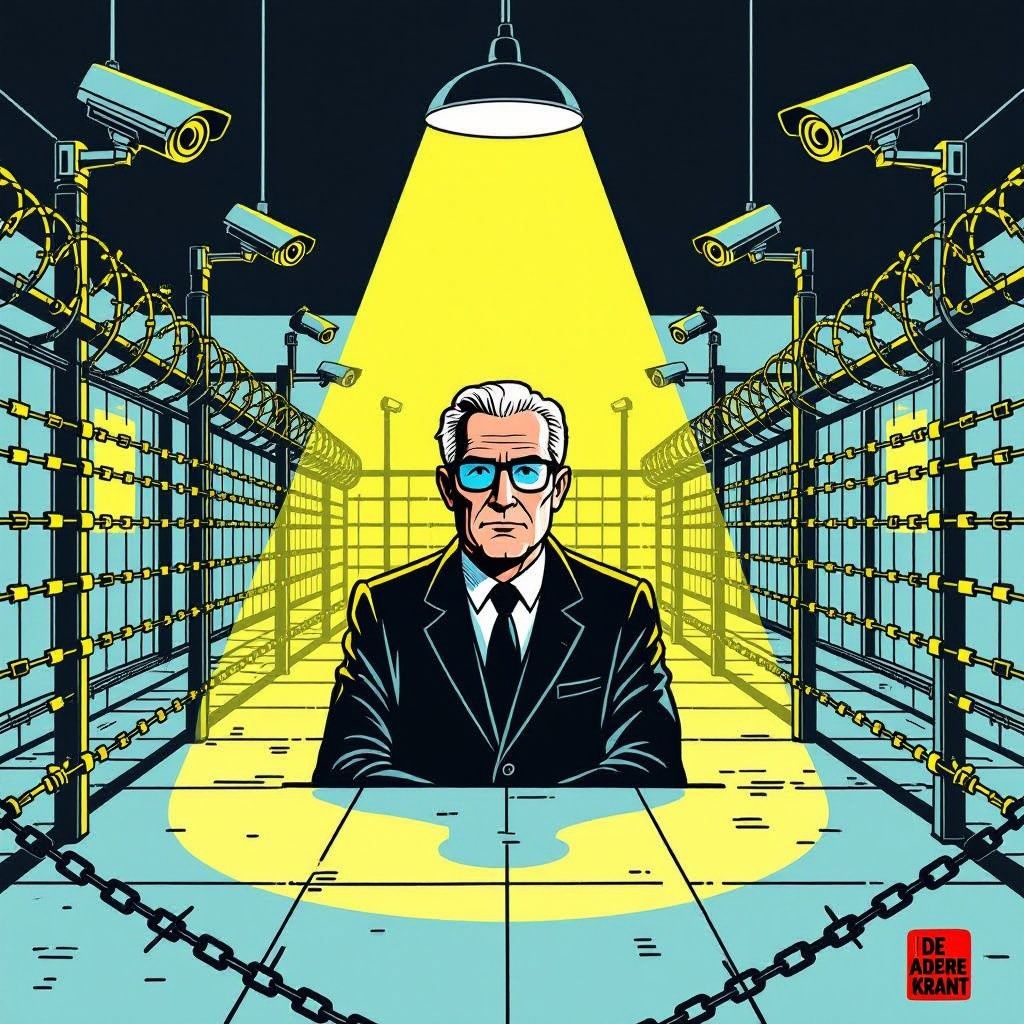
Arno van Kessel, a 62-year-old former lawyer, spent over eight months detained on the terrorism unit in Vught without any proven offense. His arrest came hours after submitting legal arguments challenging coronavirus measures as biological weapons. The case raises urgent questions about state power and judicial integrity. Despite no evidence found, he remained isolated among convicted jihadists under strict surveillance. Van Kessel claims the detention followed his court filing against top officials, including Mark Rutte. Released in February 2026, he now speaks out about trauma and systemic pressure on dissenters during the pandemic era. The full account appears in an exclusive interview with De Andere Krant titled “Damaged, Not Broken”.
arrestation linked to legal action on covid measures
The arrest of Arno van Kessel occurred on June 11, 2025, shortly after he submitted a legal document known as the Conclusie van Repliek in a procedural case challenging government actions during the pandemic [1]. He argued that the Covid-19 vaccines constituted a form of biological weapon deployed without sufficient consent [2]. According to Van Kessel, authorities raided his home in Leeuwarden early that morning, placing a hood over his head before transporting him [3]. He maintains the timing confirms a direct connection between his legal filings and his detention [1][3].
detention amid convicted extremists without conviction
Van Kessel was held for 260 days on the terrorism wing of the Penitentiary Institution in Vught, despite never being convicted of any crime [3]. During this time, he was housed alongside individuals previously sentenced for jihadist activities, some of whom threatened him [3]. Authorities subjected him to prolonged isolation, allowing just one hour outside his cell daily in a confined concrete yard [3]. Medical treatment was delayed for three months until a prison officer intervened [3]. He states these conditions contributed significantly to lasting physical and psychological harm [3].
health consequences and mental toll of imprisonment
Following his release, Van Kessel reported suffering from post-traumatic stress disorder (PTSS), stress-induced rheumatism, and chronic ankle pain stemming from his incarceration [3]. To manage inflammation caused by extreme stress, he takes three prednisone tablets every day [3]. “I am damaged, but they did not break me mentally,” he stated in an interview [3]. Nighttime disturbances such as loud key jangling, sliding panels, and guard footsteps disrupted his sleep pattern throughout detention [3]. He attributes ongoing health challenges directly to the harsh prison environment [3].
legal basis questioned amid lack of criminal proof
Prosecutors failed to uncover any criminal conduct by Van Kessel during their investigation [1]. Nevertheless, he remained in custody under provisions extended after the September 11 attacks, enabling lengthy pre-trial detention [3]. The public prosecutor’s office offered no substantiated evidence to justify continued imprisonment [1]. Legal experts have raised concerns about the application of anti-terrorism laws in cases involving political dissent [3]. Van Kessel sees his prosecution as emblematic of broader threats to civil liberties and judicial independence [1][2].
public reaction and support during incarceration
While imprisoned, Van Kessel received thousands of letters and cards from supporters across the Netherlands [3]. Demonstrations were organized near the prison facility in Vught calling for his release [3]. Prison staff reportedly referred to his situation as “talk of the town” due to its unusual nature [3]. Independent media outlet De Andere Krant published an extensive interview titled “Beschadigd, niet gebroken” detailing his experience [2]. Readers were encouraged to subscribe to access the full piece, highlighting reliance on grassroots funding models [2].
personal motivations rooted in personal tragedy
Van Kessel cites the death of Monique, an operating room nurse who died after receiving a problematic vaccine batch, as a pivotal moment in his activism [2]. She became one of the first victims to approach him regarding adverse effects from the inoculation [2]. Her subsequent decline led her to choose euthanasia, which deeply affected him [2]. “Her story is burned into my retina,” he said [2]. This loss fueled his determination to pursue accountability through formal legal channels [2].