how a shadow deal unlocked millions for aid and revived anti-terror plans
Den Haag, donderdag, 4 juni 2026.
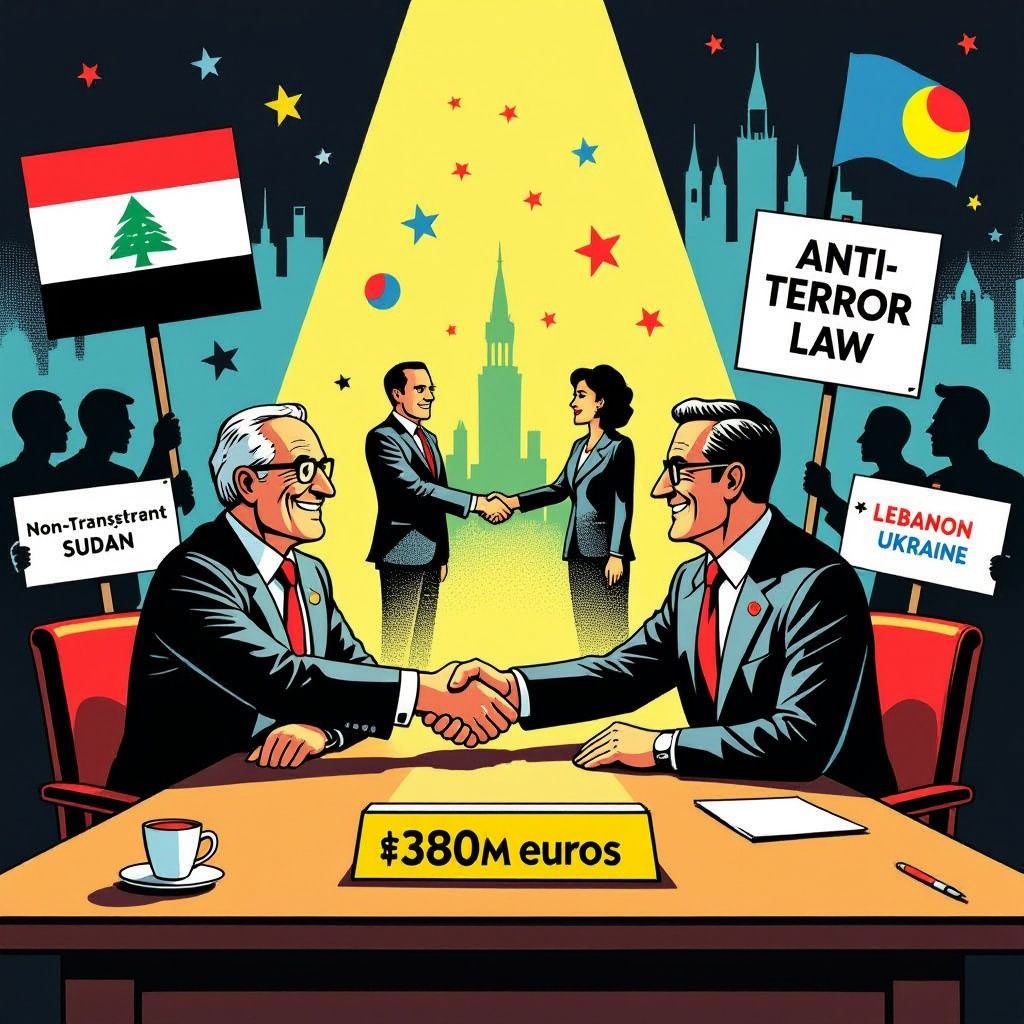
a secret agreement between d66 and vvd has reshaped the year’s policy landscape. behind closed doors, ministers struck a bargain: release 380 million euros for development aid and restart a stalled anti-terror law. the money comes from future budgets, pulling funds forward to address urgent crises in lebanon, sudan and ukraine. meanwhile, the renewed terrorism bill, which criminalizes glorifying terror, returns to parliament with d66’s support after blocking it previously. critics call the process non-transparent, raising concerns about oversight. the move highlights how informal deals maintain government stability while sidestepping public debate.
coalition compromise unlocks emergency funding
The Dutch cabinet has approved a 380 million euro increase for development cooperation in 2026 [1]. This includes 202 million euros pulled forward from the 2031 budget and 178 million euros from allocations originally planned for 2028 and 2029 [1]. The reallocation aims to fund urgent humanitarian responses in Lebanon, Sudan, and Ukraine, alongside Ebola containment efforts [1]. The decision emerged from negotiations between coalition partners D66 and VVD during the spring budget talks [3]. Funding continuity for future years remains uncertain under this arrangement [1].
shadow agreement revives stalled counter-terror legislation
In parallel, a confidential understanding allows VVD minister David Van Weel to reintroduce legislation criminalizing the glorification of terrorism [1]. The bill had been shelved following strong objections from D66, particularly due to concerns raised by MP Joost Sneller about potential misuse [3]. After internal discussions, D66 ministers now agree to support the relaunch of the proposal [1]. The revised legislative effort will proceed with formal backing from D66 leadership, despite earlier reservations about civil liberties implications highlighted by the Council for the Judiciary [3].
critics question transparency of backroom arrangements
Opposition parties have voiced serious concerns about the opaque nature of these agreements [1]. PRO MP Sjoerd Sjoerdsma expressed shock upon learning of the side deal concerning security legislation [1]. Christian Union leader Don Ceder described the situation as chaotic, stating “it is again a mess” [1]. Volt MP Laurens Dassen questioned what other undisclosed agreements exist between coalition partners [1]. Legal bodies including the Council for the Judiciary previously flagged the broad scope of the proposed terror measures as potentially infringing on fundamental rights [3].
calculating the financial shift in aid spending
The proportion of the total 380 million euro aid increase sourced specifically from the 2031 budget is calculated as follows: 53.158[1]. This equals approximately 53.16%. The share derived from budgets designated for 2028 and 2029 respectively totals 178 million euros. The percentage of the overall increase attributed to these earlier-year funds is therefore: 46.842[1]. This results in approximately 46.84% of the additional funding being advanced from those combined years.