morocco faces shock coaching change just months before world cup
Rabat, donderdag, 5 maart 2026.
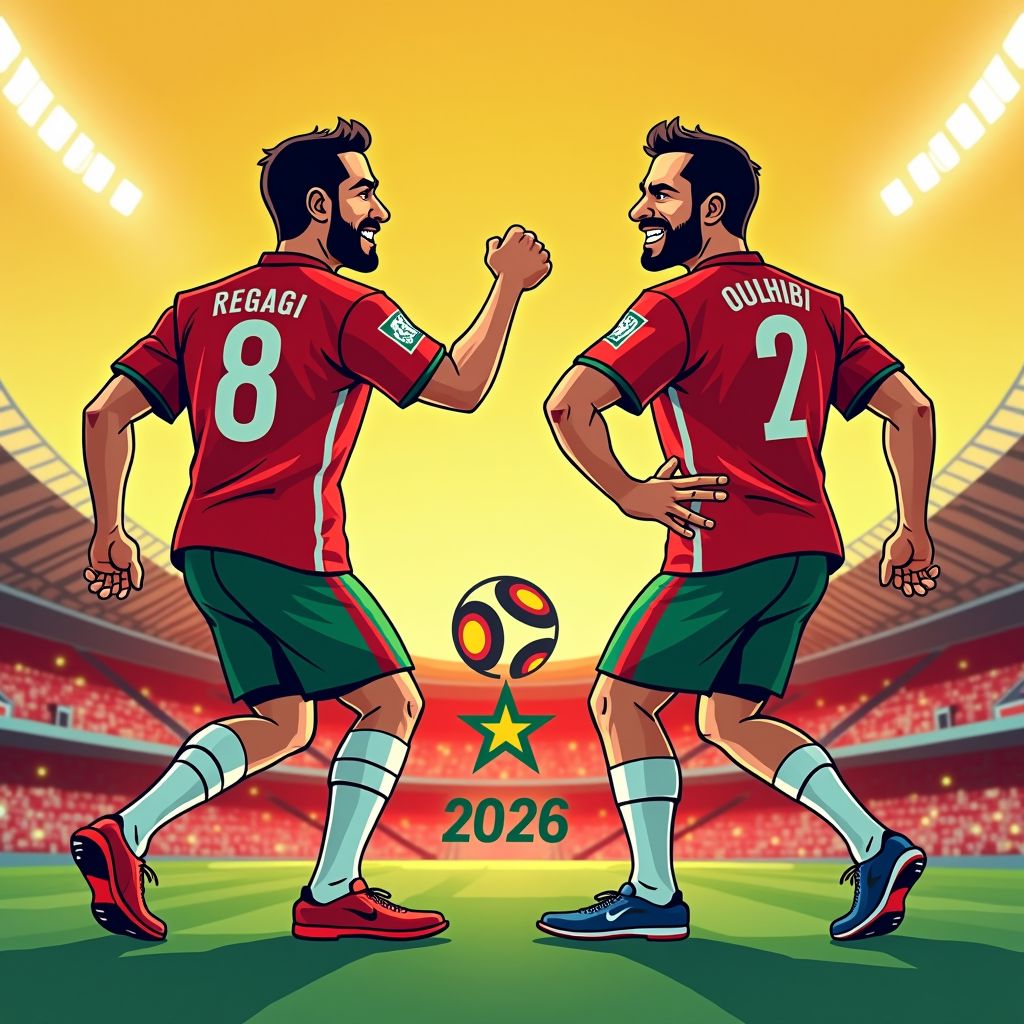
Walid Regragui has left his role as Morocco’s head coach three months before the 2026 World Cup. The move comes after internal tensions and disappointing results, including a narrow loss in the recent Africa Cup final on home soil. Regragui took the team to historic heights in 2022, leading them to the World Cup semifinals — a first for any African or Arab nation. His departure marks a bold reset ahead of the global tournament. Mohamed Ouahbi, who delivered a U20 World Cup title for Morocco in 2025, steps in as the new leader. The transition happens amid high pressure, with Morocco drawn into a tough group featuring Brazil, Scotland, and Haiti.
shock departure shakes moroccan football
Walid Regragui has officially stepped down as head coach of Morocco’s national football team, confirming his exit in a late-night press conference on March 4, 2026 [1]. The announcement came just 96 days before the start of the 2026 FIFA World Cup hosted by the United States, Canada, and Mexico [1]. Regragui made the decision public via a video message on his Instagram account, stating: “Always Morocco, thank you” [6]. The move follows growing internal tensions and mounting criticism despite his historic achievements with the team [1][2].
historic run overshadowed by recent failure
Regarded as a national hero after guiding Morocco to the semifinals of the 2022 World Cup—the first African or Arab nation to achieve such a feat—his legacy faced scrutiny following the 2026 Africa Cup of Nations [1][4]. Morocco suffered a 1–0 defeat to Senegal in the final, played on home soil, which sparked widespread debate over tactical choices and team morale [1][2]. Critics highlighted his defensive playing style, calling for changes even before the tournament concluded [1][4]. Despite setting a record with 19 consecutive wins prior to the final, the loss intensified pressure on Regragui [2].
internal friction and federation dynamics
Although the Royal Moroccan Football Federation did not cite specific reasons for Regragui’s departure, sources indicate dissatisfaction with both tactics and communication from leadership [2][4]. According to reports, Regragui felt unsupported by the federation amid rising public criticism [2]. He reportedly grew weary of constant scrutiny and lacked confidence in institutional backing [2]. Prior to stepping down, there were three official denials regarding potential dismissal, suggesting behind-the-scenes instability [1]. His resignation was framed as a mutual recognition that a “fresh face” was necessary ahead of the upcoming World Cup [1].
ouahbi takes helm amid urgent rebuild
Mohamed Ouahbi has been named as Regragui’s successor, effective immediately [1][3]. Ouahbi previously led Morocco’s U20 squad to victory at the 2025 FIFA U20 World Cup, earning praise for developing young talent [2][3][6]. Born in Schaerbeek, Belgium, and aged 49, he brings experience from European youth systems, having served as a youth coach and assistant at RSC Anderlecht between 2004 and 2016 [3][5]. His appointment signals continuity in nurturing domestic talent while injecting renewed energy into the senior side less than 100 days before the World Cup kicks off [3][6].
roadmap to world cup under new leadership
Under Ouahbi, Morocco is scheduled to play two friendly matches in late March 2026 against Ecuador (March 27) and Paraguay (March 31) [1][6]. These fixtures serve as critical preparation ahead of their World Cup campaign in Group C alongside Brazil, Scotland, and Haiti [1][6]. João Sacramento, a Portuguese tactician formerly associated with Lille, PSG, and Tottenham Hotspur, is expected to join as assistant coach [6]. With limited time to implement strategic shifts, Ouahbi inherits a squad with proven resilience but under immense expectation to deliver regional pride on the global stage [1][6].
future ambitions beyond immediate challenges
Beyond the 2026 World Cup, Morocco continues advancing broader sporting ambitions, including co-hosting the 2030 FIFA World Cup with Spain and Portugal [1]. Central to these plans is the construction of the Grand Stade Hassan II, projected to seat 115,000 spectators upon completion in 2028—a venue intended to symbolize Morocco’s emergence as a football power [1]. The current coaching transition reflects deeper structural goals aimed at modernizing football governance and elevating competitive performance across age groups [1][2]. Investment in sports infrastructure remains substantial, signaling long-term commitment beyond short-term results [1].