Groningen gasveld in opleiding als strategische reserve?
Groningen, donderdag, 5 maart 2026.
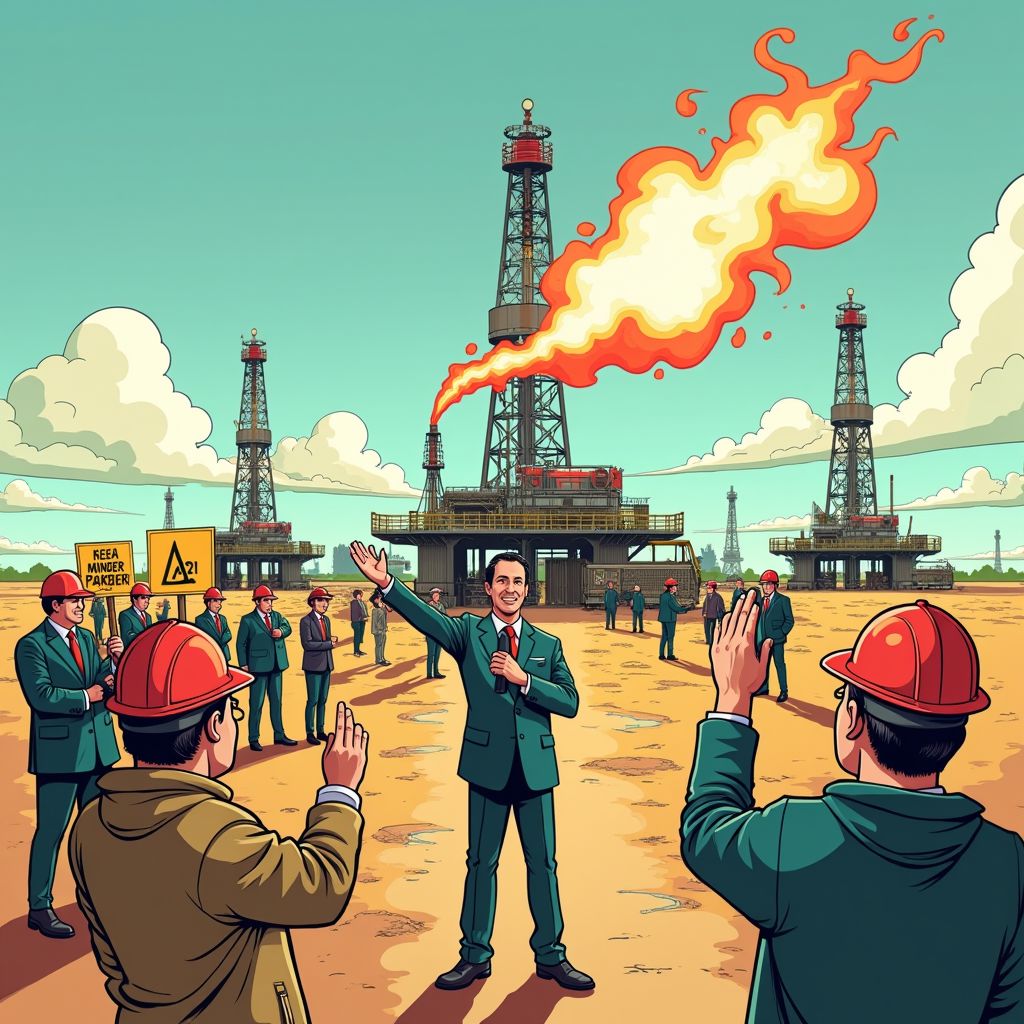
Het besluit over het lot van het Groningen gasveld valt dit jaar. Hoewel de productie in 2024 werd stopgezet vanwege aardbevingen, wil de oppositiepartij JA21 delen van het veld openhouden als strategische reserve. Partijleider Joost Eerdmans vindt het verkeerd om de eigen gasvoorraad af te sluiten in tijden van geopolitieke onzekerheid. De regering houdt vast aan sluiting vanwege veiligheidsrisico’s. Ruim driekwart van de 337 putten is nog niet betongesloten. Milieuorganisaties en lokale bewoners zijn fel gekant tegen heropening. Sommige economische adviseurs zien beperkte winning als oplossing bij noodgevallen. De discussie raakt de kern van Nederlandse energiezekerheid en regionaal vertrouwen.
political push for strategic reserve status
Far-right party JA21 introduced a legislative proposal on March 5, 2026, to maintain parts of the Groningen gas field as a strategic emergency reserve [1]. Party leader Joost Eerdmans argues against permanently sealing the remaining gas wells, calling the current policy a ‘historic blunder’ made out of emotion rather than facts [2]. The plan does not advocate for large-scale resumption of gas extraction but seeks legal guarantees for access during national emergencies [3]. Eerdmans stresses the importance of retaining control over domestic resources amid rising global instability [4].
geopolitical and economic arguments
Supporters highlight growing dependence on foreign energy supplies following the reduction of Russian gas imports after 2022 [2]. The Netherlands now relies heavily on Norwegian pipeline gas and liquefied natural gas shipments from the US and Qatar [2]. Experts warn this shift introduces new vulnerabilities, including exposure to international price fluctuations and infrastructure sabotage risks [5]. Eerdmans notes approximately 75 percent of the 337 wells remain unsealed, suggesting reversible closure procedures are still feasible [2]. He questions why any country would voluntarily cut off its own energy supply during uncertain times [4].
ongoing safety concerns and public resistance
Decades of gas extraction have triggered repeated earthquakes in Groningen, damaging thousands of homes and undermining trust in state oversight [2]. A powerful tremor near Zeerijp in November 2025 intensified fears about geological stability [6]. Local residents recall shaking houses and loud booms, reinforcing opposition to renewed activity [6]. The Groninger Bodem Beweging (GBB) firmly opposes any reopening, stating ‘Groningen is not one of the solutions’ [6]. Provincial authorities reaffirmed on March 4, 2026, that the site remains closed and will stay closed [6]. Safety considerations continue to dominate official reasoning.
divided parliamentary landscape
While JA21 leads the initiative, support extends to other right-wing factions. Geert Wilders of the Freedom Party backs the idea, insisting any extracted gas serve only Dutch needs [1]. Combined seats of JA21, PVV, FvD, and Groep Markuszower total 42 out of 150 in the House of Representatives [6]. However, this falls well short of a majority required to pass legislation [6]. The cabinet reiterated on March 4 that it feels no urgency to reverse course, dismissing the proposal publicly [6]. Parliamentary debates scheduled around early March 2026 reflect ongoing scrutiny over energy resilience versus regional safety [7].
regulatory framework and transition efforts
The Committee on Climate and Green Growth oversees decommissioning activities related to the Groningen field [7]. Recent regulatory changes focus on reducing methane emissions through alignment with EU Regulation 2024/1787 [7]. Discussions also cover broader energy security challenges, including grid congestion and fossil fuel phase-out strategies [7]. While some experts suggest limited extraction might be technically manageable under strict limits, institutional momentum favors permanent closure [2]. Investment priorities have shifted toward renewable alternatives such as offshore wind and solar power expansion programs like SDE++ 2026 [7].
Bronnen
- www.devdiscourse.com
- www.dutchnews.nl
- www.worldenergynews.com
- nieuwrechts.nl
- www.ad.nl
- www.rtlnieuws.nl
- www.tweedekamer.nl