orbán positions brussels as greater threat than moscow ahead of hungarian elections
Boedapest, zondag, 15 februari 2026.
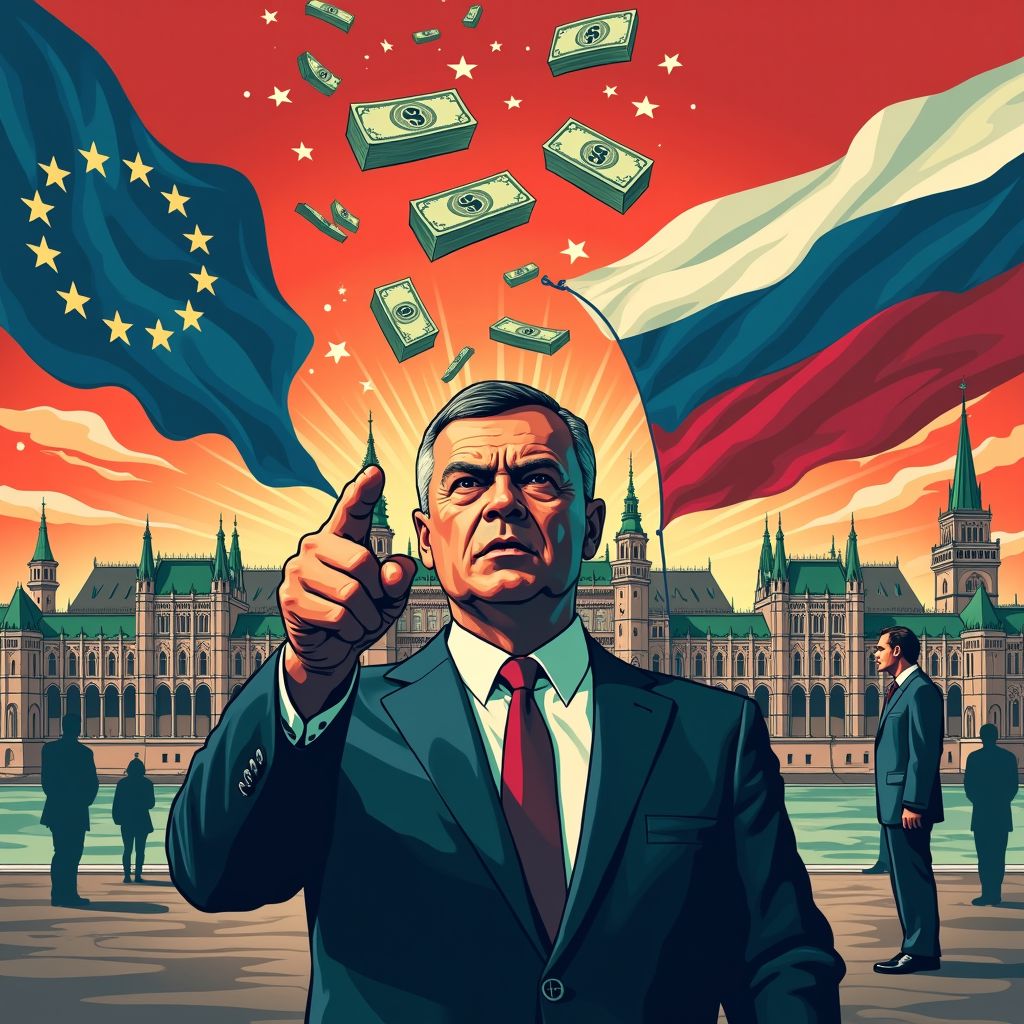
Hungarian prime minister Viktor Orbán has declared the European Union a bigger threat to Hungary than Russia. In a sharp escalation ahead of the April 2026 elections, Orbán labeled Brussels as an immediate danger, dismissing fears of Putin as “primitive”. He claims the EU aims to draw Hungary into conflict with Russia and would override national sovereignty. Orbán accuses the bloc of weaponizing frozen funds and plotting regime change through opposition allies. With EU funding still restricted over rule-of-law concerns, he frames the election as a choice between Hungarian independence and submission to Brussels. His opponent, Péter Magyar, rejects the narrative but vows to restore ties with the West and unlock billions in stalled EU support. The standoff deepens Central Europe’s east-west divide.
orban’s sovereignty argument intensifies
Hungarian Prime Minister Viktor Orbán has intensified his criticism of the European Union, calling it a greater threat to Hungary than Russia. During his state-of-the-nation address on February 14, 2026, Orbán argued that Brussels poses a tangible danger to Hungarian sovereignty [1]. He dismissed concerns about Vladimir Putin as “primitive and unserious” while framing the EU as an immediate threat [1]. Orbán claimed the bloc would involve Hungary in conflicts against its interest if his Fidesz party loses the April 2026 election [1]. His remarks come amid prolonged disputes over EU funding conditionality [2].
election stakes and geopolitical alignment
Orbán positioned the upcoming April 2026 parliamentary vote as a decisive moment for Hungary’s future direction. He accused the EU of attempting to install a compliant government in Budapest [1]. According to Orbán, multinational corporations and EU elites seek to overturn his administration [3]. He specifically mentioned banks, energy firms, and civil society groups as instruments of foreign influence [3]. Orbán defended his outreach to former U.S. President Donald Trump as resistance against liberal global networks [3]. His rival, Péter Magyar of the Tisza party, denied being a proxy for Brussels despite pledging to restore normal ties with the EU [1].
economic leverage and frozen funds
A central point of contention remains the suspension of approximately €10.2 billion in EU cohesion funds to Hungary [4]. The European Commission initially froze the money in 2022 over rule-of-law and corruption concerns [4]. Although some funds were partially released in 2023 following alleged reforms, this decision now faces legal scrutiny [4]. On February 12, 2026, EU Advocate General Tamara Ćapeta recommended annulling the disbursement, stating Hungary had not fulfilled reform obligations [4]. Orbán denounced such actions as coercive tactics undermining national autonomy [4]. He pledged to dismantle what he termed the “Brussels repressive machine” if re-elected [1].
foreign policy clashes and regional tensions
Orbán’s confrontation extends beyond institutional matters to active foreign policy disagreements. He labeled Ukraine an “enemy of Hungary” after President Volodymyr Zelenskyy pushed for accelerated EU integration and restrictions on Russian energy [5]. Orbán argued that blocking affordable Russian fuel harms Hungarian consumers and violates national interests [5]. When EU officials explored mechanisms to circumvent Hungarian veto power on Ukraine matters, he described it as a “declaration of war” against Hungary [5]. These developments reflect broader divisions within the EU regarding responses to Russia’s war in Ukraine and enlargement strategies [5].
domestic implications and opposition response
Despite Orbán’s warnings, opposition leader Péter Magyar maintains that stronger EU cooperation benefits Hungary economically and politically [1]. Magyar’s platform includes unlocking the €18 billion in stalled EU funds by addressing governance shortcomings [6]. Polls indicate growing public dissatisfaction with economic stagnation linked to isolated policymaking [6]. While Orbán emphasizes cultural conservatism and anti-immigration stances to mobilize voters, Magyar appeals to younger demographics seeking reintegration with European structures [6]. The April 12 election will test whether nationalist narratives outweigh pragmatic considerations for EU partnership and development financing [6].
Bronnen
- apnews.com
- english.news.cn
- responsiblestatecraft.org
- halifax.citynews.ca
- newsukraine.rbc.ua
- dailynewshungary.com