79-year-old fined for missed bin collection amid accessibility row
Dordrecht, woensdag, 29 april 2026.
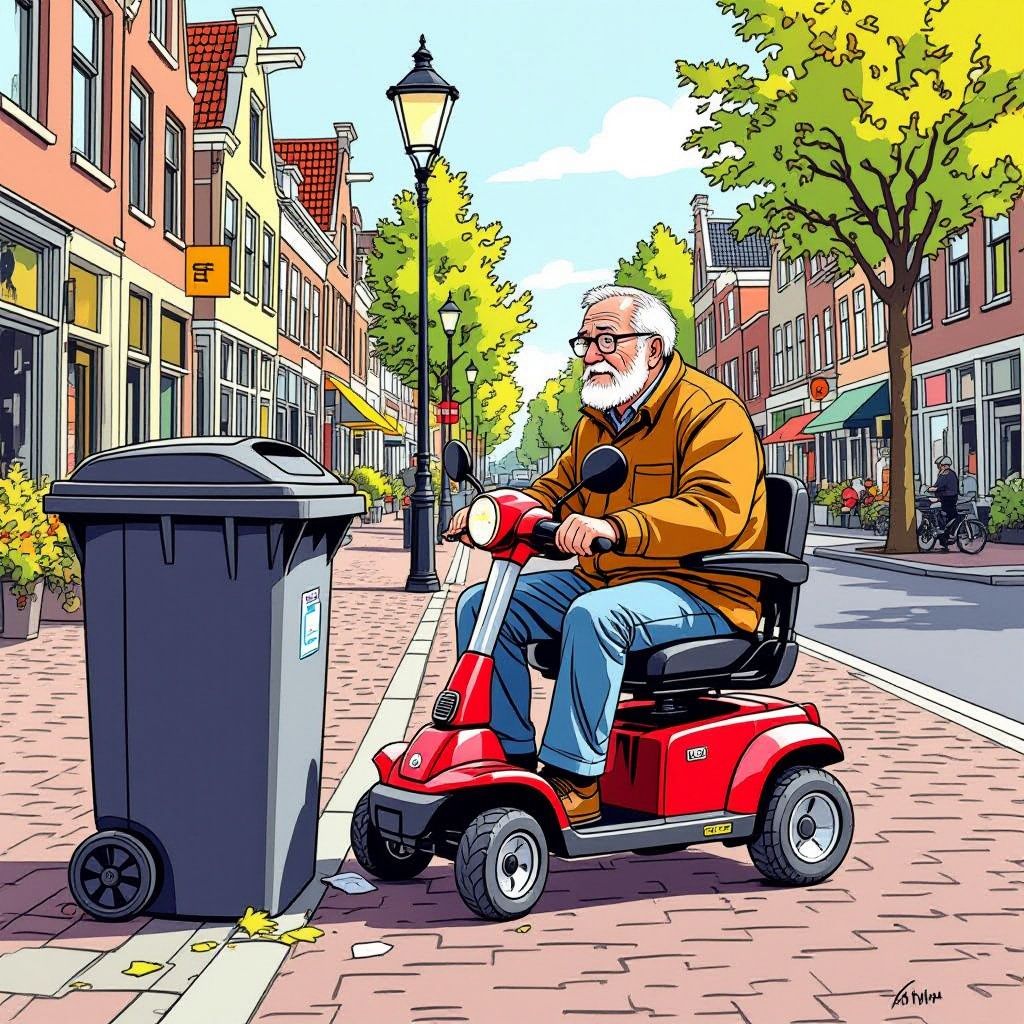
A 79-year-old man from Dordrecht has been fined €181 for leaving household waste beside a public container after struggling to reach it. Ad van Dijl uses a mobility scooter but still faces a 200-meter journey to the nearest working unit. Some new bins remain full or broken, making disposal impossible even upon arrival. He once dropped off rubbish steps from home. Not anymore. The city’s updated waste policy removed local underground containers, replacing them with 400 new units across town to improve recycling. For residents with limited mobility, the change brings hardship rather than progress. Van Dijl says he followed all rules yet feels punished for circumstances beyond his control. His experience highlights broader issues in urban planning for aging populations. Dordrecht acknowledges the complaints. Officials now explore tailored solutions like waste coaches and enforcement adjustments for vulnerable citizens. The case raises urgent questions about fairness in public service design.
elderly resident penalized for waste disposal difficulties
In Dordrecht, 79-year-old Ad van Dijl received an €181 fine for placing household waste next to a public container [1]. Though compliant with regulations, physical limitations made proper disposal difficult. Using a mobility scooter, he faced a roughly 200-meter journey to the nearest functional unit [1]. Upon arrival, malfunctioning lids often prevented access altogether [2]. “The first won’t open, neither will the second. None of the residual waste bins work,” he reported [2]. This situation arose after municipal changes replaced nearby underground containers with centralized units further away [2].
city defends overhaul while acknowledging hardships
Dordrecht introduced 400 new waste stations to enhance recycling by consolidating residual, paper, plastic, and green waste in one location [2]. The project aims to replace 100–150 older underground models by late 2026 [2]. City officials recognize the burden placed on seniors and those with reduced mobility [1]. A spokesperson confirmed awareness of complaints regarding distance and technical faults [1]. While promoting environmental benefits such as improved separation rates, authorities admit logistical shortcomings for vulnerable groups [2]. They emphasize ongoing evaluation to align sustainability goals with equitable access [1][2].
calls grow for adaptive policies and inclusive planning
Van Dijl expressed dismay at being penalized despite following procedures and acting responsibly [1]. “Then you feel rotten. Because I’ve always neatly put trash in the bin, just as required,” he said [1]. Local activists highlight his case as symptomatic of broader urban planning flaws affecting disabled and elderly residents [alert! ‘no direct activist quote provided’] . The municipality plans targeted interventions including waste coaches who offer personalized support [2]. Enforcement staff may also adjust protocols for individuals with documented limitations [2]. Residents await firm timelines for implementation [2].