Russia's silence speaks volumes as Iran faces attacks
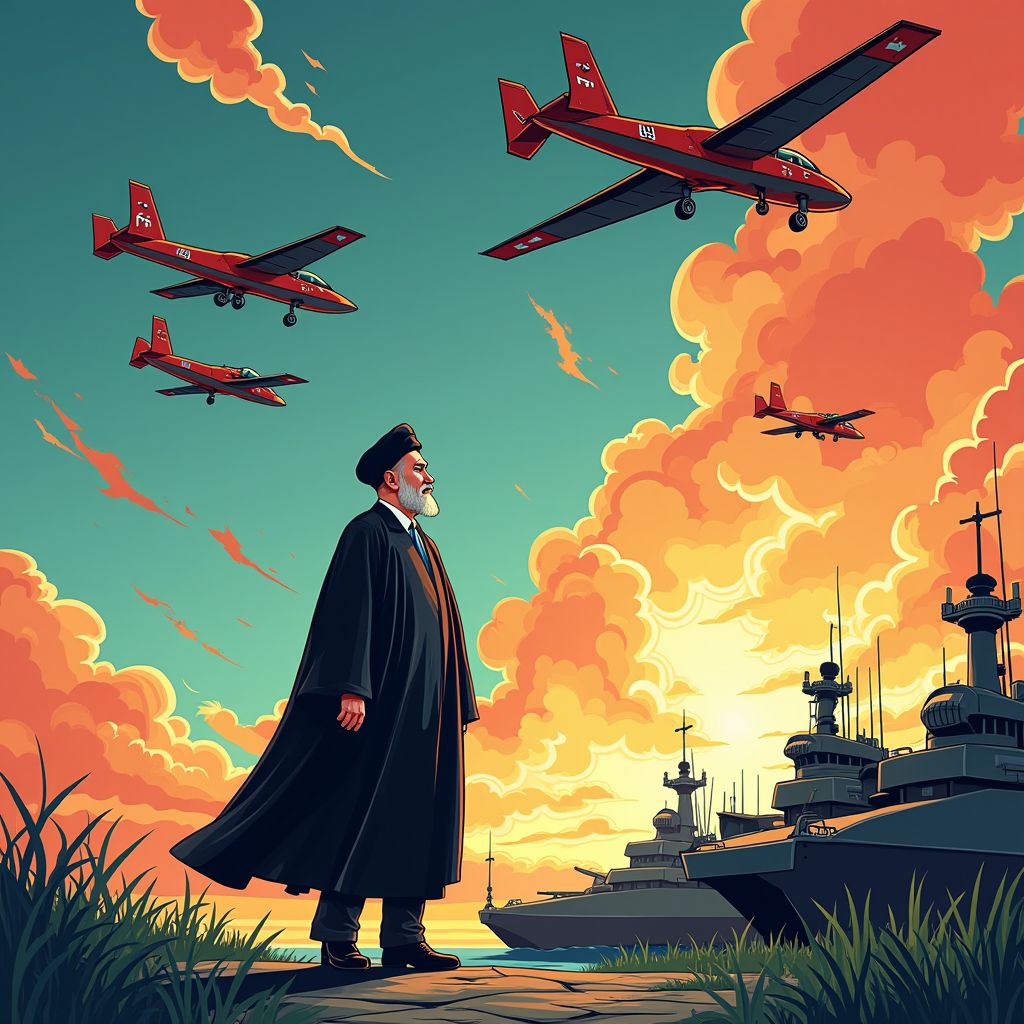
Teheran, maandag, 2 maart 2026.
The death of Iran’s Supreme Leader Ali Khamenei in a U.S.-Israeli airstrike marks a turning point. Moscow offered only diplomatic condolences, no military action. This echoes past inaction during crises in Syria, Venezuela, and earlier Iranian conflicts. Despite a 2025 strategic partnership, Russia avoids mutual defense commitments. Tehran provides drones for Ukraine war; Moscow supplies technology. Yet no joint defense exists. Analysts see a pattern: Putin’s Russia lacks capacity to protect allies. The Kremlin focuses on its own priorities. Recent seizures of Russian shadow fleet tankers by Belgium and France show growing Western pressure. A strong reaction from Moscow is absent. This passive stance weakens Russia’s global standing. It signals limited power projection in the Middle East. The shift impacts regional balance and European security. Iran now stands isolated despite years of cooperation with Moscow.
russia’s silence speaks volumes as iran faces attacks
The death of Iran’s supreme leader Ali Khamenei in a U.S.-Israeli airstrike on February 28, 2026 marks a critical juncture in Middle Eastern geopolitics [1]. Russian president Vladimir Poetin issued a written condemnation calling the attack a ‘cynical murder’ violating international norms, but stopped short of military intervention [2][3]. This restrained response aligns with previous non-action during crises in Syria and Venezuela [1]. Despite close political and economic ties, no formal mutual defense agreement binds Moscow and Tehran [1].
pattern of strategic restraint emerges
Moscow’s reliance on diplomatic statements rather than tangible support underscores a broader inability to project power beyond its immediate sphere [1]. When Iran faced Israeli strikes in 2024 and American attacks on nuclear facilities in June 2025, Russia remained inactive [1]. Even amid escalating tensions following Khamenei’s assassination, Kremlin spokesperson Dmitri Peskov confirmed ongoing talks without committing to action [1]. Analysts interpret this as evidence of Russia’s overstretched resources and selective prioritization [1]. Political scientist Isolde Van den Eynde notes that Poetin’s promises often exceed Moscow’s capabilities [1].
asymmetric alliance under strain
Tehran has supplied thousands of Shahed drones to Russia for use in Ukraine since 2022, receiving advanced aerospace and missile technologies in return [1]. Both nations also collaborate through a ‘shadow fleet’ to bypass Western sanctions on energy exports [1]. However, the absence of reciprocal defense obligations exposes vulnerabilities in their partnership [1]. While Iran aids Russian warfare abroad, Moscow refrains from defending Iranian sovereignty [1]. This imbalance raises questions about the durability of their alignment, particularly as Europe intensifies operations against sanctioned shipping [4].
western pressure mounts on russian logistics
Recent actions highlight increasing Western resolve to disrupt Russian supply chains. On March 1, 2026, Belgian special forces boarded a vessel belonging to Russia’s shadow fleet off the coast of North Africa, backed by French aerial surveillance [4]. Defense minister Theo Francken stated the operation aimed to cripple funding for Moscow’s war efforts in Ukraine [4]. He acknowledged potential retaliation but emphasized continued vigilance [4]. Such bold interdictions test Russia’s willingness to respond militarily—so far, Moscow has confined itself to verbal protests [4].
regional realignment and european implications
With Russia declining direct involvement, Iran appears increasingly isolated in confronting U.S. and Israeli military superiority [1]. The erosion of trust in Moscow as a reliable partner could prompt Tehran to recalibrate its foreign policy posture [1]. For European security, shifting alliances in the Middle East influence energy stability and migration flows [GPT]. Any escalation risks drawing external powers deeper into regional instability [GPT]. As noted by analyst Julian G. Waller, diminished Russian credibility may deliver a ‘fatal blow to Moscow’s influence in Europe’ [1].