inside iran's power shift: the man stepping in after khamenei
Teheran, zondag, 1 maart 2026.
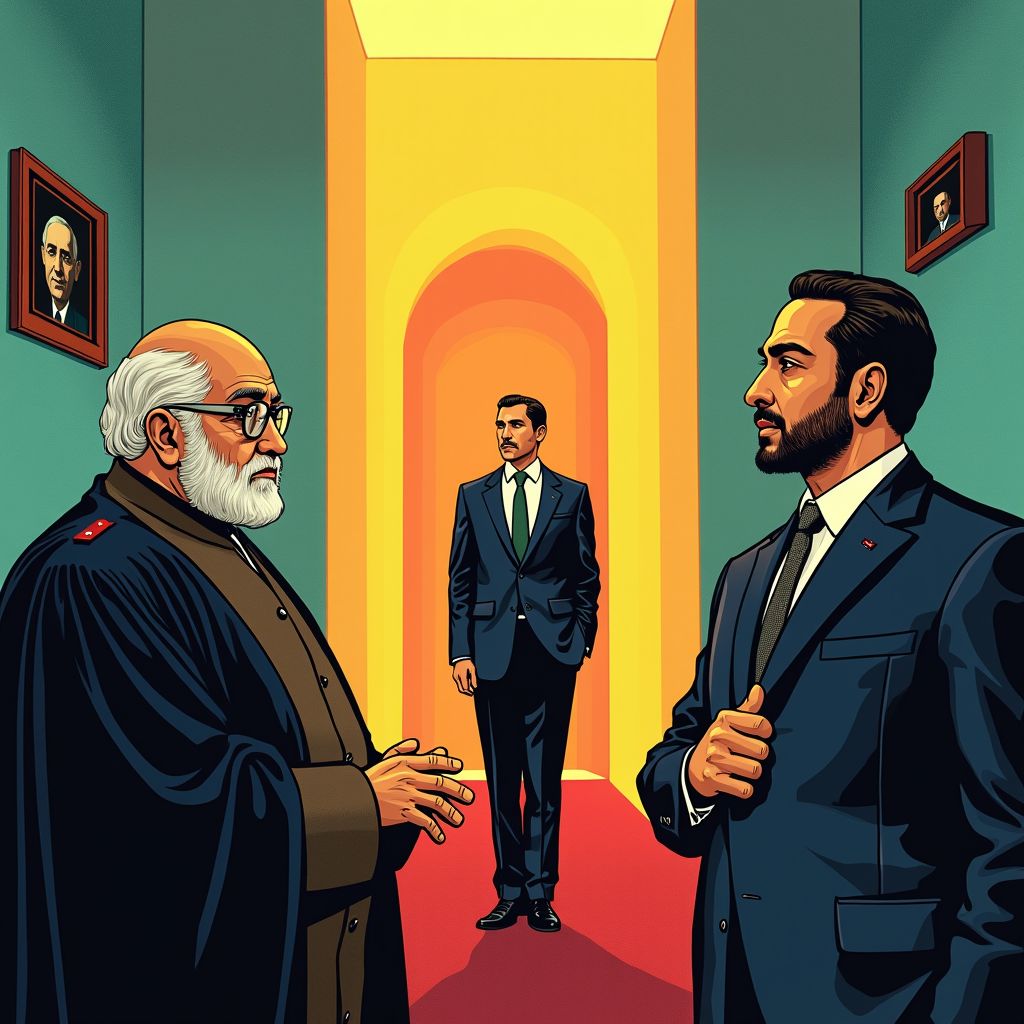
Alireza Arafi is the new face of Iran’s temporary leadership, stepping forward after the sudden death of Supreme Leader Ayatollah Ali Khamenei. At 66, Arafi joins president Masoud Pezeshkian and judiciary chief Gholam-Hossein Mohseni Ejei in a three-member council guiding the country through crisis. This move activates Article 111 of Iran’s constitution, ensuring immediate governance continuity. Arafi is no outsider—he chairs the Guardian Council, advises on candidate eligibility, and leads the Assembly of Experts. Known for backing ai in spreading ideological messages, he speaks fluent english and arabic, positioning him uniquely in global clerical circles. His close ties to Khamenei suggest policy stability despite regional tensions. With Iran facing external attacks and internal uncertainty, Arafi’s role may shape the nation’s direction longer than expected. The world watches as one of Tehran’s most connected clerics takes the helm in turbulent times.
power vacuum filled in iran after khamenei’s death
Iran entered a new era on March 1, 2026, following the confirmation of Supreme Leader Ayatollah Ali Khamenei’s death after Israeli-US airstrikes on Tehran [1]. The constitutional mechanism under Article 111 immediately activated, establishing a temporary ruling council [2]. This tripartite body comprises President Masoud Pezeshkian, Judiciary Chief Gholam-Hossein Mohseni Ejei, and cleric Ayatollah Alireza Arafi [3]. Their mandate is to govern until the Assembly of Experts selects a permanent successor, a process that could take weeks or months [4].
profile of a rising cleric: alireza arafi
At 66 years old, Ayatollah Alireza Arafi is a seasoned figure within Iran’s clerical establishment [1]. He currently serves as head of Iran’s national Islamic Seminary system and holds membership in both the powerful Guardian Council and the Assembly of Experts [3]. Appointed by Khamenei to the Guardian Council in 2019, Arafi played a central role in vetting political candidates [1]. His reputation as a loyalist makes him a stabilizing choice during a moment of national vulnerability [3].
global connections and technological vision
Unlike some traditional clerics, Arafi is fluent in Arabic and English, enhancing his ability to communicate beyond Iran’s borders [3]. In 2022, he represented Iran in diplomatic talks with Pope Francis at the Vatican, highlighting his international stature [4]. Arafi has also advocated for modern tools in ideological outreach, promoting the use of artificial intelligence to expand the influence of Shia Islam worldwide [3]. This blend of tradition and innovation marks him as a ‘modern hardliner’ within the regime [2].
balancing act amid regional instability
Arafi assumes leadership amidst heightened regional tensions and economic strain [5]. Markets reacted sharply to Khamenei’s death, with Bitcoin surging past $68,000 as investors priced in potential volatility [5]. Iran accounts for roughly one-third of global crude oil exports, making domestic stability crucial for energy markets [5]. While the interim council aims to prevent drastic shifts, public sentiment remains uncertain amid ongoing conflict and speculation about the future of theocratic rule [6].
controversial legacy and internal challenges
Arafi’s tenure includes controversial statements, such as his 2022 remark during the Mahsa Amini protests suggesting dissent against clerics would be fatal [4]. Canada sanctioned him that same year over these comments [4]. Domestically, figures like Mojtaba Khamenei were once seen as successors but lack sufficient clerical support [6]. The Assembly of Experts faces pressure to choose a leader acceptable to both the Revolutionary Guard and reform-minded factions, complicating the transition [6].
Bronnen
- www.nrc.nl
- www.metronieuws.nl
- www.wionews.com
- www.hindustantimes.com
- www.coindesk.com
- www.volkskrant.nl