china blocks meta's $2 billion ai takeover in global power move
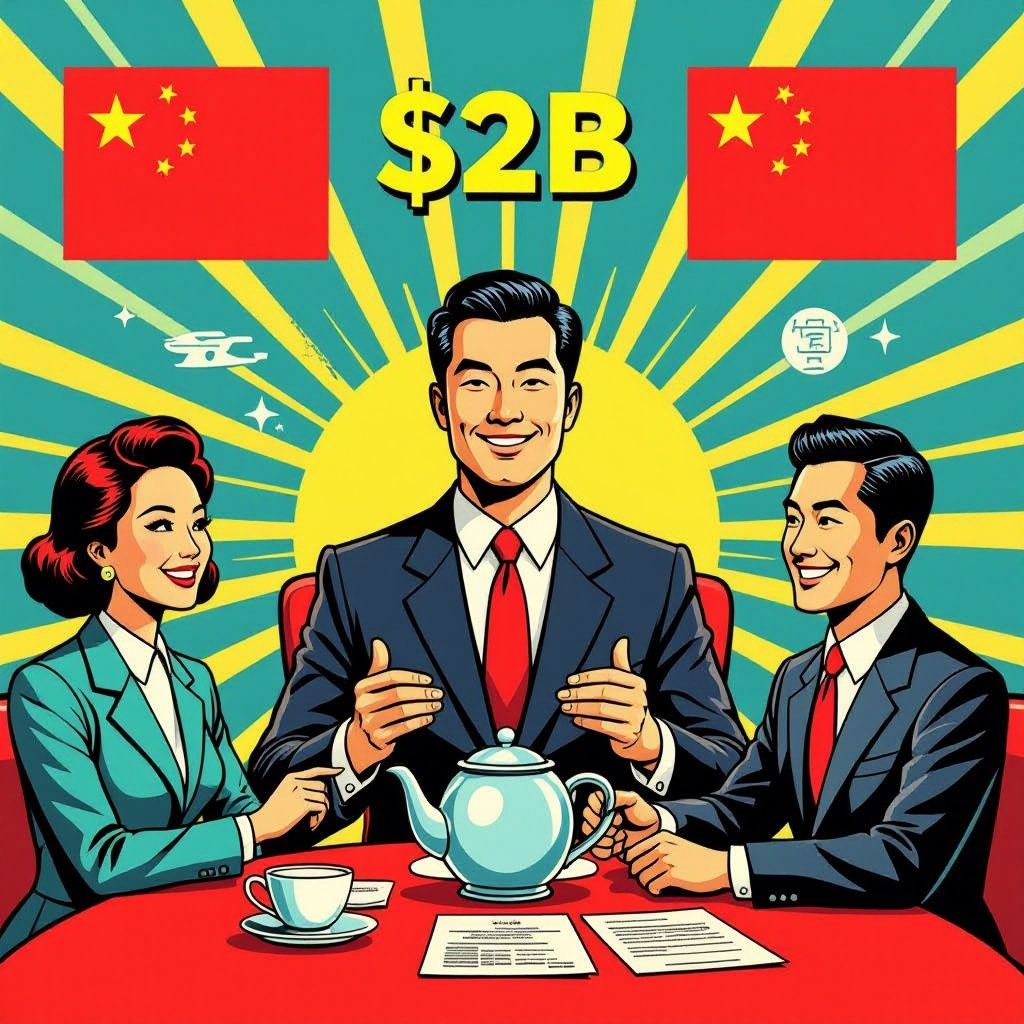
Peking, maandag, 27 april 2026.
china has halted meta’s planned $2 billion acquisition of ai-startup manus, citing national security concerns. the decision marks a sharp escalation in control over advanced ai technologies. manus, founded just months ago by chinese programmer xiao hong, developed powerful ai agents capable of executing complex tasks independently. though the company moved its headquarters to singapore, china asserts authority over its technology and founders. both hong and his co-founder are now under travel restrictions. the block suggests china is drawing a line against foreign ownership of critical ai, mirroring us export controls. this move could reshape international tech deals and intensify us-china rivalry in artificial intelligence. the outcome remains uncertain.
china blocks meta’s $2 billion ai takeover in global power move
China has blocked Meta’s $2 billion acquisition of AI startup Manus, citing national security concerns [1]. The decision was confirmed by Chinese authorities on April 27, 2026, marking a significant intervention in international tech transactions [2]. Although Manus relocated its headquarters from Beijing to Singapore in July 2025, China maintains jurisdiction over its technology and founders due to national regulations on sensitive sectors [3][4]. The move underscores growing geopolitical friction over control of emerging technologies.
manus and the rise of autonomous ai agents
Manus, founded fewer than 15 months ago by Chinese programmer Xiao Hong, specializes in AI agents capable of performing independent tasks such as scheduling trips, analyzing financial markets, and reviewing job applications [5]. Within eight months, the company achieved over $100 million in revenue, attracting Meta’s interest [6]. The integration of Manus’ technology into Facebook, Instagram, and WhatsApp had already begun by March 2026, indicating early stages of operational merger prior to regulatory pushback [7].
regulatory roadblocks and geopolitical signals
The National Development and Reform Commission (NDRC) led the review, citing potential risks related to technology transfer and foreign ownership of critical AI systems [8]. Despite Meta stating the deal “complied fully with applicable law,” Chinese regulators emphasized that outbound investments and cross-border acquisitions must align with domestic legislation [9]. Analysts interpret this as a strategic assertion of sovereignty over deep-tech assets, mirroring U.S. export controls and investment screening mechanisms targeting Chinese firms [10].
founders restricted as legal limbo continues
Both Xiao Hong and the co-founder remain subject to travel bans, prohibiting them from leaving China until further notice [11]. Legal experts note that even relocating corporate registration abroad does not absolve Chinese startups of state oversight when foundational research or personnel originate domestically [12]. With no official reaction yet from either Meta or Manus leadership, uncertainty looms over the company’s operational continuity and intellectual property rights under current sanctions [13].
broader implications for u.s.-china tech relations
This decision arrives weeks ahead of a scheduled diplomatic meeting between U.S. President Donald Trump and Chinese leader Xi Jinping in May 2026, amplifying its symbolic weight [14]. Experts suggest it reflects a recalibration of how nations treat AI infrastructure—as matters of national defense rather than commercial enterprise [15]. As both powers tighten controls on dual-use technologies, similar standoffs may increasingly disrupt global innovation pipelines and force multinationals to navigate fragmented regulatory landscapes [16].
Bronnen
- nos.nl
- www.rtl.nl
- www.bnr.nl
- www.tijd.be
- nl.marketscreener.com
- nos.nl
- www.npr.org
- financialtimes.com
- www.bbc.com
- techcrunch.com
- reuters.com
- theverge.com
- bloomberg.com
- politico.eu
- wired.com
- diplomat.com