gaswinning stijgt in beschermd gebied maar kostprijs is hoog
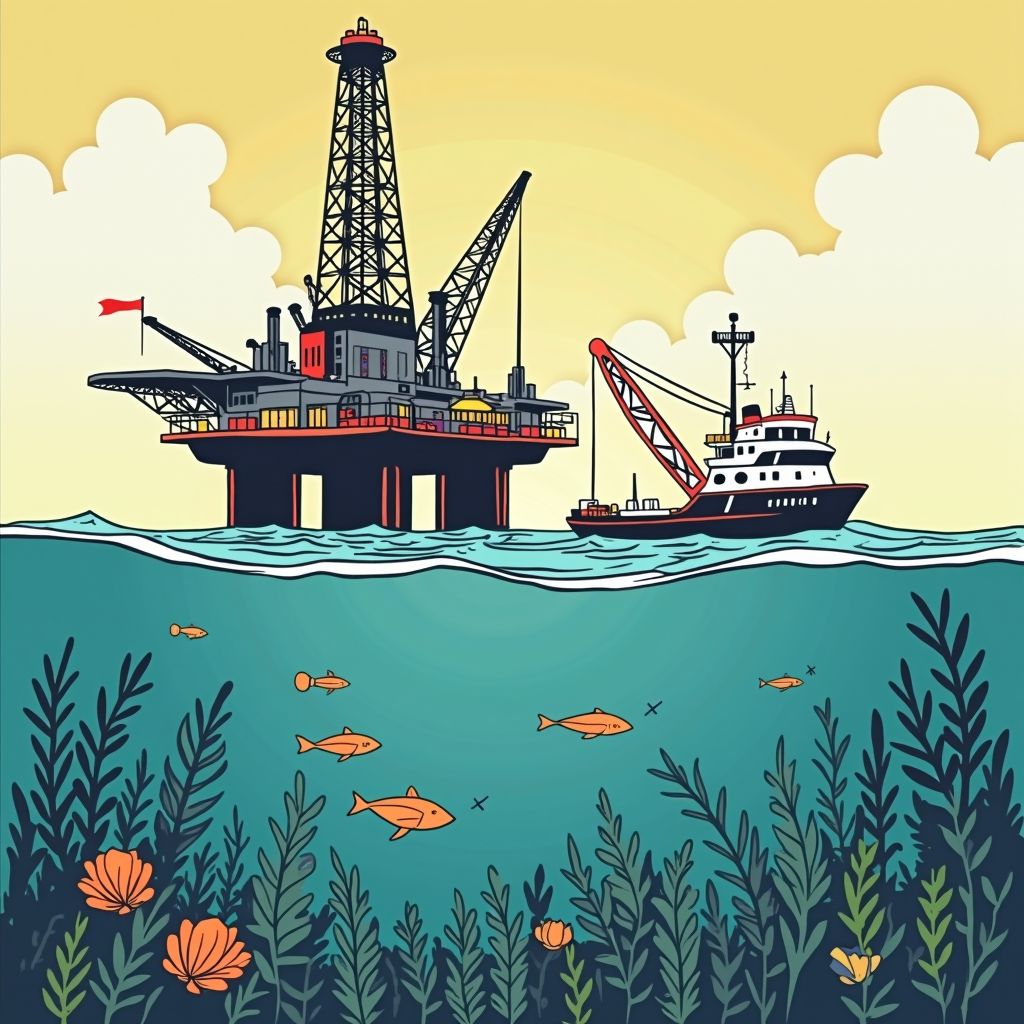
Noordzee, maandag, 6 april 2026.
het Nederlandse energiebedrijf one-dyas pompt meer aardgas uit de noordzee. sinds begin april draait een tweede put op het platform n05-a. de jaarmileu veroortzaakt een miljard kubieke meter gas. dat is goed voor 7 procent van de nederlandse vraag. het platform ligt vlakbij het wadden, in een beschermd marien gebied. milieuorganisaties maken zich zorgen over de ecologie. de nieuwe winning is bovendien afhankelijk van hoge gasprijzen. zonder die prijzen loopt het project financieel geen stand. tegelijk profiteert de schatkist van elk winstpercentage. 70 tot 80 procent van de opbrengst gaat naar de overheid. het project belooft energiezekerheid, maar steekt in een dilemma tussen economie en natuur.
netherlands sees increased gas output in north sea
The Dutch energy company ONE-Dyas has expanded gas production from its N05-A platform in the North Sea. A second production well became operational in early April 2026, increasing annual output to approximately 1 billion cubic meters of natural gas [1]. The platform is located about 20 kilometers north of Schiermonnikoog, placing it near the Wadden Sea, a protected marine ecosystem [2]. This expansion raises concerns among environmental groups regarding potential harm to local biodiversity [3].
economic reliance on high gas prices
The financial feasibility of the project depends heavily on elevated European gas prices. Current TTF benchmark prices stand at around €50 per megawatt-hour, which is 10.4 higher than early 2025 levels [3]. Sustained high prices are essential for profitability amid global LNG competition and fluctuating storage demands [3]. Without such pricing conditions, the project would struggle financially despite its contribution to regional energy security [3]. Market stability remains uncertain due to geopolitical risks, including tensions involving Iran and the Strait of Hormuz [3].
environmental concerns in sensitive waters
Environmental organizations have voiced alarm over hydrocarbon extraction activities in protected zones like those surrounding the Wadden Sea [2]. Although the offshore facility uses wind power for operations—resulting in nearly zero direct emissions—the broader ecological footprint remains debated [3]. Critics highlight risks associated with underwater noise, accidental spills, and disruption to marine species migration patterns [2]. Despite rigorous permitting processes confirming negligible seismic risk, ongoing scrutiny persists from conservation advocates monitoring impacts on vulnerable habitats [2].
energy security versus nature protection
This development aligns with national efforts to reduce dependency on imported fossil fuels [2]. According to ONE-Dyas, domestically sourced gas helps bolster energy resilience following the reduction of Russian pipeline deliveries since 2022 [1]. The additional billion cubic meters covers roughly 7% of annual Dutch demand and supports grid flexibility during peak periods [3]. However, balancing climate goals and habitat preservation against short-term energy needs creates policy tension [2]. Officials stress adherence to EU environmental regulations even as they support limited exploitation of small indigenous fields [1].
government benefits from resource revenue
Public finances gain significantly from the increased production. Between 70% and 80% of the company’s profits are directed to the state treasury through taxes and royalties [2]. This fiscal arrangement strengthens public budgets without expanding sovereign borrowing [2]. While inflation-adjusted returns depend on volatile commodity markets, sustained output enhances medium-term revenue predictability [3]. Such income streams may fund renewable transitions elsewhere, though critics argue subsidies should favor non-extractive sectors aligned with decarbonization mandates [GPT].