eu parliament unveils ambitious budget stance amid tough talks
Brussel, maandag, 27 april 2026.
the european parliament is taking a firm stand on the next long-term budget, pushing for significantly higher spending. lawmakers support a plan that would boost the mff by 55% compared to current levels. this sharp rise targets key areas like climate action, security, and innovation—priorities vital for europe’s future. the move puts pressure on member states deeply divided over costs. with frugal nations resisting hikes, the path to agreement looks rocky. the parliament’s position gives it strong leverage, though final approval rests with national governments. a critical step unfolds tuesday when leadership reveals its strategy after the internal vote. the debate over how much to spend, and where, is now fully ignited.
parliament prepares to unveil budget stance
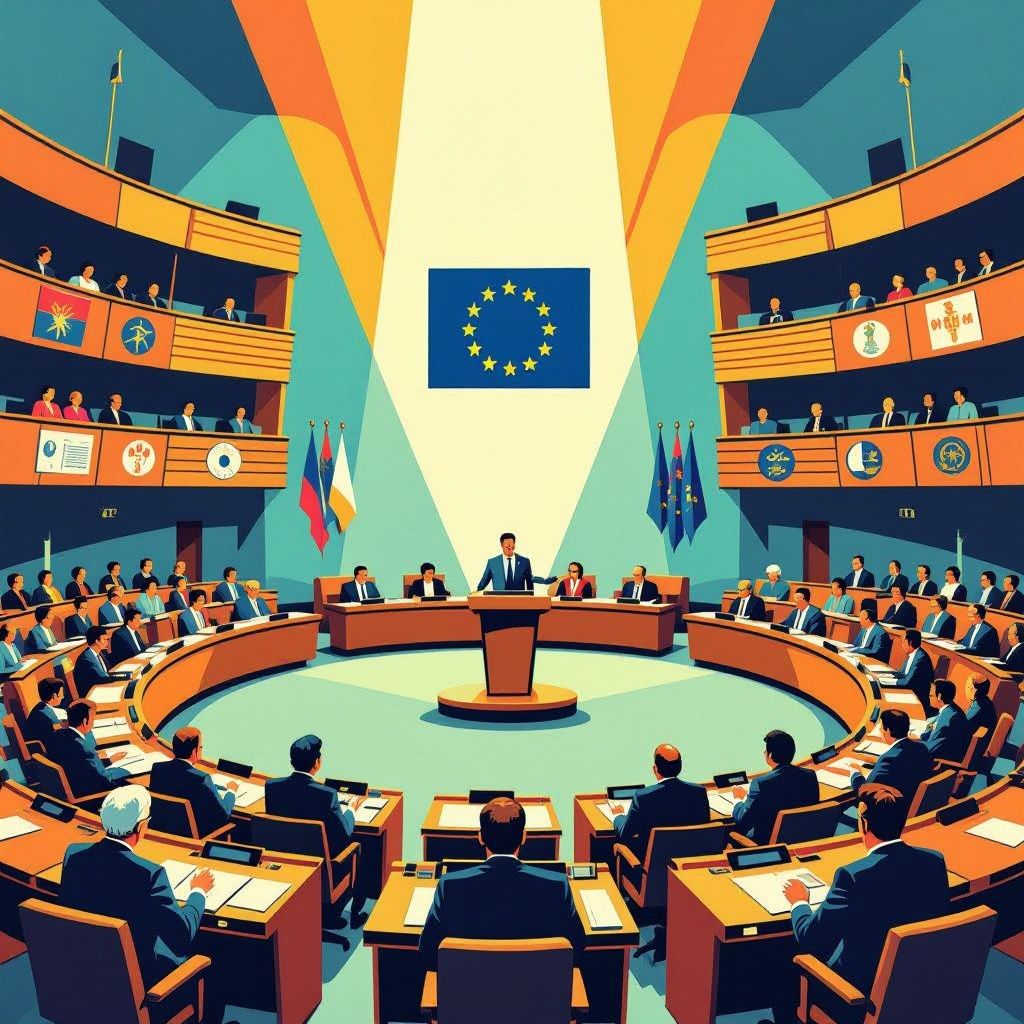
On Tuesday, 28 April 2026, the European Parliament will hold a press conference in Strasbourg to announce its official negotiating position on the 2028–2034 Multiannual Financial Framework (MFF) [1]. The event follows a crucial plenary vote on the interim report outlining the Parliament’s budget demands [1]. President Roberta Metsola and co-rapporteurs Siegfried Mureşan and Carla Tavares will brief journalists at 14:00 CET [1]. The press conference will be streamed live, offering interpretation in six languages [1]. This marks a pivotal moment in shaping the EU’s long-term finances.
ambitious spending plans meet fiscal reality
The European Parliament proposes an MFF of €1,931.8 billion in 2025 prices, a 55% increase over the current MFF [3]. This represents a 10% increase over the European Commission’s already elevated proposal of €1,763.0 billion [3]. The Parliament’s plan translates to 1.38% of EU Gross National Income (GNI), including €149.3 billion for NextGenerationEU repayment [3]. While the Parliament advocates for robust funding, it simultaneously resists raising national contributions [4]. This creates tension, as the proposed spending exceeds readily available revenue streams [4].
member states divided over budget size
EU leaders remain deeply split on the MFF’s scope and funding. At an informal summit in Cyprus on 23–24 April 2026, leaders acknowledged the difficulty of reaching consensus [2]. Prime Minister Rob Jetten of the Netherlands leads a coalition of fiscally cautious states opposing the Commission’s €1.8 trillion proposal [2]. Known as the ‘frugal’ group, members include Denmark, Sweden, Finland, Ireland, Austria, and Germany [2]. Italian Prime Minister Giorgia Meloni described negotiations as “extremely difficult” and stated agreement is “difficult to foresee” [2]. Disagreements center on spending priorities and new revenue mechanisms.
clashing priorities shape the negotiation landscape
National priorities clash sharply in the budget talks. Italy insists on protecting cohesion funds and the Common Agricultural Policy (CAP), criticizing their current insufficiency and distribution [2]. Prime Minister Meloni also opposes a planned €800 million renovation of the European Council headquarters [2]. Eastern member states like Poland and Latvia prioritize defense spending due to proximity to Russia [2]. Meanwhile, the Parliament champions investments in competitiveness, artificial intelligence, and energy [5]. Finding compromise among these competing interests remains a daunting challenge for the upcoming negotiations.
path forward hinges on new revenue models
With spending ambitions exceeding current income, the EU must develop new own resources to finance its goals [5]. Proposed solutions include expanding the Emissions Trading System (ETS) to cover buildings and transport, implementing a Carbon Border Adjustment Mechanism (CBAM), and introducing a corporate levy (CORE) [5]. The Renew Europe group emphasizes that “No EU revenues, no EU budget” [5]. However, establishing new taxes requires unanimous approval from all member states, a significant hurdle [5]. Without consensus on funding, even politically approved budgets risk paralysis, extending current spending limits indefinitely [3].