spanje zet voet dwars bij druk van trump over iran-basen
Madrid, woensdag, 4 maart 2026.
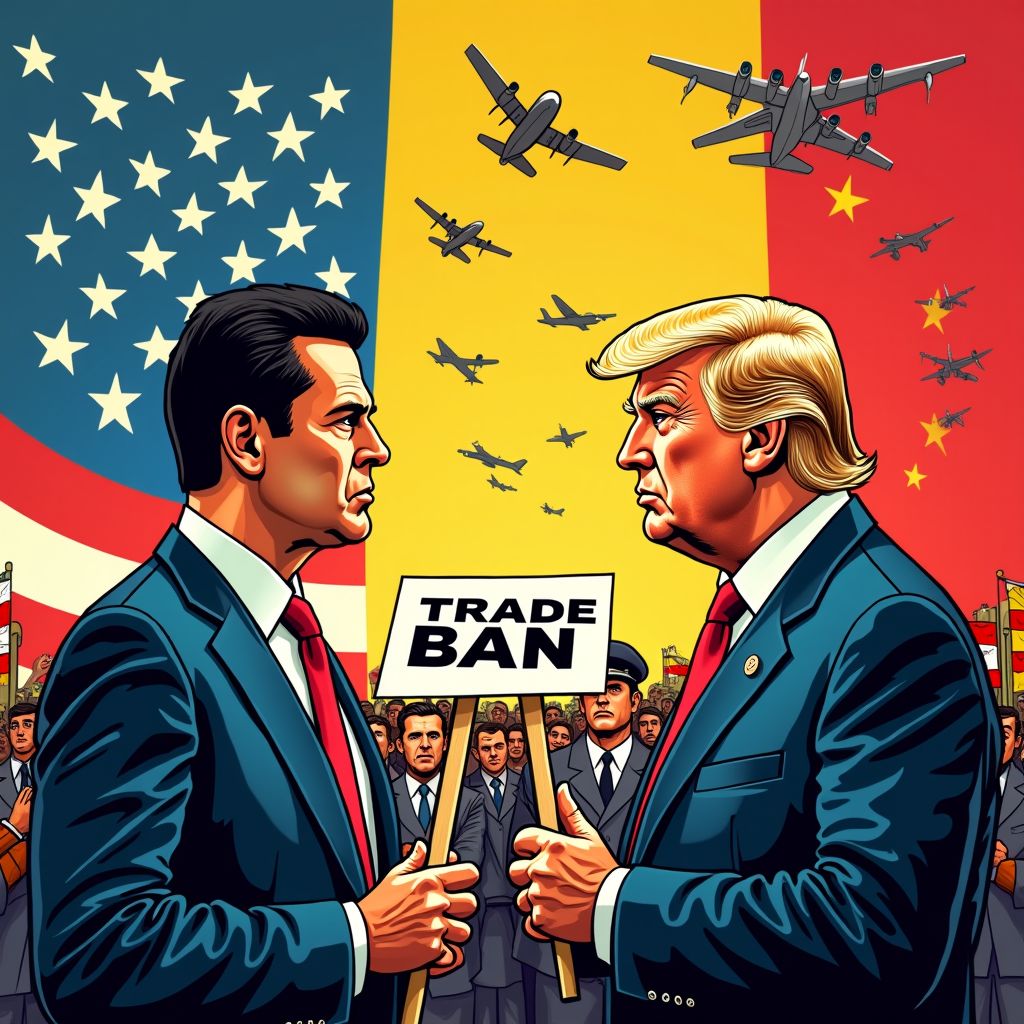
De relatie tussen spanje en de vs staat onder grote spanning. Premier pedro sánchez weigert amerikaanse bases in spanje te laten gebruiken voor operaties tegen iran. Dat trok een harde reactie uit van president donald trump. Hij dreigt nu met een volledig handelsverbod. Spanje noemt zijn keuze een kwestie van principes. Het land wil niet meedoen aan wat het beschouwt als een illegale oorlog. Internationale diplomaten zijn alarmerend over de escalatie. Zelfs binnen spanje is er verdeeldheid over de koers. Maar madrid laat zich niet intimideren. De eu steunt spanje openlijk. Volgens sánchez mag angst niet bepalen waar een natie staat.
spain stands firm amid us trade threats over iran conflict
Spain has defiantly maintained its position against participating in US-led military actions targeting Iran, despite escalating pressure from former US President Donald Trump. Following Spain’s refusal to grant access to its military bases in Rota and Morón for offensive operations, Trump issued threats to cut all trade with Madrid [1]. Prime Minister Pedro Sánchez dismissed these warnings, asserting Spain’s sovereign right to oppose what he described as an illegal war [2]. The standoff has intensified transatlantic tensions during a volatile phase in Middle Eastern geopolitics [3].
sánchez denounces threats as reckless escalation
In a nationally televised address from La Moncloa on March 4, 2026, Pedro Sánchez condemned Trump’s rhetoric as dangerously destabilizing [4]. He warned that responding to one illegality with another risks triggering broader catastrophes, echoing historical precedents such as the 2003 Iraq War [5]. Sánchez characterized the conflict as playing “Russian roulette with the destiny of millions” [6]. His remarks underscored Spain’s consistent stance across multiple conflicts—opposing military solutions lacking international legitimacy [7]. The prime minister insisted that fear of economic reprisals would not dictate national policy [8].
eu backs spain in face of unilateral trade threats
The European Union has publicly rallied behind Spain following Trump’s announcement of potential trade sanctions [9]. European Council President António Costa affirmed that any threat to one member state constitutes a threat to all [10]. EU Internal Market Commissioner Stéphane Séjourné reinforced this stance, drawing parallels to previous aggressive posturing over Greenland [11]. Spokesperson Olof Gill confirmed the bloc’s readiness to activate its common commercial policy in defense of member states [12]. Such unified support strengthens Spain’s negotiating position amid external pressures [13].
domestic debate intensifies over foreign policy stance
While the governing coalition stands united behind Sánchez’s ‘no to war’ doctrine, domestic opposition voices criticize the move as economically perilous [14]. Conservative party leader Alberto Núñez Feijóo claimed Spain is now “less safe, less stable” due to the confrontation [15]. Far-right group Vox went further, blaming Sánchez himself as the principal threat to national stability [16]. In contrast, junior coalition partner Sumar voiced strong approval, declaring pride in defending European values [17]. Even some local officials, including Madrid’s mayor, dismissed the stance as politically motivated nonsense [18].
economic safeguards under review as markets react
Spanish ministers are evaluating emergency measures to cushion potential economic shocks stemming from disrupted trade flows [19]. Finance Minister María Jesús Montero confirmed preparations for palliative policies affecting households and small enterprises [20]. Despite initial jitters, financial markets showed resilience, with the Ibex 35 index gaining 1.6% on March 4 [21]. Officials cite lessons from past crises, particularly the aftermath of the Iraq War, which led to prolonged insecurity and migration surges [22]. Energy supply disruptions remain a concern, especially given the strategic importance of the Strait of Hormuz, through which 20% of global oil passes [23].
diplomatic coordination expands amid regional fallout
Madrid is actively coordinating with regional and European partners to manage the humanitarian and logistical impacts of ongoing hostilities [24]. The government has initiated evacuation protocols for Spanish nationals in affected Middle Eastern territories [25]. These efforts rely on both diplomatic channels and military assets stationed abroad [26]. Spain continues to call for an immediate ceasefire and renewed diplomatic engagement involving all parties [27]. While condemning Iran’s internal repression, particularly against women, authorities stress that violence is not the path to resolution [28].
Bronnen
- www.theguardian.com
- www.cnbc.com
- www.theguardian.com
- www.independent.co.uk
- www.lamoncloa.gob.es
- www.infobae.com
- www.elconfidencial.com
- www.rtve.es