half a million unaware: the hidden rise of type 2 diabetes in the netherlands
Utrecht, dinsdag, 10 februari 2026.
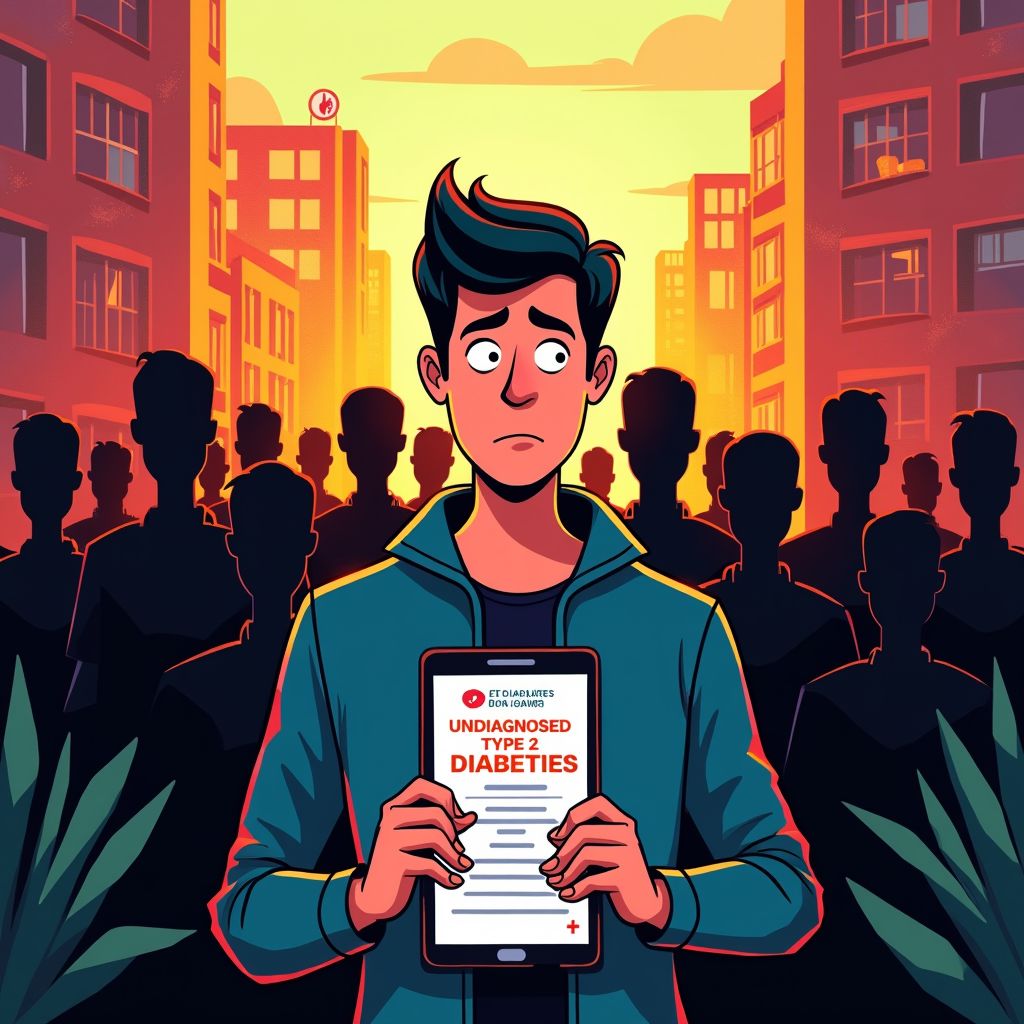
Around 400,000 adults in the Netherlands have type 2 diabetes without knowing it. This hidden group makes up one in three people with the condition. Early symptoms are often vague—increased thirst, fatigue, frequent urination—and easily overlooked. Many don’t seek medical help until serious damage occurs. Untreated, the disease can lead to irreversible harm: heart and vascular disease, vision loss, kidney failure, or dementia. Recent research from the Dutch Cohort Consortium tracked over 200,000 people to map this silent epidemic. The Diabetes Fund warns timely detection can prevent complications. They urge those with risk factors—like obesity, family history, or sedentary lifestyle—to take a quick online risk test and consult their doctor before symptoms appear.
one in three remains undiagnosed
An estimated 400,000 adults in the Netherlands live with undiagnosed type 2 diabetes, according to new research commissioned by the Diabetes Fonds [1]. This means one in three people affected by the condition remain unaware of their diagnosis [2]. The findings mark the first time this hidden population has been accurately mapped using large-scale cohort data [3]. Researchers analyzed health records of over 216,000 individuals across long-term studies conducted by seven universities, university medical centers, and the RIVM [4].
silent progression threatens public health
Type 2 diabetes develops gradually, often without noticeable symptoms, earning it the label ‘silent killer’ [1]. Common early signs such as increased thirst, fatigue, frequent urination, and blurred vision are frequently dismissed or attributed to other causes [5]. Because these signals are subtle, many delay visiting a doctor until irreversible organ damage has occurred [6]. Without treatment, elevated blood sugar levels progressively harm nerves, eyes, kidneys, and cardiovascular systems [7].
complications become inevitable without intervention
More than half of all patients with type 2 diabetes eventually develop severe health problems due to delayed care [1]. Complications include permanent nerve damage, blindness, kidney failure, dementia, and life-threatening heart or vascular diseases [8]. According to Diena Halbertsma, director of the Diabetes Fonds, much of this suffering is preventable through earlier detection [9]. Once diagnosed, lifestyle changes and medication can effectively manage blood glucose and reduce complication risks significantly [10].
disparities emerge along socioeconomic lines
People with lower educational attainment face a higher risk of developing type 2 diabetes, research shows [11]. However, participants in major cohort studies tend to be more health-conscious and better educated than average, potentially skewing initial results [12]. To address this bias, researchers adjusted their findings using official statistics from Statistics Netherlands (CBS) on education level, age, and gender distribution [13]. Despite corrections, experts agree the scale of underdiagnosis represents a national healthcare crisis [14].
call for action intensifies prevention efforts
The Diabetes Fonds urges the government to expand preventive measures and invest in nationwide screening programs [1]. They advocate for accessible risk assessments, particularly among high-risk groups including those who are overweight, physically inactive, or have a family history of diabetes [15]. An online risk test developed by the foundation helps identify candidates needing further clinical evaluation [16]. “Early detection saves lives,” emphasizes Halbertsma, calling for stronger policies supporting healthier living environments across communities [17].
Bronnen
- nos.nl
- nos.nl
- www.ad.nl
- www.rtlnieuws.nl
- www.nu.nl
- www.rd.nl
- www.nu.nl
- www.ad.nl
- nos.nl
- www.rd.nl
- www.rtlnieuws.nl
- www.rd.nl
- www.rtlnieuws.nl
- nos.nl
- www.nu.nl
- www.diabetesfonds.nl
- www.ad.nl