massive russian strike knocks out ukraine's power grid amid freezing temperatures
Kiev, zondag, 8 februari 2026.
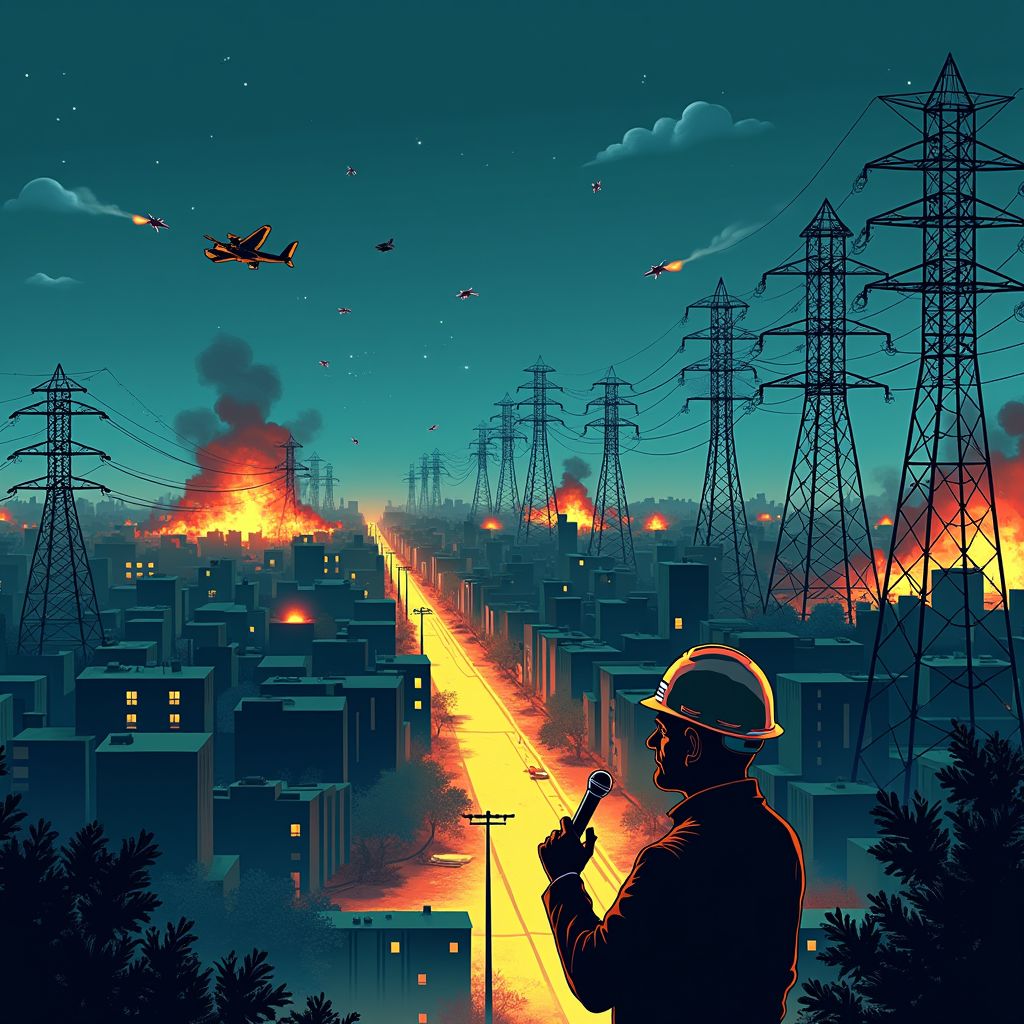
a massive russian missile and drone assault on 7 february 2026 severely damaged ukraine’s energy infrastructure. the coordinated attack targeted thermal plants, high-voltage lines, and even affected nuclear facilities. ukraine’s state grid operator ukrenergo responded with emergency nationwide power cuts, plunging much of the country into darkness during harsh winter conditions. kyiv residents faced just 1.5 to 2 hours of electricity daily. president zelensky condemned the strikes as unprecedented terror tactics, accusing moscow of weaponizing the cold against civilians. he urgently appealed for western air defense support, including patriot and nasams systems. dtek confirmed significant damage to power generation, compounding months of relentless attacks on critical energy assets. engineers stand ready to repair the grid but remain constrained by ongoing threats. the international criminal court is already investigating similar past strikes as potential war crimes. direct losses to ukraine’s energy sector now exceed $20 billion.
russian assault targets critical energy nodes
On the morning of 7 February 2026, Russia launched a large-scale combined missile and drone attack targeting Ukraine’s energy infrastructure [1]. The assault involved 13 cruise missiles and 21 Shahed-type drones, striking across multiple regions [1]. Key targets included thermal power stations in Burshtyn and Dobrotvir, high-voltage transmission lines operating at 750 kV and 330 kV, and substations crucial to national grid stability [1]. The Ukrainian Air Force intercepted several projectiles, but many reached their intended energy facilities [1]. Damage reports confirm substantial harm to both power generation and transmission capabilities [1].
nationwide blackouts triggered by systemic damage
In immediate response to the physical destruction, Ukrenergo implemented emergency power rationing measures across all regions of Ukraine [2]. The organization cited “significant losses of available capacity” caused by the destruction and damage of generation, transmission, and distribution assets [3]. As a preventive measure to avoid total grid collapse, authorities enacted rolling blackouts without prior notice [4]. Most areas were subjected to 4.5 to 5 stages of scheduled outages [4]. Residents in eastern and northern oblasts faced additional restrictions beyond the standard rotation [1]. The scale of disruption left millions without reliable access to heating or lighting during sub-zero temperatures [1][3].
kyiv residents face extreme power shortages
The capital city, Kyiv, was among the hardest hit by the imposed energy restrictions. Local utility provider DTEK announced that citizens could expect only 1.5 to 2 hours of electricity supply per day [1]. This severe limitation impacted basic living conditions, especially regarding heating and communication services. Hospitals and critical infrastructure operated on backup generators where available [1]. Civilian hardship intensified due to the timing of the attack, which coincided with a period of exceptionally cold winter weather across Eastern Europe [1]. The deliberate targeting of civilian energy supplies raised serious concerns under international humanitarian law [1][5].
zelensky condemns weaponization of winter
President Volodymyr Zelensky publicly denounced the attacks, calling them acts of terrorism designed to exploit seasonal vulnerabilities [1]. He stated that Moscow prioritizes terrorizing civilians during the coldest days over diplomatic solutions [5]. Zelensky issued an urgent appeal for increased Western military assistance, specifically requesting more Patriot and NASAMS air defense systems to counter future aerial assaults [1]. “Moscow must be deprived of the ability to pressure Ukraine with cold weather,” he emphasized [1]. His remarks underscored the strategic nature of attacks aimed at undermining public resilience through environmental manipulation [5].
cumulative toll exceeds twenty billion dollars
Direct financial damages to Ukraine’s energy sector from sustained Russian attacks have surpassed $20 billion USD [5]. This figure, jointly assessed by the United Nations, World Bank, and European Commission, reflects widespread structural degradation [5]. Since the beginning of the invasion, this marked the 220th recorded attack on thermal power facilities alone [1]. Engineers remain prepared to initiate repairs immediately when security conditions allow [1]. However, repeated offensives severely hamper reconstruction efforts. Legal experts note the ICC has previously issued arrest warrants related to such attacks, citing reasonable grounds to believe they constitute intentional strikes on civilian objects [5].