netherlands sits on near-empty gas reserves while europe watches
Den Haag, maandag, 16 februari 2026.
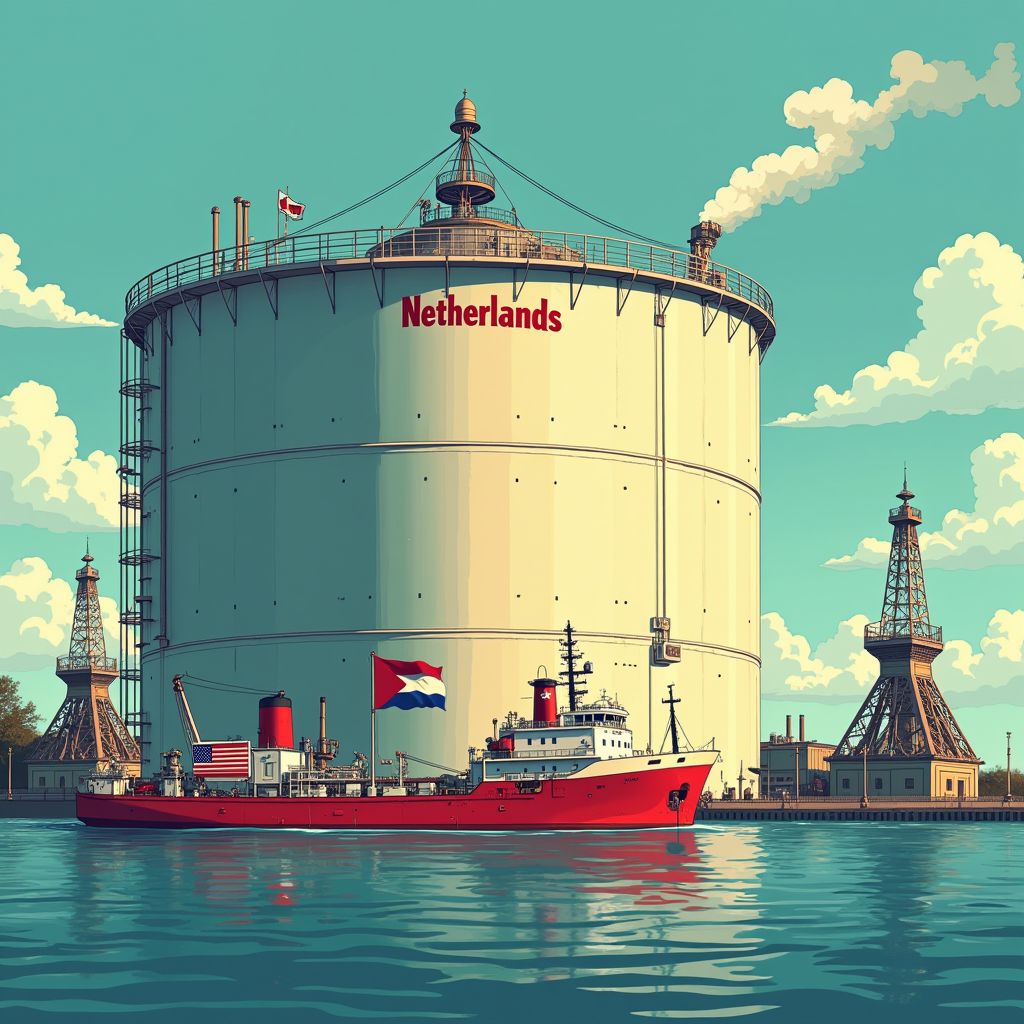
The netherlands holds just 15 percent of its gas storage capacity—lowest in europe. While other countries average 34 percent, this sharp drop comes from high winter demand and reliance on imported lng. Experts say there’s no immediate risk because ships keep arriving from the us and qatar. Still, vulnerability grows if supply routes face disruption. Prices already jumped after cold weather hit america. With little buffer left underground, the country depends entirely on global markets and stable shipping lanes. Energy leaders warn this thin margin leaves little room for surprise.
record low gas storage raises questions
The netherlands’ gas storage facilities are filled to only 15 percent of capacity as of february 16, 2026, marking the lowest level among european nations [1]. This contrasts sharply with the european average of 34 percent [2]. The decline follows heightened consumption during a prolonged cold spell, increasing demand for heating and electricity generation [3]. Despite the shallow reserves, authorities emphasize that physical shortages are unlikely due to continuous liquefied natural gas (lng) deliveries from abroad [4].
market mechanisms over buffers
Experts note that the market is expected to manage supply risks despite minimal stored gas [1]. According to Koen Kuijper of energievergelijk.nl, traders are deliberately keeping stocks low, anticipating price stabilization [2]. Gasunie confirms ongoing lng shipments from the united states and qatar sustain adequate supply levels [4]. René Peters, director of gas technology at TNO, explains that much of the netherlands’ gas now arrives by ship rather than pipelines, making logistics vulnerable to geopolitical disruptions or severe weather [5].
price volatility amid external shocks
In late january 2026, extreme cold in north america caused a spike in european gas prices, reaching €40 per megawatt-hour on the TTF benchmark [2]. Prices later stabilized around €31 per megawatt-hour by mid-february [2]. This fluctuation illustrates how international conditions directly impact domestic costs [5]. Although infrastructure remains functional, analysts warn that repeated exposure to such swings could strain household budgets, especially for those on variable contracts [6].
infrastructure and policy concerns
Gasunie operates major storage sites in grijpkerk, norg, and alkmaar, with total capacity nearing depletion [4]. While current flows prevent crisis scenarios, the company acknowledges future winters pose uncertainty [4]. The government previously mandated minimum 80 percent pre-winter fill rates by october 1, though enforcement remains pending [1]. Demissionary energy minister sophie hermans stated she is monitoring developments closely but sees no urgent threat [7].
energy transition pressures
With the groningen field closed, the netherlands relies almost entirely on foreign supplies and regional networks [6]. Hans grünfeld of the VEMW trade association notes the country still produces about 30 percent of its own gas, primarily from smaller fields [2]. However, renewable intermittency forces gas power plants to compensate when solar and wind output fall [3]. Market parties control replenishment decisions, leaving public oversight limited unless emergencies arise [4].
Bronnen
- www.ad.nl
- www.energievergelijk.nl
- www.rtvnoord.nl
- www.upday.com
- www.welingelichtekringen.nl
- www.weerwoord.be
- www.zeelandnet.nl