moderna's mRNA-griepvaccin stuit op veto van fda
Washington D.C., woensdag, 11 februari 2026.
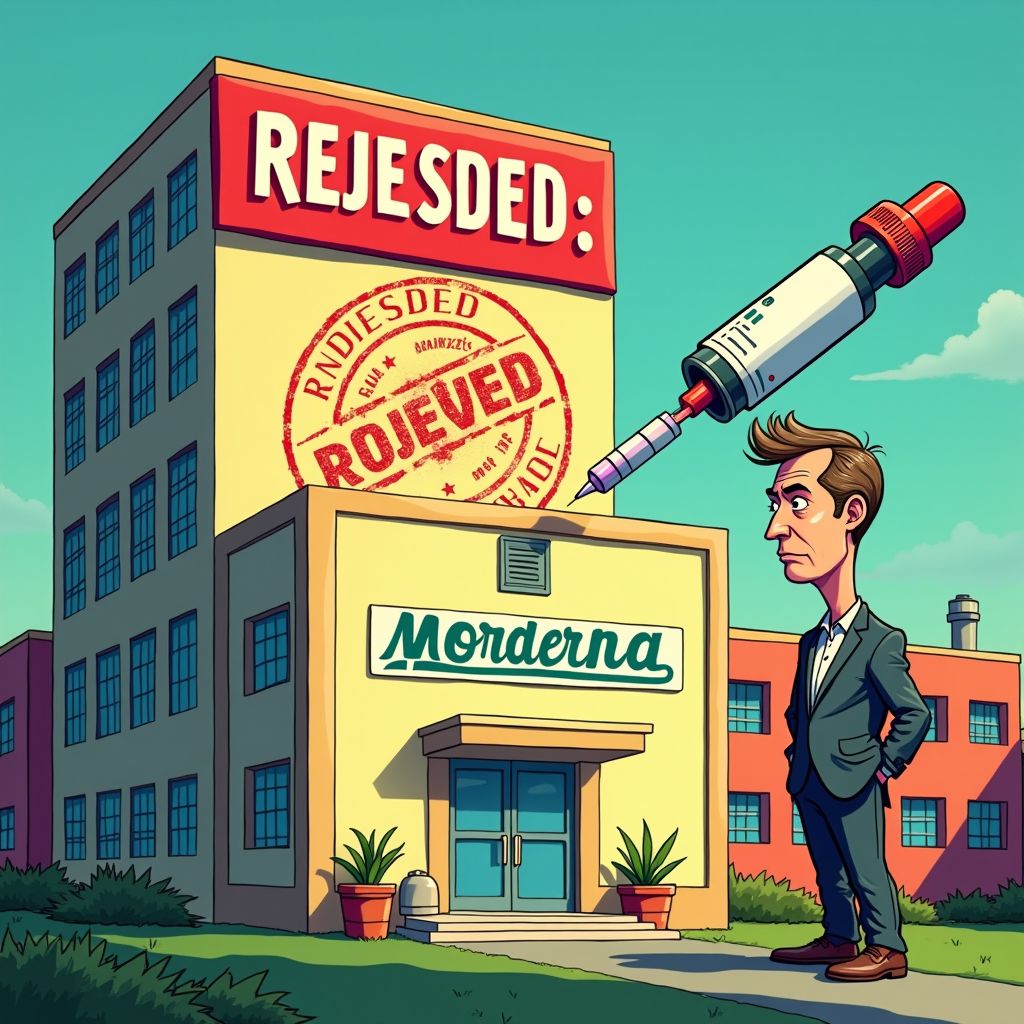
De amerikaanse fda weigert moderna’s aanvraag voor een nieuw mrna-grippenvaccin te behandelen. dit gebeurt tijdens het bewind van minister robert f. kennedy jr., die eerder sceptisch was over mrna-technologie. de fda noemt de opzet van de klinische proeven ontoereikend. moderna claimt dat het vaccin effectiever is dan bestaande opties. er zijn geen veiligheidskwesties gemeld. het bedrijf zoekt nu goedkeuring in europa, canada en australië. dit besluit werpt vragen op over de toekomst van innovatieve vaccins in de vs. het kan ook gevolgen hebben voor internationale vaccinprogramma’s. de markt reageerde direct met een daling van moderna’s aandelen.
us regulator blocks review of moderna’s mRNA flu vaccine
The U.S. Food and Drug Administration (FDA) has refused to review Moderna’s application for an mRNA-based influenza vaccine, marking a significant setback for the pharmaceutical company [1]. The decision stems from concerns over the clinical trial’s design, particularly the choice of comparator vaccine used in the study [4]. According to the FDA, the trial did not measure the new shot against the “best-available standard of care,” a requirement for such submissions [5]. Despite this, no safety or efficacy issues were flagged in the refusal-to-file letter issued on February 7, 2026 [3].
trial design dispute at center of regulatory clash
Moderna’s phase 3 trial enrolled approximately 41,000 participants aged 50 and older, comparing its mRNA-1010 vaccine to licensed standard-dose seasonal influenza vaccines [6]. The company reported superior immune responses and maintained the protocol was pre-discussed and agreed upon with the FDA’s Center for Biologics Evaluation and Research (CBER) [3]. However, FDA official Dr. Vinay Prasad stated the trial fails to meet the threshold of an “adequate and well-controlled” study due to the comparator selection [1]. This divergence underscores growing tension between industry innovation and evolving regulatory expectations under the current administration [4].
political backdrop intensifies scrutiny on mRNA policy
The regulatory pushback occurs amid broader changes under Health and Human Services Secretary Robert F. Kennedy Jr., known for his skepticism toward mRNA technology [2]. Since taking office, the department has canceled over $500 million in funding for mRNA vaccine research through agencies like BARDA [3]. In late 2025, Kennedy advocated for placebo-controlled trials for new respiratory vaccines, a move widely criticized by public health experts [2]. While the FDA maintains scientific independence, insiders note a shift in agency posture, evidenced by recent warnings added to existing mRNA vaccines and the removal of certain advisors from committees [4].
moderna pivots to international markets and oncology
Following the FDA’s refusal, Moderna has accelerated efforts to secure approval elsewhere, with ongoing reviews in the European Union, Canada, and Australia [3]. The company emphasizes that the same mRNA platform proved highly effective during the pandemic and expresses confidence in its flu vaccine’s potential [1]. Concurrently, Moderna is shifting substantial resources toward oncology research, with upcoming investigational drug applications primarily focused on cancer therapies [3]. This strategic pivot reflects both the challenges in navigating the current U.S. regulatory environment and the company’s broader ambition beyond infectious disease prevention [3].
market reacts sharply to regulatory roadblock
Financial markets responded swiftly to the news, with Moderna’s stock (MRNA) dropping 8.5% in pre-market trading on February 11, 2026, falling from a previous close of $41.995 to $38.42 [7]. The decline highlights investor concern over delayed revenue streams from post-pandemic products [7]. Analysts note the stock now trades below key technical indicators, including its 20-day and 50-day moving averages, increasing near-term volatility risks [7]. Market observers are closely watching whether the share price stabilizes around $38.0 in support levels or continues downward, potentially retesting lows seen earlier in the year [7].
broader implications for vaccine innovation in the us
Experts warn the FDA’s decision may deter future investment in advanced vaccine platforms within the United States [4]. Legal scholar Dorit Reiss notes that rejecting a review based on comparator choices—after trials were completed—creates uncertainty for developers relying on established benchmarks [4]. The lack of publicly revised guidance raises questions about procedural transparency [4]. Some former FDA leaders have expressed alarm, arguing that abrupt policy shifts without formal consultation undermine trust in the agency’s predictability and commitment to medical innovation [4]. The episode may influence how global pharmaceutical firms prioritize U.S.-based clinical development going forward [6].
Bronnen
- apnews.com
- www.nbcnews.com
- www.fiercebiotech.com
- www.theguardian.com
- www.bloomberg.com
- www.nytimes.com
- www.ainvest.com