klm haalt gestrande Nederlanders op uit oorlogszone
Muscat, woensdag, 4 maart 2026.
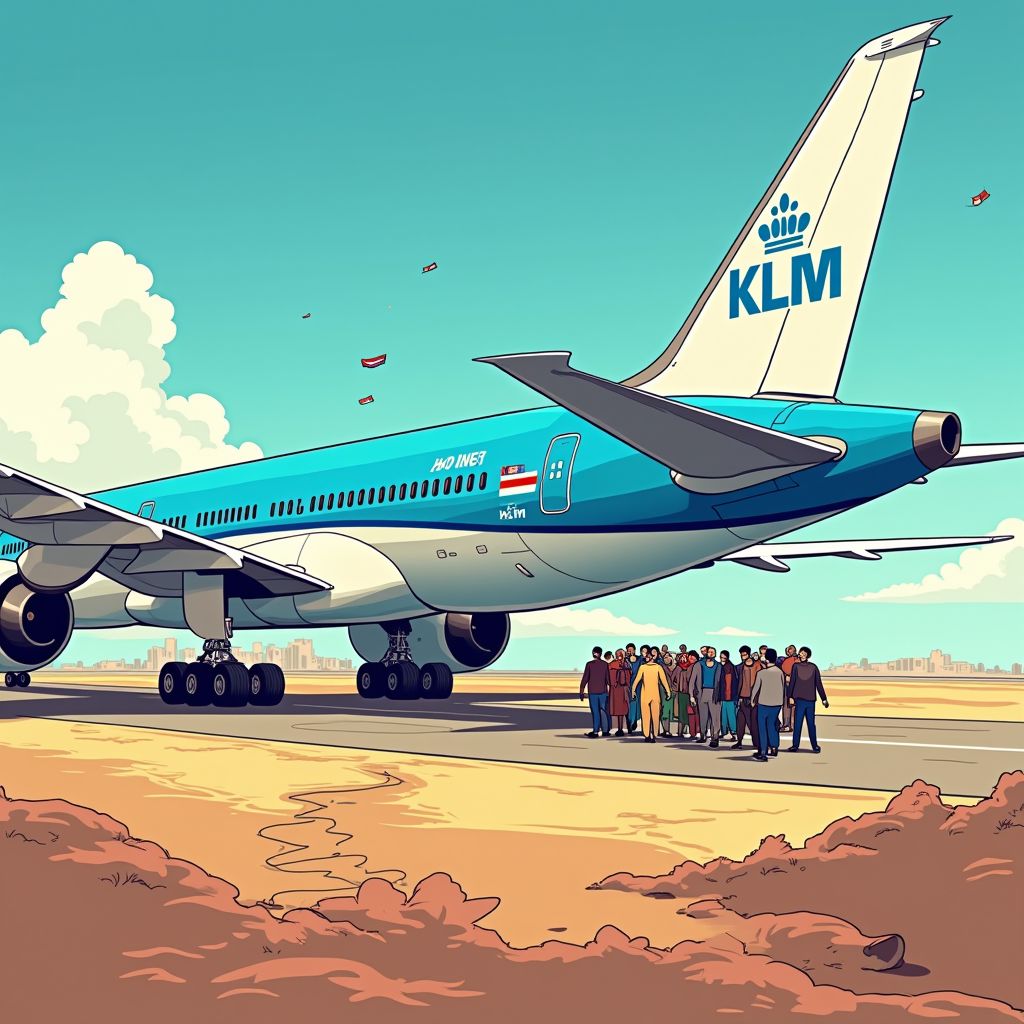
Een Boeing 787-10 van KLM is dinsdagavond opgestegen richting Muscat om 83 Nederlandse burgers op te halen. De humanitaire evacuatie komt er na escalerend geweld in het Midden-Oosten. Het ministerie van Buitenlandse Zaken coördineert de actie. De veiligheid van gestrande reizigers staat centraal. Andere EU-burgers mochten meereizen. De vlucht keert woensdagochtend terug in Nederland. Militaire spanningen beperken commerciële vluchten. Reizigers worden aangespoord zich niet lukraak te verplaatsen. Officiële kanalen blijven cruciaal voor repatriëring.
emergency evacuation flight launched amid regional instability
The Netherlands executed a special evacuation mission from Oman late Tuesday, deploying a KLM Boeing 787-10 aircraft to retrieve stranded citizens amid escalating Middle East tensions [1]. Eighty-three Dutch nationals were successfully evacuated from Muscat International Airport under a coordinated government effort led by the Ministry of Foreign Affairs [2]. The humanitarian flight departed Muscat on March 3, 2026, and arrived at Amsterdam Schiphol Airport early Wednesday morning, marking the country’s first official repatriation action since commercial air routes became severely disrupted [3][4].
coordinated government response to citizen safety concerns
Foreign Minister Tom Berendsen confirmed the emergency operation during parliamentary proceedings, emphasizing close cooperation with KLM to ensure citizen safety [5]. While approximately eighty-three individuals returned on this initial flight, authorities acknowledge thousands of Dutch travelers remain potentially affected across the region [6]. The minister explicitly advised against spontaneous travel attempts through conflict zones, stating ‘people should not randomly travel around hoping to find a return flight’ [7]. Instead, citizens are urged to register with official channels to facilitate organized evacuation procedures when available [8].
aviation industry adapts to rapidly changing security landscape
The special KLM deployment reflects broader disruptions affecting global aviation, with over twelve thousand flights canceled across Middle Eastern destinations since hostilities intensified [9]. Unlike military aircraft, commercial airliners lack missile detection systems, relying instead on transponders that continuously broadcast identification and location data [10]. According to aviation expert Joris Melkert of TU Delft, airlines operate under strict protocols where national airspace closures legally prohibit civilian flight operations [11]. When airspace remains technically open, carriers must independently assess risks based on intelligence briefings and real-time threat assessments [12].
ongoing challenges for international travel and diplomacy
While the successful retrieval of Dutch citizens represents a critical milestone, officials stress that logistical hurdles persist beyond mere aircraft availability [13]. The fundamental challenge involves safely transporting individuals from dispersed locations to secure departure points amidst active combat operations [14]. Several European Union nations are coordinating similar efforts, with Italy confirming the evacuation of 127 citizens from Muscat shortly after the Dutch operation concluded [15]. Belgium simultaneously initiated plans to repatriate more than twenty-six thousand citizens, underscoring the widespread nature of the displacement crisis [16].