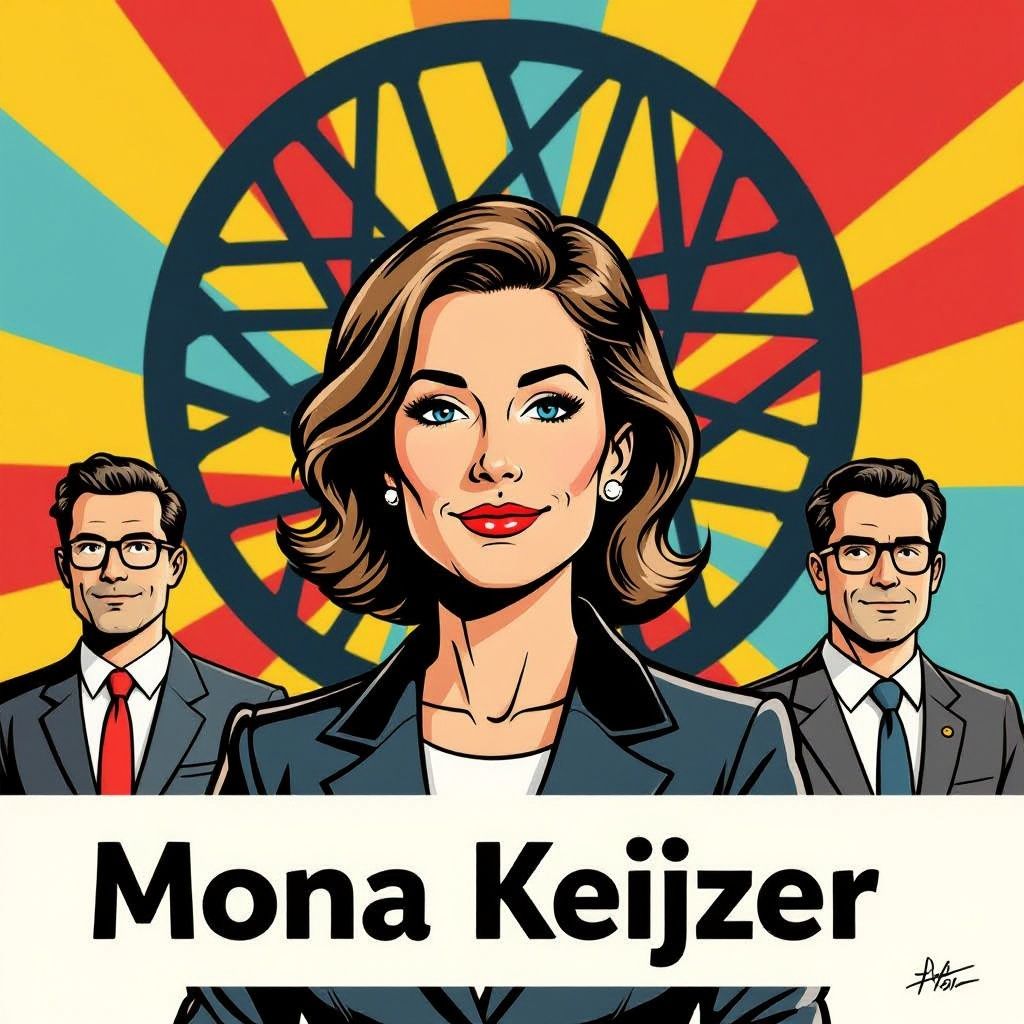
Mona Keijzer in de schaduw van DNA
Den Haag, maandag, 27 april 2026.
Zeven ex-pvv-leden lanceerden de nederlandse alliantie. De partij presenteert zich met harde slogans over cultuur en rechtsorde. Mona Keijzer wordt genoemd als mogelijke lijsttrekker. Peilingen tonen een verrassend beeld. Met Keijzer aan het roer haalt dna mogelijk acht zetels. Zonder haar slechts één. Keijzer zelf zou met een eigen lijst zeven zetels halen. De cijfers wijzen op een strategische keuze. De interne machtsverdeling is onduidelijk. Gidi markuszower richtte dna op maar profiteert minst van zijn eigen naam. De partij belooft actie tegen migratie en streeft naar stabiliteit. Burgers met zorgen over energiekosten en werk worden expliciet benaderd. De beweging noemt zich een antwoord op vernielende politiek. Toch groeit de twijfel of dit een echte alternatief biedt of alleen de rechterflank versplintert.
dna officially launched by former pvv members
Seven former PVV members of parliament have formally established the political party Nederlandse Alliantie (DNA). The movement positions itself as a right-wing conservative force amid shifting dynamics in Dutch politics. Its leadership includes prominent figures such as Gidi Markuszower alongside Ton F. van Dijk and Esther van Fenema. The launch marks a notable development ahead of upcoming elections, reflecting growing fragmentation on the right flank [1]. Internal coordination remains under scrutiny as strategic decisions unfold.
hardline messaging targets cultural concerns
DNA introduced its campaign with strong slogans emphasizing national identity and order: “één taal, één rechtsorde, één gedeelde cultuur” [1]. The messaging aims to resonate with citizens who feel overlooked by mainstream parties. Issues like migration, rising energy costs, and economic insecurity are central to its outreach. Specific groups mentioned include nurses, teachers, police officers, and self-employed individuals struggling with policy disconnects in urban governance [1]. The appeal focuses on restoring perceived societal coherence.
keijzer’s influence reshapes electoral projections
According to polling data by Maurice de Hond, Mona Keijzer could elevate DNA’s parliamentary representation significantly if positioned as lead candidate. Simulations suggest DNA might secure eight seats with her at the helm [1]. Without her involvement, support drops sharply to approximately one seat [2]. A standalone initiative led by Keijzer alone is projected to yield seven seats [2]. These findings underscore her pivotal electoral appeal despite not founding the party herself [1][2].
internal tensions and strategic doubts emerge
Despite formal unity, internal power structures within DNA remain ambiguous. Gidi Markuszower initiated the formation of the party yet appears less electorally compelling than Keijzer, whose personal following surpasses his own base [1]. Analysts including Ton F. van Dijk question whether aligning with DNA serves her interests well [1]. Concerns echo past experiences of infighting seen in other splinter movements like BBB, raising caution about organizational stability [1]. Strategic autonomy may offer greater control.
public sentiment fuels anti-establishment momentum
Local unrest, particularly in areas like Loosdrecht opposing asylum center placements, illustrates broader dissatisfaction with governmental communication practices [1]. Critics argue that existing coalitions fail to address everyday struggles effectively [1]. DNA capitalizes on this discontent by positioning itself against what it calls destructive politics lacking tangible outcomes. Unlike previous protest factions focused primarily on rhetoric, DNA pledges actionable results rather than symbolic opposition alone [1]. Public trust hinges on delivering visible change.