uitsluitsel europese hof paralyseert uitzetbeleid
Den Haag, maandag, 20 april 2026.
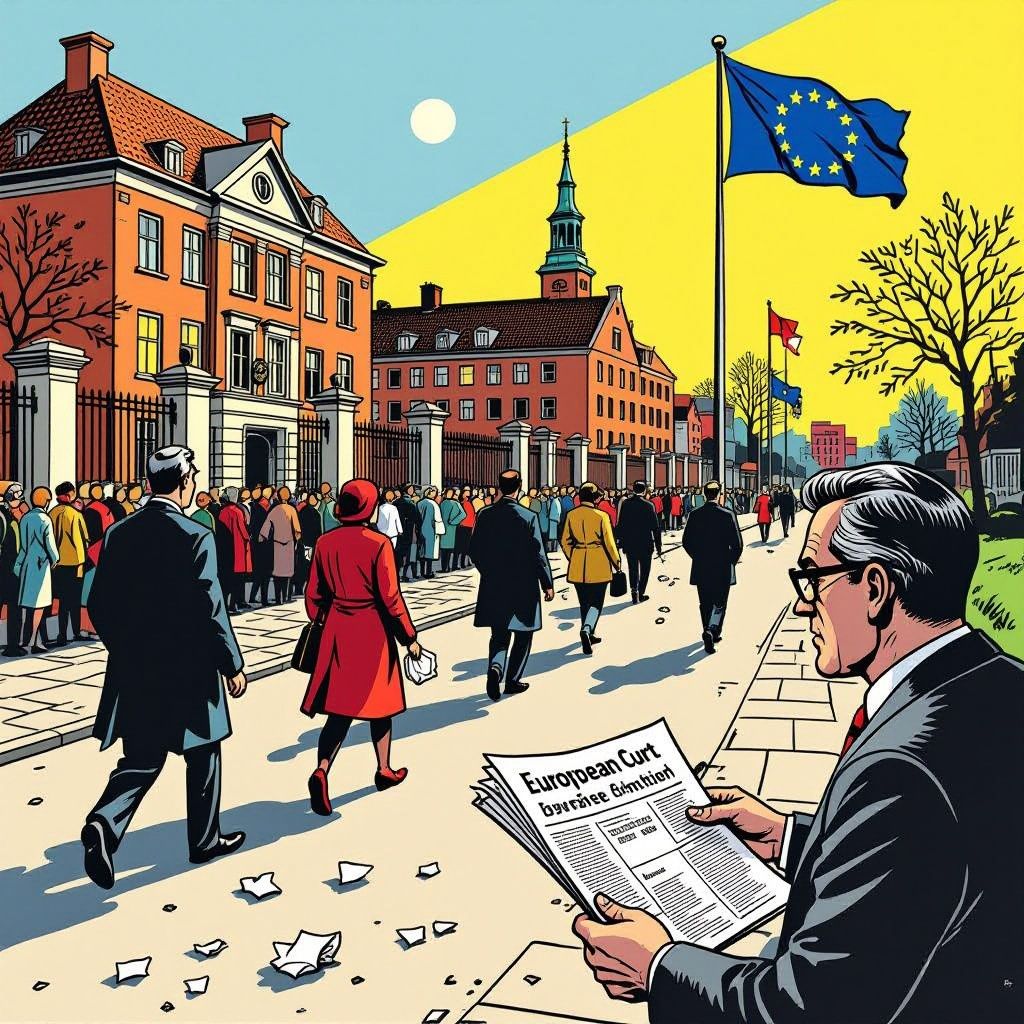
Een uitspraak van het Europese Hof van Justitie heeft directe gevolgen voor het uitzetbeleid in Nederland. Vreemdelingen die langer dan 18 maanden in detentie hebben gezeten, mogen niet langer worden vastgehouden. Daarmee valt de juridische basis voor hun uitzetting weg. Het ministerie van Justitie en Veiligheid kan deze groep niet meer pakken. Alleen al in april werden minstens 30 mensen vrijgelaten. Sommigen kregen zelfs duizenden euro’s aan schadevergoeding. De uitvoerende diensten zitten vast in hun opties. Er is geen duidelijk plan-B. Juristen bevestigen dat zonder nieuw beleid of wetgeving de staat geen grip meer heeft op de terugkeer van langdurig gedetineerden. De situatie eskaleert geleidelijk.
legal deadlock after 18-month detention limit
A ruling by the European Court of Justice now prevents the Netherlands from detaining foreign nationals beyond 18 months for deportation purposes [1]. This includes cumulative detention periods, which the court ruled must be counted together [1]. As a result, individuals who have served more than 18 months in detention cannot be held longer, undermining forced removal procedures [1]. At least 30 people were released in April alone due to this legal barrier [1]. Without alternative enforcement tools, authorities face a growing inability to execute returns [1].
compensation paid for unlawful detention
Several recently released individuals received financial compensation for excessive detention periods [1]. One Moroccan national was awarded €2,000 following a court decision on April 12, 2026 [1]. A Nigerian man received €3,000 under similar circumstances [1]. Another individual from Ghana was compensated nearly €8,000 on March 19, 2026 [1]. These payments stem from rulings that such prolonged detention violates legal safeguards [1]. The government acknowledges these obligations but lacks strategies to prevent recurrence [1].
government agencies struggle with implementation
Operational bodies including the Immigration and Naturalisation Service (IND), immigration police, and DT&V are reviewing existing cases to assess remaining detention time [1]. DT&V is adopting a tactical approach to manage limited detention capacity [1]. Officials stress the need for strategic decisions on whom to detain, knowing each day reduces future leverage [1]. There is currently no legislative workaround to extend detention beyond the 18-month threshold [1]. Ministries await potential changes in EU return policy discussions [1].
political debate intensifies over migration laws
On April 19, 2026, the Senate debated a proposal to criminalize irregular residence in an effort to strengthen return powers [1]. The PVV party threatened to block the bill, arguing it does not go far enough [1]. Religious leaders including the Bishop of ’s-Hertogenbosch and representatives from the Protestant Church issued a joint letter opposing the measure [3]. They warned that criminalizing illegal stay causes irreversible harm to vulnerable populations [3]. The debate reflects deep divisions over how to handle failed asylum seekers [3].
broader reforms delayed amid european pact rollout
Plans to align national legislation with the upcoming European Asylum and Migration Pact remain unclear [3]. The pact must be implemented within six weeks of May 31, 2026, creating urgency [3]. However, the Council of State previously ruled that introducing new measures before the pact takes effect could violate effective legal protection principles [3]. The IND estimates needing 462 additional full-time staff to implement proposed laws [3]. Legal experts question whether punitive measures will actually improve compliance with departure orders [3].
belgium pursues stricter citizenship revocation
In Belgium, former Deputy Prime Minister Theo Francken advocates automatic loss of Belgian nationality for dual citizens convicted of terrorism offenses [4]. This follows the stripping of citizenship from Fouad Belkacem, leader of Sharia4Belgium, in October 2018 [4]. Once his sentence ends in 2027, authorities aim to transfer him directly to a closed center pending expulsion to Morocco [4]. Similar actions were taken against Malika El Aroud, known as the ‘black widow of jihad’ [4]. Such moves highlight regional efforts to enhance security-based exclusion mechanisms [4].
bbc uncovers fraud in uk asylum system
An undercover investigation by the BBC revealed a shadow industry assisting asylum seekers in falsely claiming to be LGBTI to obtain residency permits [5]. Applicants reportedly pay thousands of pounds to law firms that help fabricate evidence [5]. The findings suggest systemic vulnerabilities in assessing credibility during sexual orientation claims [5]. While focused on the UK, the report raises questions about similar risks in other European countries processing sensitive asylum categories [5]. Authorities have not yet commented on preventive measures [5].