waarschuwing voor niet-eu-passagiers: langdurige vertragingen op Europese luchthavens
Frankfurt, zaterdag, 6 juni 2026.
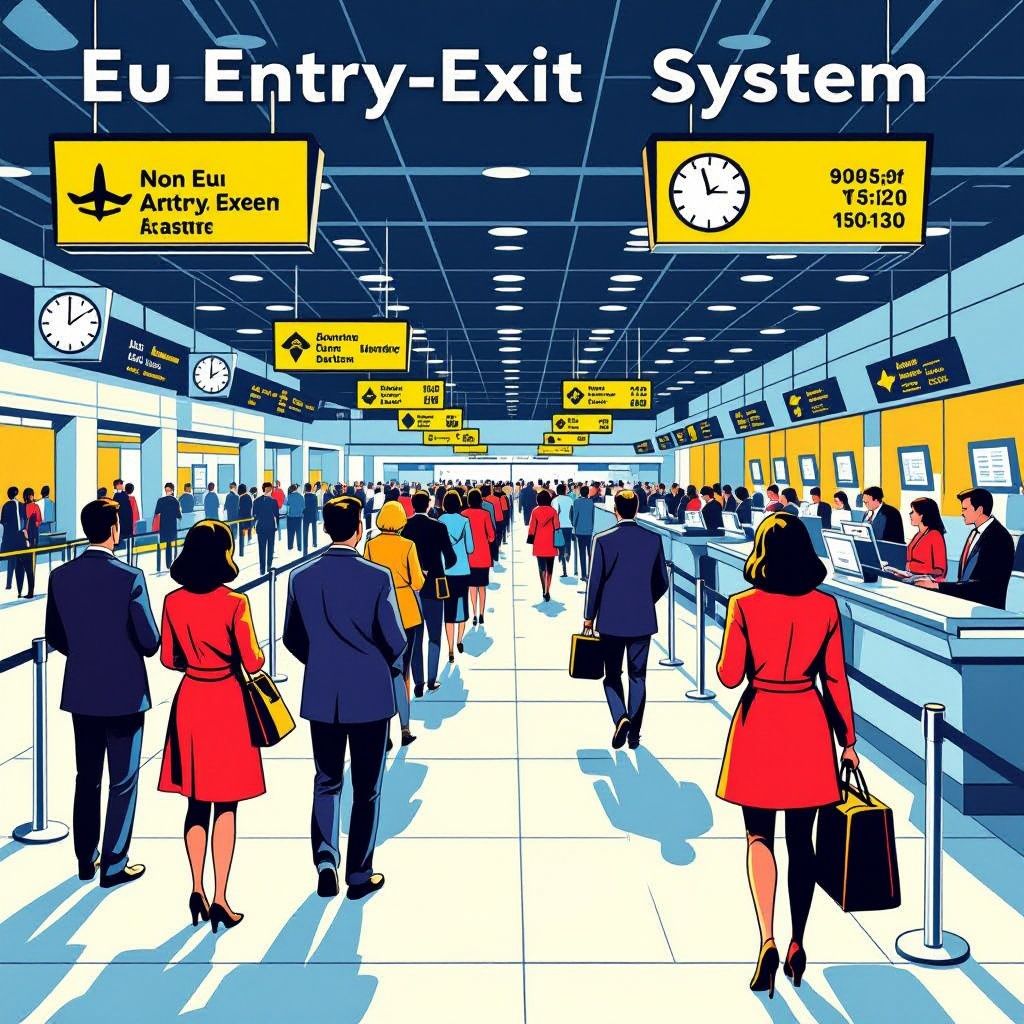
De invoering van het nieuwe EU Entry/Exit System (EES) veroorzaakt grote vertragingen voor niet-EU-reizigers. Bij binnenkomst moeten biometrische gegevens worden geregistreerd, wat de grenscontrole aanzienlijk vertraagt. Op drukke momenten kunnen wachttijden oplopen tot vier à zes uur. IATA noemt de situatie alarmerend en wijst op risico’s van gemiste aansluitingen. De problemen treden op in populaire vakantielanden zoals Spanje, Portugal, Griekenland en Italië. Reizigers wordt dringend geadviseerd veel extra tijd in te plannen. De maatregel moet de veiligheid vergroten, maar zorgt nu voor chaos aan de balie.
operational chaos at southern european borders
Non-eu travelers face significant delays at major southern european airports due to the rollout of the eu entry/exit system (ees). The new system requires biometric registration upon arrival, including fingerprint scans and facial images, replacing manual passport stamping [1]. This additional step has drastically slowed border processing times. At peak hours, queues regularly stretch four to six hours, according to iata’s regional vice president rafael schvartzman [2]. The situation creates substantial risks for missed connecting flights and disrupted itineraries, especially for transit passengers [2].
hotspots identified in mediterranean tourism hubs
The most severe delays are concentrated in popular tourist destinations heavily reliant on international arrivals. Airports in spain, portugal, italy, and greece report the longest wait times for non-eu nationals clearing immigration [2]. These countries represent key entry points for travelers from north america, asia, and africa, whose passenger volumes surged ahead of the northern hemisphere summer [2]. The influx coincides precisely with the ees implementation, overwhelming existing staff and infrastructure capacities at border control points [1]. Authorities struggle to manage the combined pressure of high traffic and new procedures.
industry calls for flexible implementation approach
The international air transport association (iata) has formally expressed concern over the current execution of the ees program. While acknowledging the goals of enhanced security and better migration tracking, iata stresses the immediate impact on travelers and airlines is unacceptable [2]. Schvartzman urged eu authorities to adopt greater flexibility during the initial phase [2]. He specifically recommended extending the planned partial suspension period beyond september 7th and allowing local, ad-hoc suspensions whenever queue lengths threaten to become unmanageable at specific airports [2].
passenger advice amidst ongoing disruption
Travelers, particularly those holding non-eu passports, are advised to allocate substantially more time for arrival and connection processes. Experts recommend arriving at least three to four hours before departure for international flights and allowing a minimum five-hour buffer for onward connections following an international arrival [1]. Preparing documents such as passports, visas, and accommodation details in advance can slightly expedite the process [1]. Checking eligibility for automated e-gates where available and monitoring official airport channels for real-time updates is strongly encouraged [1].