Europese parlementsleden krijgen ultimatum over massascan van chats
Brussel, vrijdag, 6 februari 2026.
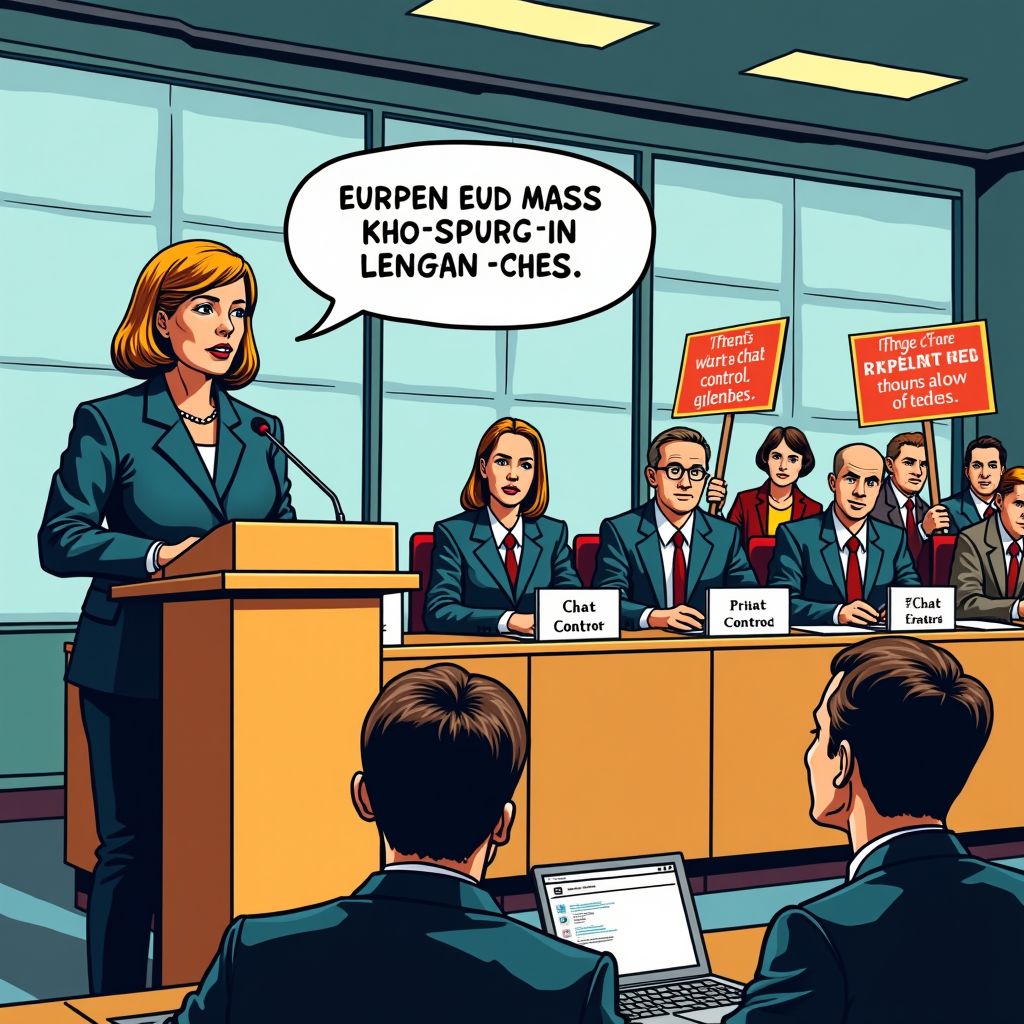
Het Europees Parlement staat onder druk over plannen voor massabewaking van privéberichten. Rapporteur Birgit Sippel stelt een uitbreiding van Chat Control voor, waarbij alleen al bekende misdrijfsmaterialen worden gescreend via hashes. Dit behoudt echter de kern van de controversiële wetgeving. Experts wijzen op talloze foutieve meldingen, waarvan veel betrekking hebben op jongeren. In Duitsland leidde dit tot dat 40% van de onderzoeken terecht kwam bij minderjarigen. Activisten waarschuwen dat deze aanpak kinderen niet echt beschermt en mobiliseren tegen de plannen. Burgers worden opgeroepen om hun vertegenwoordigers te benaderen via fightchatcontrol.eu voordat de stemming plaatsvindt.
eu parliament under scrutiny over chat control extension
The european union stands at a crossroads over digital privacy as rapporteur birgit sippel (s&d) advances a draft report extending ‘chat control 1.0’ [1]. Her proposal maintains mass scanning of encrypted messaging services for known child sexual abuse material using hash-matching technology [2]. This occurs despite warnings from cybersecurity experts about high rates of false positives [3]. The system targets only pre-existing illegal material, ignoring live exploitation which remains undetected [1]. Critics argue this undermines effective law enforcement strategies.
effectiveness questioned amid rising false alarms
German federal criminal police agency (bka) data reveals 48% of flagged chats are false positives, equating to approximately 100,000 erroneous reports annually [2]. These inaccuracies overwhelm investigative units with trivial cases such as family photos [4]. In germany, 40% of all investigations initiated through chat control focus on minors engaged in sexting rather than organized predator rings [1]. Such outcomes divert critical resources from tracking active offenders across darknet channels [3]. The inefficiency raises serious doubts about the policy’s overall utility.
legal and ethical concerns mount
Legal scholars highlight that indiscriminate scanning violates article 7 and 8 of the eu charter of fundamental rights concerning privacy and data protection [alert! ‘constitutional challenge likely’] [5]. By outsourcing surveillance to u.s.-based tech firms like meta, the eu delegates law enforcement powers without sufficient accountability [2]. Algorithms operate without understanding context or intent, risking wrongful accusations [6]. Former mep dr. patrick breyer asserts this constitutes “privatized policing” where silicon valley algorithms replace judicial oversight [2]. The approach may criminalize ordinary behavior instead of preventing crime.
civil society mobilizes against expansion
Activist groups have launched coordinated campaigns urging citizens to contact members of the european parliament before february 10, 2026—the amendment deadline [1][7]. Platforms like fightchatcontrol.eu facilitate direct communication with meps including shadow rapporteurs [8]. Demonstrators argue true child protection lies in ‘security by design,’ proactive removal of illicit content from public spaces, and targeted investigations based on suspicion [2]. Over fifty organizations back this position, warning that mass surveillance weakens digital security for everyone [3].
alternative solutions gain traction
Experts advocate shifting focus from automated mass scans to strengthening end-to-end encryption and implementing client-side detection under strict judicial supervision [9]. The eu parliament’s 2024 resolution a9-0021/2024 supports targeted probes requiring court approval instead of blanket monitoring [10]. Enhancing cooperation between europol and national agencies could improve results without compromising privacy [3]. Investing in victim identification tools and international coordination would address ongoing abuse more directly than reactive scanning of outdated databases [1].
Bronnen
- www.patrick-breyer.de
- www.patrick-breyer.de
- techrights.org
- diariodelamancha.com
- www.euractiv.com
- www.patrick-breyer.de
- alcazardesanjuan.com
- diariodelamancha.com
- csa-scientist-open-letter.org
- www.europarl.europa.eu