civil servants sound alarm over stalled pay talks
Utrecht, woensdag, 15 april 2026.
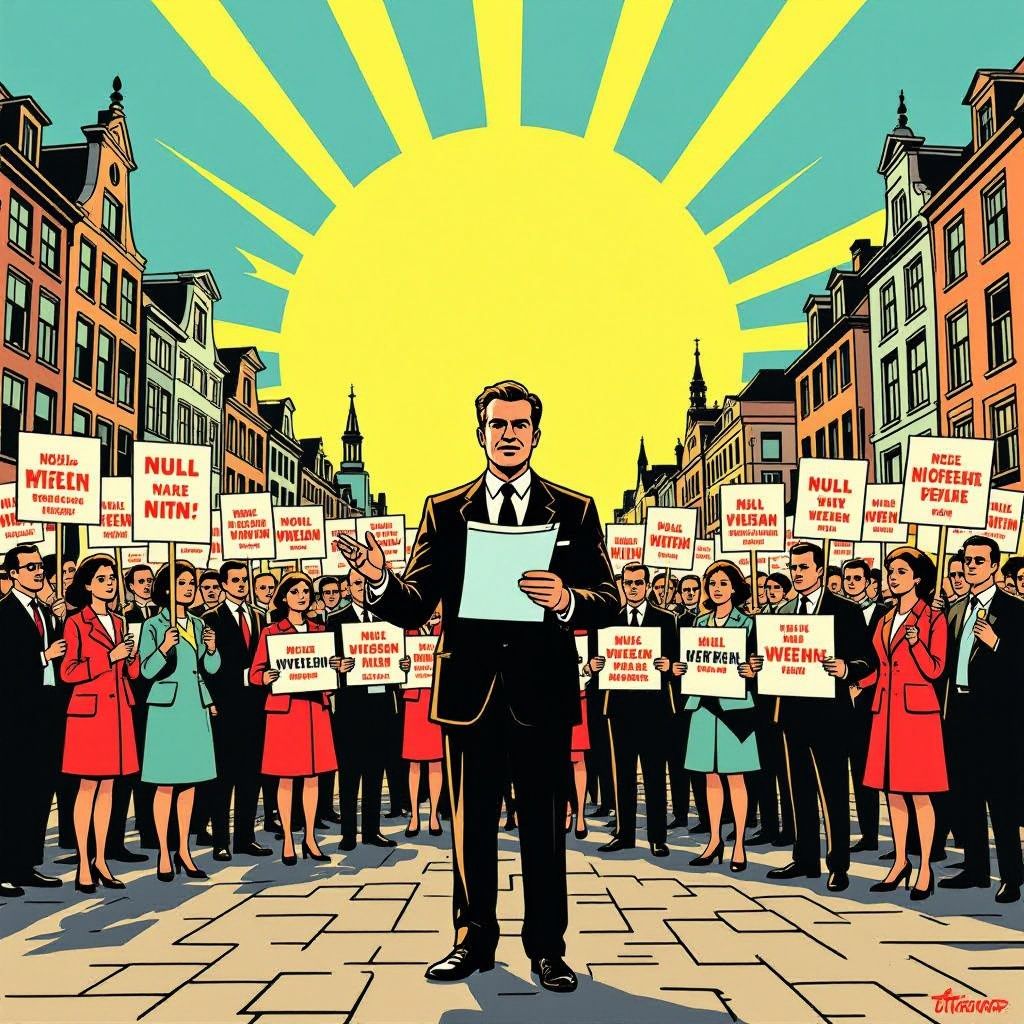
Over a thousand civil servants gathered at the Jaarbeursplein in Utrecht to voice frustration over frozen wage negotiations. Their main concern is a sharp decline in netto lonen amid rising living costs. The protest, led by FNV Overheid and supported nationwide, targets the government’s proposed nullijn—a zero percent salary increase for 2026. Workers warn that without adjustment, those keeping essential services running could face financial strain. “Netto gaan ze er keihard op achteruit,” said union leader Jasper de Jong. Demonstrations also occurred at ministries, prisons, and inspection agencies, signaling widespread unease across the public sector.
thousands protest stagnant wages in utrecht
Around a thousand civil servants demonstrated at the Jaarbeursplein in Utrecht on April 14, 2026, opposing stalled collective labor agreement (cao) negotiations [1]. The protest, organized by FNV Overheid, targeted the government’s proposal to maintain salaries unchanged in 2026—the so-called nullijn [2]. Participants expressed deep concern over declining net incomes amid rising inflation and cost of living [1]. Similar actions took place simultaneously at various government sites, including ministries, prisons, and inspectorates, highlighting broad discontent across the public sector workforce [2].
union leaders decry real income losses
Jasper de Jong, spokesperson for FNV Overheid, emphasized that civil servants are facing significant erosion in purchasing power [1]. “The groceries are getting more expensive, fuel prices are going up. Everything is becoming pricier, yet their earnings remain static,” he stated during the demonstration [1]. According to union estimates, this results in a substantial decrease in take-home pay after taxes and inflation adjustments [1]. De Jong stressed that these workers—employed at institutions such as Customs, the Tax Helpline, and enforcement agencies—are essential to national operations but are being overlooked financially [1].
government stance fuels tensions
The current administration insists on adhering to the previous cabinet’s decision to implement a zero-percent salary increase for central government employees in 2026 [2]. Union representatives criticize this position, calling it incomprehensible given the economic climate [1]. Beyond immediate pay concerns, unions also object to planned austerity measures affecting ministries, which they argue further undermine working conditions [1]. Together, these factors render the employment terms unacceptable to a large segment of the civil service community [1]. Without concessions, unions threaten escalating industrial action [1].
nationwide disruption signals deeper unrest
Although disruptions remained limited during the April 14 demonstrations, authorities warned of broader consequences should negotiations fail [2]. Staff shortages affected phone accessibility at agencies such as Customs due to strike participation [2]. The coordinated nature of the protests—from Groningen to Maastricht—underscores widespread dissatisfaction beyond Utrecht alone [2]. Officials acknowledged potential delays in processing applications and reduced service availability [2]. Should talks continue to stall, officials expect citizen-facing impacts to intensify significantly in coming weeks [2].