Iran reeling after supreme leader's sudden death
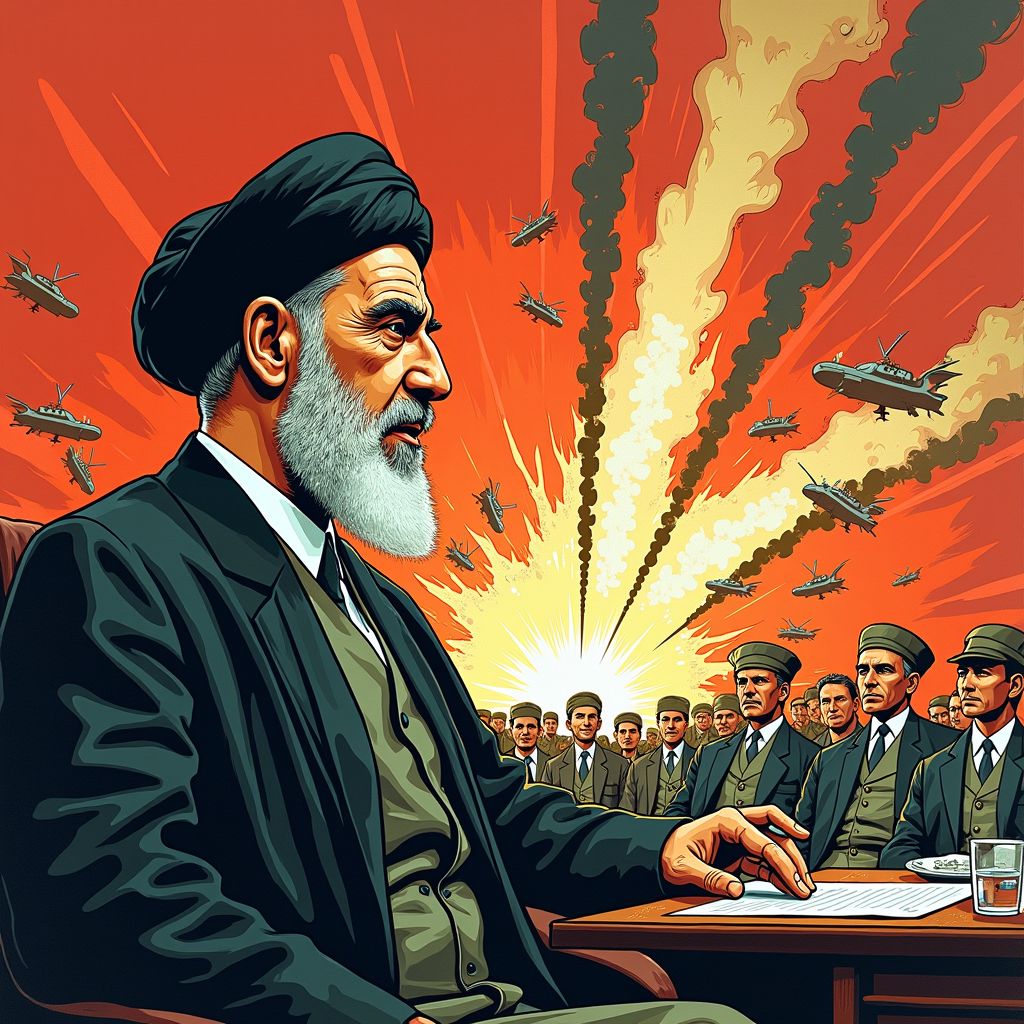
Teheran, woensdag, 4 maart 2026.
Ayatollah Ali Khamenei is dead. A three-member transitional council was swiftly formed with Alireza Arafi, President Pezeshkian and judiciary head Mohseni Ejei taking charge. This quick move masks deep instability. Experts call it a crisis of power. Key Revolutionary Guard leaders were killed in targeted strikes by Israel and the US. Analyst Peyman Jafari doubts Iran can sustain combat against two major militaries. The UN urges de-escalation. NATO chief Mark Rutte says the world is safer without Khamenei. Trump mentioned exiled figure Reza Pahlavi as a potential successor. The system built on one man now trembles.
power vacuum widens in iran amid international pressure
Three days after the confirmed death of Iran’s supreme leader Ayatollah Ali Khamenei, the country faces growing internal instability despite the swift formation of a transitional council [1]. The council comprises Alireza Arafi as temporary religious authority, President Masoud Pezeshkian, and judiciary head Gholamhossein Mohseni Ejei [1]. While this appears orderly, analysts warn of a deepening power crisis [1]. Key figures in the Islamic Revolutionary Guard Corps (IRGC) were eliminated in coordinated air strikes by Israel and the United States [1]. Iran specialist Yaghoub Sharhani describes the loss as catastrophic, noting Khamenei was the central node holding disparate factions together [1]. Without him, the regime risks fragmentation [1].
regional tensions escalate with us and israeli actions
The US and Israel launched a series of targeted operations under what experts describe as an ‘decapitation strategy’ aimed at crippling Iran’s command structure [1]. Among those killed were senior IRGC commanders responsible for regional proxy networks [1]. US President Donald Trump confirmed plans for a sustained military campaign lasting four to five weeks, revising earlier suggestions of a shorter intervention [1]. Defense Secretary Hegseth denied seeking regime change, though speculation persists [1]. Trump reportedly considered exiled opposition figure Reza Pahlavi as a potential successor to lead a post-Khamenei government [2]. Such moves signal strategic recalibration in Washington’s approach to Tehran [2].
international responses shape diplomatic landscape
Global powers are reacting cautiously to the unfolding crisis. The UN Secretary-General called urgently for de-escalation, emphasizing that “what is needed now in the region more than anything, is a way out” [3]. Meanwhile, NATO Secretary-General Mark Rutte stated the world is “better off” without Khamenei, citing threats posed by Iran’s nuclear and ballistic programs [4]. He clarified NATO is not participating militarily but remains vigilant in defending alliance territories [4]. Iran issued warnings through its foreign ministry spokesperson, cautioning European nations against joining the conflict alongside Israel and the US [5]. France, Germany, and the UK had previously signaled willingness to take defensive measures against Iranian missile capabilities [5].