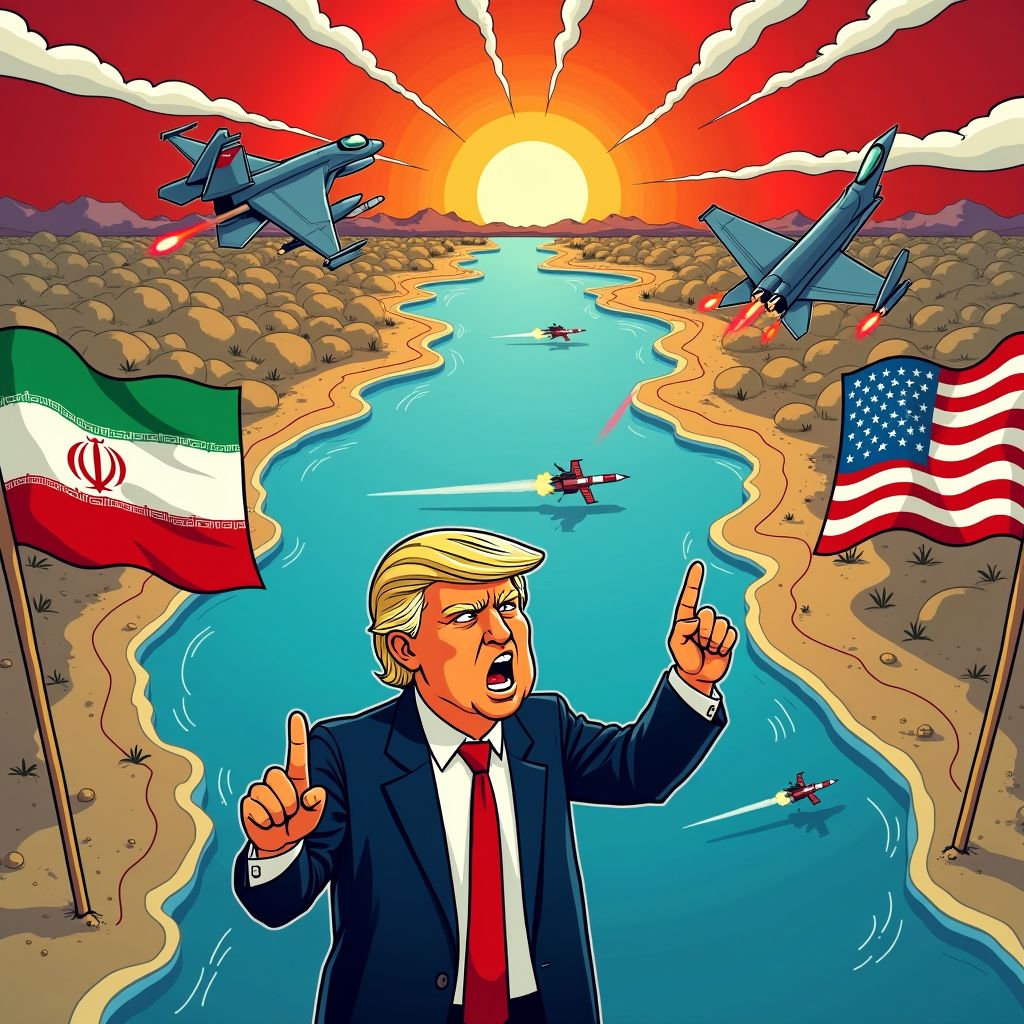
trump waarschuwt iran voor ultieme escalatie na neergeschoten f-15e
Teheran, zaterdag, 4 april 2026.
De spanning tussen de vs en iran loopt gevaarlijk op. Na de neerhaling van een amerikaanse f-15e straaljager boven iran is één bemanningslid nog steeds vermist. president trump reageerde agressief via sociale media en gaf iran een ultimatum van 48 uur om een deal te sluiten of de straat van hormuz te openen. anders volgt, aldus trump, ‘hel’. intussen lanceerde iran meerdere raketten richting golfstaten en israël. de internationale gemeenschap vreest voor verdere destabilisering. de situatie rond de strategische zeestraat bedreigt de mondiale oliemarkt en kan serieuze gevolgen hebben voor de energieprijzen in nederland en elders. pakkende diplomatieke pogingen lopen spaak.
escalating tensions in the middle east
The conflict between the United States and Iran intensified sharply after an American F-15E fighter jet was shot down over southwestern Iran. One crew member was rescued, but the weapon systems officer remains missing amid hostile terrain [1]. President Donald Trump responded aggressively on social media, issuing a 48-hour ultimatum demanding Iran either strike a deal or reopen the Strait of Hormuz [2]. Failure to comply, Trump declared, would bring ‘all Hell’ upon the country, signaling potential large-scale military action [3].
regional retaliation and civilian risks
In response to the downing of the F-15E and subsequent U.S.-Israeli strikes, Iran launched multiple missiles toward Gulf states and Israel [4]. Some projectiles were intercepted, though debris damaged commercial property in Dubai, including an Oracle office building [5]. Civilian populations remain exposed despite international warnings against targeting non-military infrastructure [6]. The Red Cross emphasized that attacks on civilian sites constitute war crimes, urging restraint from both sides [7]. Regional allies continue to bolster air defenses amid persistent drone and missile threats [8].
search operations amidst diplomatic deadlock
Both U.S. and Iranian forces are actively searching for the missing F-15E crew member in southwestern Iran [9]. The U.S. military deployed Black Hawk helicopters for the rescue mission, two of which sustained enemy fire but exited Iranian airspace safely [1]. Tehran offered a reward equivalent to $66,100 for the capture of the airman, underscoring the high stakes involved [10]. Diplomatic negotiations mediated by Pakistan have stalled, with Iran rejecting what it calls Trump’s ‘helpless, nervous’ ultimatums [11]. Previous attempts to negotiate a ceasefire have failed to yield tangible outcomes [12].
strategic implications for global trade
The prolonged closure of the Strait of Hormuz continues to disrupt global maritime traffic and energy supplies [13]. Since late February 2026, approximately 220 vessels have managed limited passage, primarily carrying essential goods, yet major shipping lanes remain compromised [14]. Oil prices have surged dramatically, rising from $73 to over $100 per barrel due to supply concerns [15]. This volatility threatens economic stability worldwide, particularly affecting countries reliant on imported oil such as the Netherlands [16]. Analysts warn that without swift resolution, energy insecurity could trigger broader financial instability [17].
broader military actions and threats
Beyond the immediate crisis, both nations have escalated broader military campaigns. U.S. and Israeli forces conducted coordinated strikes on Iranian universities and petrochemical facilities, targeting research and industrial infrastructure [18]. In retaliation, Iran’s Revolutionary Guard named 18 major U.S. technology firms—including Apple, Microsoft, and Nvidia—as legitimate military targets [19]. Russian firm Rosatom evacuated 198 personnel from the Bushehr nuclear site following repeated attacks, raising fears of radiological incidents [20]. Both superpowers maintain substantial missile and drone arsenals capable of prolonging hostilities indefinitely [21].