kpn klaagt ziggo aan over gebruik van term glasvezel
Den Haag, vrijdag, 27 februari 2026.
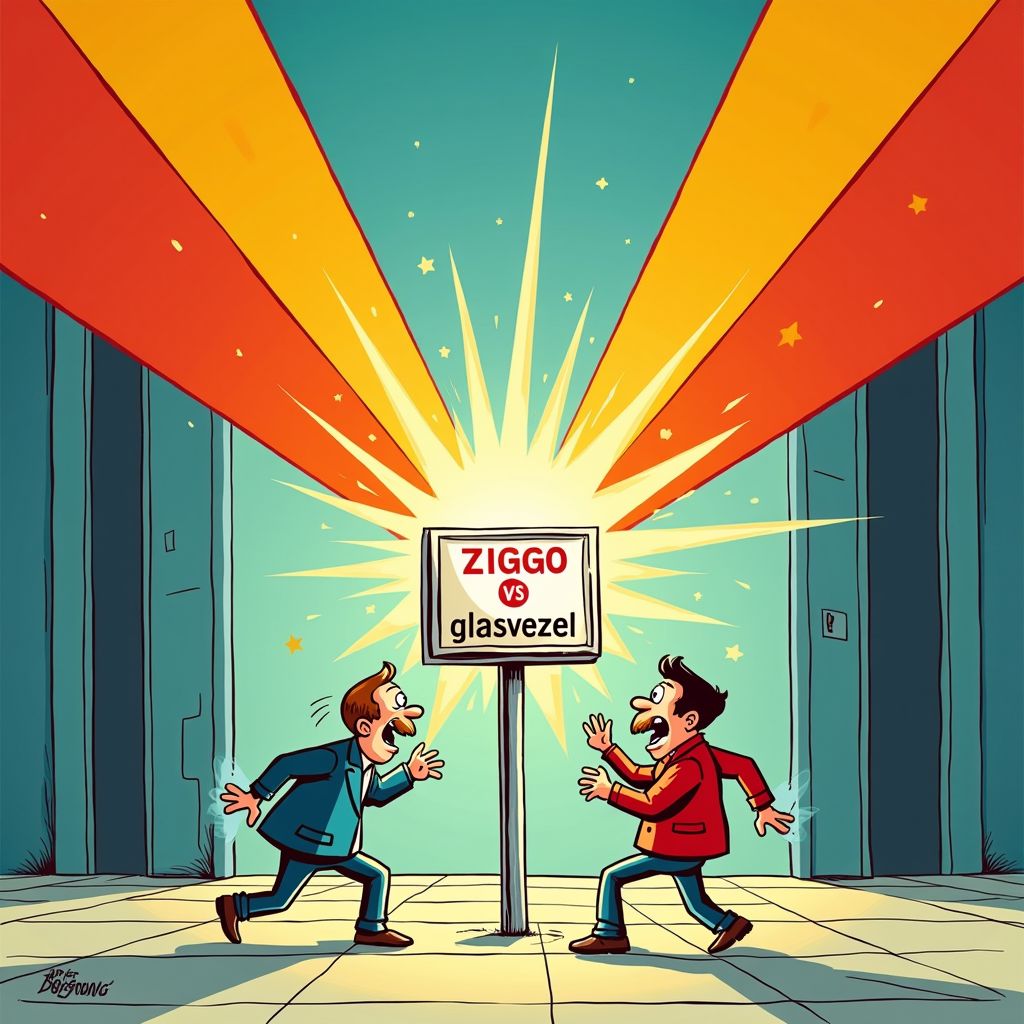
KPN heeft een rechtszaak gestart tegen Ziggo wegens het gebruik van de term glasvezel in diens marketing. Volgens KPN is de aanduiding misleidend omdat Ziggo geen volledig glasvezelnetwerk heeft. Het bedrijf wijst op een combinatie van glasvezel en coaxkabel, wat technisch geen pure glasvezelverbinding is. Consumenten zouden hierdoor verkeerd geïnformeerd worden over de aard van de internetverbinding. KPN, dat wel 100% glasvezel aanbiedt, voelt zich benadeeld. Al in 2014 waarschuwde de Reclame Code Commissie al voor dergelijke claims. De uitspraak kan invloed hebben op hoe internetproviders in Nederland adverteren.
kpn takes legal action against ziggo over fiber optics terminology
Telecom company KPN has initiated legal proceedings against its competitor Ziggo over the use of the term ‘glasvezel’ in advertising campaigns. KPN argues that Ziggo’s description of its internet connection as ‘glasvezel’ is misleading because it does not provide a fully fiber-optic connection to homes [1]. Instead, Ziggo uses a hybrid network combining glass fiber and coaxial cable infrastructure [2]. According to KPN, this technical distinction misleads consumers about the nature of the service being offered [3]. The hearing took place in The Hague on Wednesday, February 25, 2026 [4].
dispute centers on consumer perception and fair competition
The core of KPN’s complaint lies in how customers interpret the term ‘glasvezel-kabel’ used by Ziggo on its official website [1]. A spokesperson for KPN stated that such phrasing sets consumers on the wrong track regarding the technology behind their internet connection [2]. Since KPN offers what it describes as a 100 percent glass fiber solution, it considers itself unfairly disadvantaged in the marketplace [3]. The company demands that Ziggo cease using variations of the word ‘glasvezel’ in its marketing materials until its network meets full fiber specifications [4]. This positions the dispute as both technical and competitive.
regulatory precedent strengthens kpn’s position
This is not the first time Ziggo has faced scrutiny over similar claims. Back in 2014, the Advertising Code Committee (RCC) ruled that Ziggo could not advertise having a ‘glasvezelnetwerk’ due to its reliance on coaxial cables alongside fiber optics [1]. That earlier complaint was filed by Reggefiber, which has since become part of KPN [2]. The RCC determined at the time that promoting a fiber network while using mixed infrastructure misled potential customers [3]. Given this regulatory history, KPN believes it holds strong grounds for demanding clearer labeling practices today [4].
outcome may reshape dutch telecom advertising norms
Should the court rule in favor of KPN, the decision could significantly affect how internet providers across the Netherlands describe their services in advertisements [1]. Other companies using partial fiber networks might need to revise their messaging to avoid confusion among consumers [2]. Industry observers suggest the judgment may prompt broader standardization in broadband terminology [3]. For now, Ziggo has indicated it will respond publicly at a later stage but has not issued detailed comments ahead of the verdict [4]. The outcome could influence future transparency requirements in digital connectivity marketing.