boeren krijgen meer zeggenschap dankzij nieuw eu-akkoord
Brussel, donderdag, 5 maart 2026.
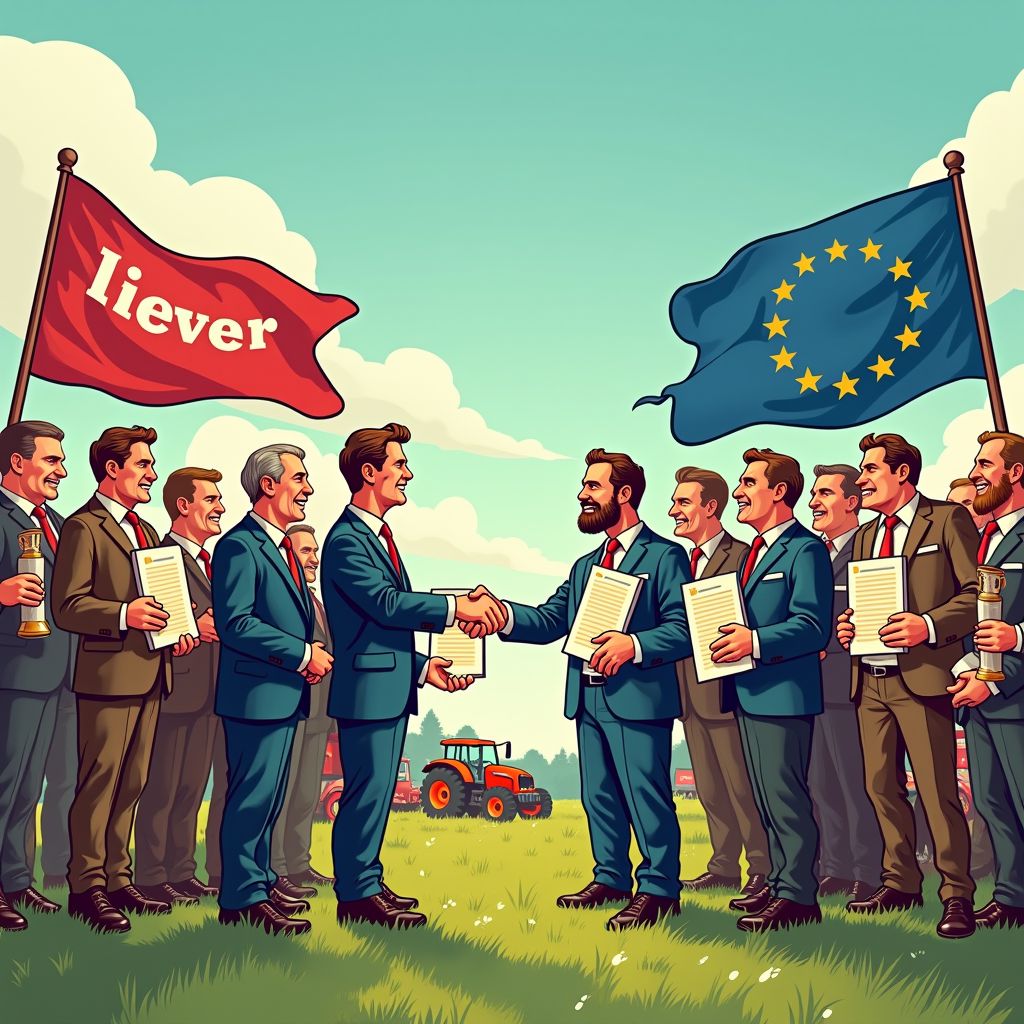
Landbouwers in de EU krijgen krachtiger contractuele rechten. Na jaren van onderhandelingen bereikten het Europees Parlement en de Raad op 5 maart 2026 een akkoord. De nieuwe regels versterken de onderhandelingspositie van boeren in de voedselketen. Hun inkomen moet hierdoor beter te stabiliseren zijn. Producentorganisaties mogen nu samen onderhandelen, wat hen meer gewicht geeft tegenover grote afnemers. Ook komt er extra bescherming voor traditionele productnamen. Termen als ‘biefstuk’ en ‘lever’ zijn voortaan alleen toegestaan voor echt vlees. Dit sluit laboratoriumvlees expliciet uit. De maatregelen richten zich op eerlijkere relaties in de agrarische sector, met name in landbouwdistricten als Gelderland en Flevoland.
eu agreement strengthens farmers’ position in food supply chain
In Brussels, Belgium, on 5 March 2026, European lawmakers finalized a landmark agreement to enhance the contractual standing of farmers within the food supply chain [1]. This development builds upon earlier legislation aimed at shielding farmers from unjust trading practices, offering additional safeguards through enforceable contracts and mediation pathways [2]. The updated framework mandates member states to publish online indicators for contractual agreements, increasing transparency across agricultural markets [1]. These actions aim to stabilize farmer incomes amid volatile pricing environments.
producer organizations gain stronger negotiation powers
Producer organizations (POs) will play a more influential role under the new regulations, gaining expanded authority for collective bargaining and market coordination [1]. For unrecognized POs, a temporary exemption from certain competition laws allows unified representation during negotiations with large buyers [1]. According to Céline Imart of the European People’s Party, these changes represent “a major victory” for farmers seeking equitable treatment [1]. Such exemptions empower small-scale producers who historically lacked leverage compared to corporate purchasers.
protection of meat terminology reinforces consumer clarity
The agreement includes strict definitions protecting traditional food labels such as ‘steak’ and ‘liver,’ which now legally apply exclusively to animal-derived products [1]. Lab-grown or plant-based alternatives may no longer use these designations, preserving authenticity for consumers [1]. This measure responds to growing concerns about misleading marketing tactics in alternative protein sectors [1]. The decision aligns with broader efforts to standardize labeling practices and maintain trust in agricultural branding across the EU.
parallel safeguards address trade impacts from mercosur pact
Simultaneously, the Council adopted protective measures linked to the pending EU-Mercosur trade agreement [3]. A bilateral safeguard clause enables rapid intervention—within four months—if import surges exceed five percent and disrupt domestic markets [3]. Temporary remedies can be imposed within 21 days after investigation launch [3]. Cypriot Minister Michalis Damianos stated this action fulfills commitments to shield EU farmers from sudden economic shocks caused by international trade flows [3].
horizon europe funding emphasizes farm innovation inclusion
Separately, MEP Bert-Jan Ruissen emphasized the importance of integrating farmers directly into research initiatives funded by Horizon Europe [6]. He advocated for sustained budgetary support and improved participation of agricultural stakeholders in shaping innovation agendas [6]. Including working farmers ensures practical relevance in developing technologies tailored to real-world production challenges [6]. This approach complements regulatory reforms by addressing structural gaps in knowledge transfer and technological adoption across rural communities.
ongoing policy discussions shape future agricultural frameworks
Discussions continue regarding the next phase of the Common Agricultural Policy (CAP) beyond 2028, with several member states urging transitional arrangements due to implementation timelines [4]. Some ministers warn that ambitious scheduling could hinder effective rollout without adequate preparation time [4]. Meanwhile, regional leaders stress the need to preserve cohesion policy funding and prevent fund consolidation that might weaken targeted investments in less developed areas [5]. Final decisions await further interinstitutional consultations scheduled throughout 2026.
Bronnen
- www.europarl.europa.eu
- dgki.laio.info
- www.consilium.europa.eu
- www.landbouwleven.be
- cor.europa.eu
- www.instagram.com