global ripple effects of middle east escalation
Den Haag, dinsdag, 3 maart 2026.
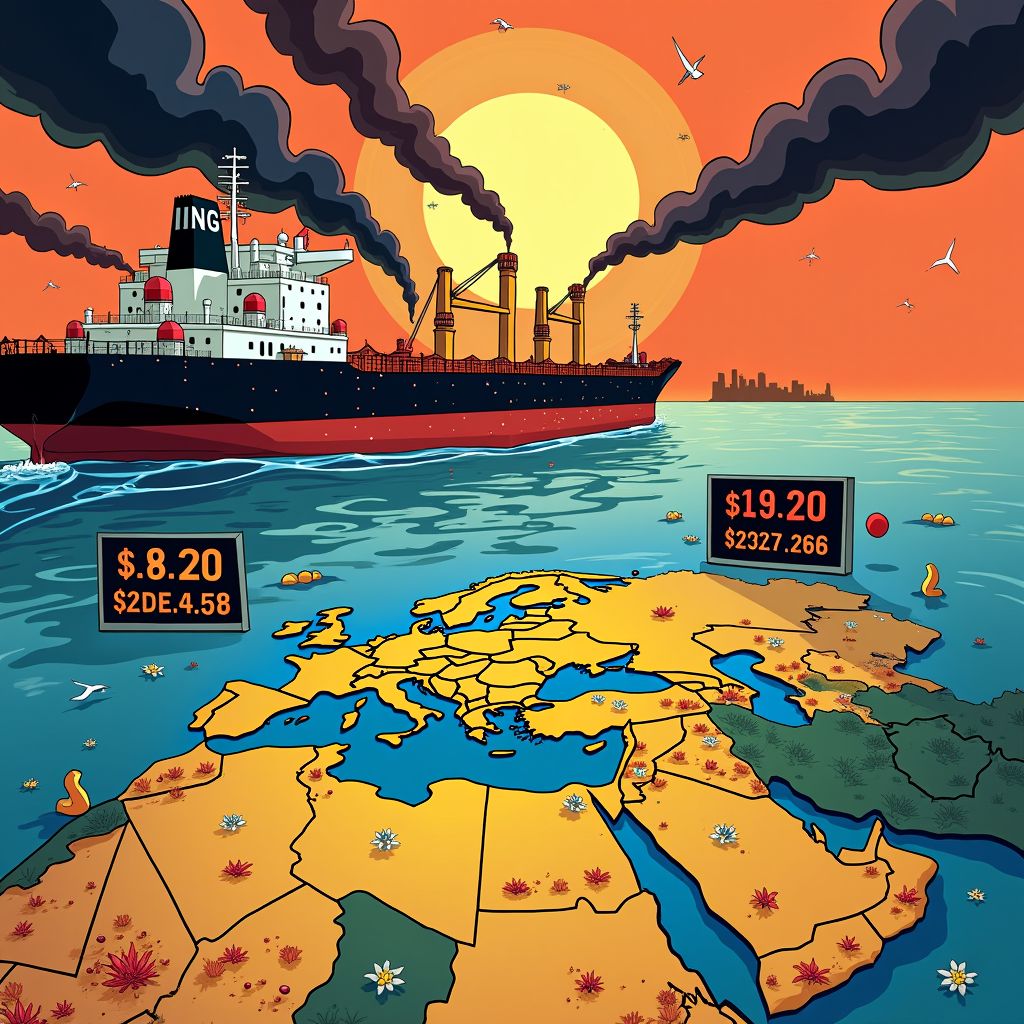
ING Groep warns of severe economic fallout if military escalation in the Middle East continues. A direct hit on Iran has already disrupted global energy markets. Oil prices jumped over 12 percent, while European gas prices surged 25 percent overnight. The Strait of Hormuz, handling nearly 20 million barrels of oil daily, is now a flashpoint. Even partial closures trigger supply shocks. Insurers pull coverage, shipping routes shift, and airlines cancel hundreds of flights. The timing couldn’t be worse. Global trade still recovers from earlier disruptions. Higher energy costs feed inflation, especially in Europe and parts of Asia. Central banks may delay rate cuts. The dollar strengthens as investors seek shelter. While short-term spikes are manageable, prolonged conflict threatens global growth. Markets now watch every geopolitical signal.
markets respond to sudden energy shock
Financial markets reacted sharply after U.S. and Israeli strikes on Iran late February 2026. Brent crude surged over 12 percent, closing near $82 per barrel from a pre-attack average of $65 [4]. Natural gas prices in Europe spiked 25 percent as traders assessed disruption risks to Qatari LNG shipments [3]. The U.S. dollar index broke past 98.00 resistance, signaling investor flight toward safe-haven assets amid uncertainty about how long hostilities may last [3]. Gold futures climbed 3 percent on initial safe-haven demand [5].
strait of hormuz at center of supply concerns
The Strait of Hormuz remains a pivotal flashpoint, carrying approximately 20 million barrels of oil per day—about one-fifth of global maritime oil trade [6]. Although not fully blocked, insurers have withdrawn coverage for vessels transiting the area, driving up shipping premiums and prompting carriers to reroute via Africa [1]. Iran’s threat to close the strait raises possibility of total disruption, which analysts warn could send oil prices soaring to $100–140 per barrel depending on duration [3]. Such a scenario would severely strain import-dependent economies across Europe and Asia [1].
european economies face renewed stress
Eurozone nations confront heightened vulnerability as energy prices spike. The region relies almost entirely on imported oil and liquefied natural gas, leaving it exposed to prolonged cost increases [1]. TTF natural gas futures jumped 25 percent immediately following the attacks, echoing the 2021–2023 energy crisis [3]. Economists caution that persistent high input costs could derail fragile industrial recoveries and reignite inflation pressures just as central bankers consider interest rate reductions [3]. Governments may need to boost spending to cushion households from surging heating and transport bills [7].
fed policy outlook shifts amid inflation risks
Higher energy prices complicate the Federal Reserve’s monetary path. Traders in Asia pulled back expectations for rate cuts in 2026, selling off fed funds futures by 3–4 ticks following the escalation [3]. With inflation still sensitive to energy costs, the Fed may delay easing despite labor market softening [3]. Analysts note that unlike Europe and much of Asia, the U.S. benefits from greater energy self-sufficiency, giving its economy a relative advantage during oil-driven shocks [3][8]. Still, elevated gasoline prices threaten consumer sentiment ahead of midterm elections [1].
emerging markets brace for currency pressures
Emerging economies dependent on fuel imports face widening current account deficits. Countries like Turkey and Hungary may experience sharp currency depreciation, with the Turkish lira and Hungarian forint particularly vulnerable to risk-off sentiment [3]. For every $10 increase in oil prices, Turkey faces a 1.1 percentage point rise in CPI inflation, while Hungary sees 0.45 percentage points and Czechia 0.2 points [3]. Central banks in Eastern Europe may postpone planned rate cuts to defend exchange rates and anchor inflation expectations [3].
conflict timeline fuels uncertainty premium
The lack of clarity over conflict duration amplifies market anxiety. Unlike the brief 12-day war in June 2025, current hostilities show signs of prolongation, with Israel stating operations will continue “as long as needed” [3]. Iran has launched retaliatory strikes against U.S. bases, Israel, and Gulf state infrastructure, escalating regional instability [3]. Should fighting persist beyond a month, economists predict structural damage to global trade flows and deeper macroeconomic imbalances [7]. Until de-escalation signals emerge, financial markets will price in continued volatility [3].
Bronnen
- www.news.cn
- www.jiemian.com
- think.ing.com
- benefitsandpensionsmonitor.com
- news.futunn.com
- financialpost.com
- think.ing.com
- www.fxstreet.com