iran's women play on as nation reels from leadership vacuum and war
Sydney, maandag, 2 maart 2026.
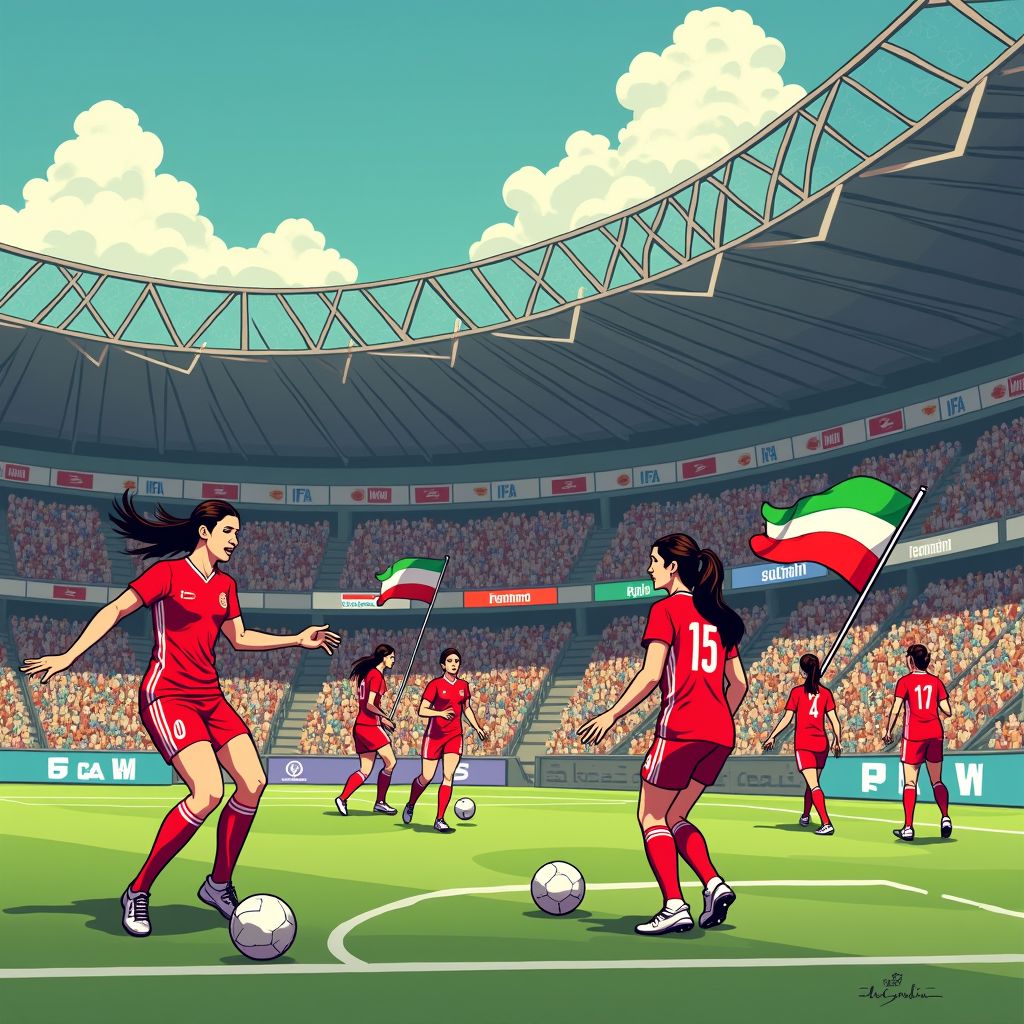
The iranian women’s football team took the pitch in australia less than 24 hours after the confirmed death of supreme leader ayatollah ali khamenei. While the middle east teeters on heightened conflict, the squad faced south korea in the asia cup opener. Their presence stunned observers, coming amid reports of airstrikes and regional instability. Team officials avoided questions about the crisis, insisting focus remains on football. Yet symbolism emerged: iranian fans waved the banned perzische vlag inside the stadium. Some players reportedly withdrew earlier over conscience-driven protest. FIFA monitors the situation closely. The 3-0 loss masks deeper tension—athletes caught between duty to country and global scrutiny. As the world watches, the team walks a razor’s edge between sport and politics. Their every move echoes far beyond the pitch. The real match isn’t just for world cup qualification—it’s for meaning in chaos.
team under pressure amid national crisis
The Iranian women’s football team competed in the AFC Women’s Asian Cup on March 2, 2026, just one day after the confirmed death of Supreme Leader Ayatollah Ali Khamenei [ESPN]. The team faced South Korea in Gold Coast, Australia, despite ongoing military escalations involving Israel and the United States [CTV News]. The geopolitical turmoil added intense pressure on the squad, already grappling with internal dissent. Two players, including Kowsar Kamali, had previously withdrawn from the team citing moral objections [ABC]. The match marked Iran’s opening fixture in Group A, serving as a qualifier for the 2027 FIFA Women’s World Cup [ESPN].
silence from leadership, defiance in stands
Head coach Marziyeh Jafari declined to address questions about Khamenei’s death during a pre-match press conference, stating, “I don’t think we should talk about this topic now” [ABC]. An AFC media officer intervened to redirect focus toward the game itself. Despite official silence, symbolic resistance appeared in the stands. Supporters displayed the historic Perzische vlag, representing pre-Islamic Iran, prompting intervention by security personnel [ESPN]. Fans shouted slogans supporting Reza Pahlavi, son of the former Shah [ESPN AU]. The Iranian Football Federation did not comment publicly on the displays or the broader implications of competing abroad during domestic unrest [Nieuws.nl].
on-field struggle reflects wider imbalance
South Korea dominated possession and shots, ultimately winning 3–0 against Iran at Gold Coast Stadium [Sportstar]. The visitors managed only three shots compared to South Korea’s 32, retaining just 21% of ball possession [Sportstar]. Choe Yu-ri opened the scoring in the 37th minute, followed by Kim Hye-ri’s penalty and Ko Yoo-jin’s header [Sportstar]. Iran’s captain, Zahra Ghanbari, left the pitch late due to injury following a collision [Sportstar]. Ranked 68th globally by FIFA, Iran faced significant technical disparities against the world No. 21 side [ESPN]. The result placed Iran at a disadvantage in their bid to qualify for the 2027 Women’s World Cup through the tournament [ESPN].
financial and political scrutiny intensify
While the immediate focus was on gameplay, structural inequalities drew attention. The Women’s Asian Cup offered $1.8 million in total prize money, starkly contrasting the men’s $14.8 million pool [ABC]. 722.222 calculates the percentage difference in prize funds [ABC]. This disparity fuels criticism about investment in women’s sports. Simultaneously, FIFA announced it would monitor developments in Iran closely [Nieuws.nl]. Concerns persist over athlete safety and potential exploitation of sports platforms for political legitimacy amid active conflict and repression [ABC]. The participation of state-linked teams under such conditions raises ethical debates internationally [ABC].