Hologram of suspect brings new hope in 2009 Bilthoven rape case
Bilthoven, maandag, 2 maart 2026.
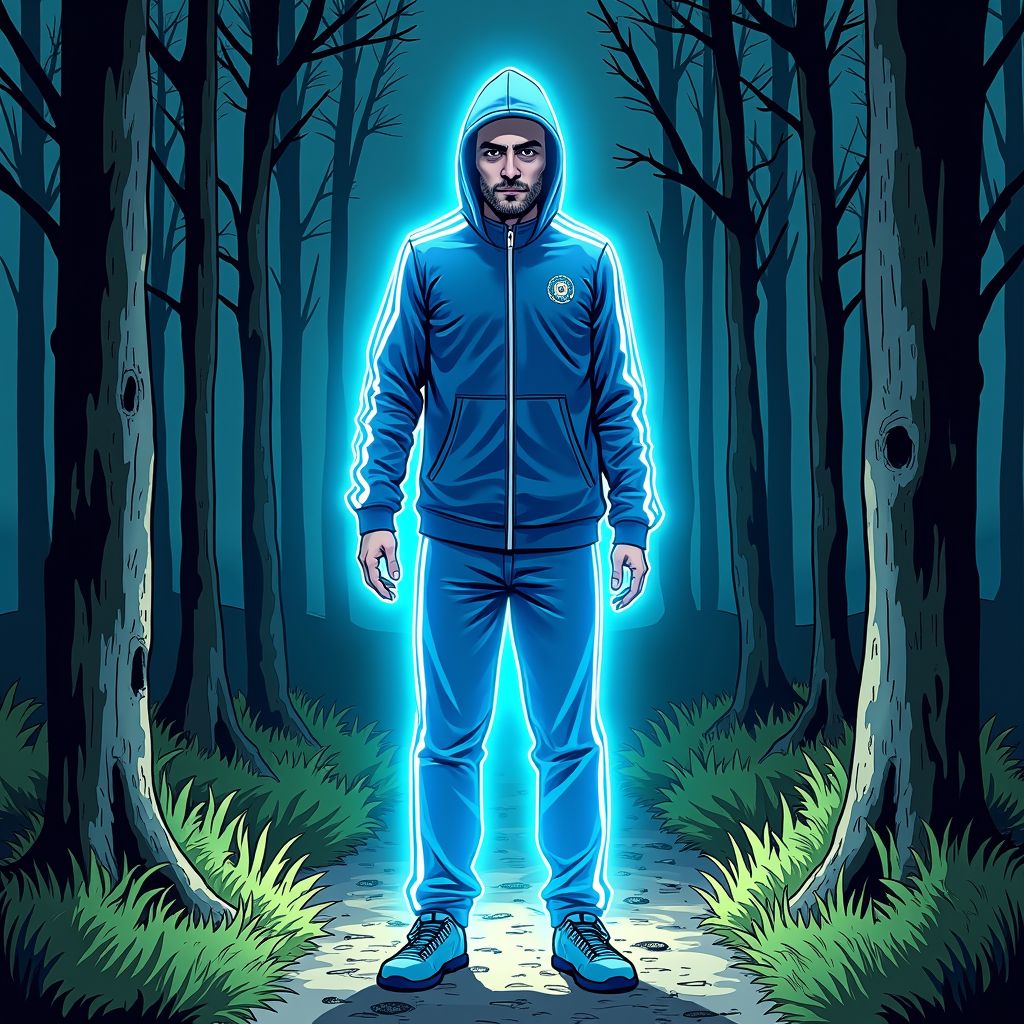
The police in Bilthoven are using a life-size hologram to find the perpetrator of a sexual assault from 2009. The 3D image shows how the suspect looked at the time of the attack. He grabbed a 15-year-old girl off her bike in broad daylight. She was cycling through the Panbos forest near Bilthoven. The attacker wore a blue tracksuit jacket with white stripes. He smelled of alcohol and spoke Dutch with a slight accent. His face appears in a composite sketch. The full figure now comes alive as a hologram. This makes his posture, clothing and presence visible. Witnesses saw nothing unusual before the attack. The police released the same 3D model in 2021. It led directly to identifying a suspect in a similar case. A reward of €10,000 remains available for decisive information. The victim once wrote an open letter urging the man to come forward. The case stays active until justice is done.
A breakthrough in a cold case
Police in Bilthoven have launched a novel approach to solve a 16-year-old rape case using a life-sized hologram of the suspect [1]. The 3D model, based on the victim’s memory, depicts how the attacker appeared during the assault in September 2009 [2]. Authorities displayed the hologram publicly in the local shopping center “De Kwinkelier” and featured it in national broadcasts including Opsporing Verzocht [1][3]. The initiative aims to spark recognition among the public who might connect the image to someone in their circle [4].
Details of the attack
On September 4, 2009, a 15-year-old girl was attacked while cycling home from school through the Panbos forest near Bilthoven [2][5]. Around 1 PM, a man grabbed her off her bicycle on a forest path leading toward Bosch en Duin [3][6]. He threatened her with violence and pulled a garbage bag over her head before committing the assault [3][5]. At the time, he was estimated to be between 30 and 40 years old, stood approximately 1.80 meters tall, and had a heavy build [2][4]. He wore a blue tracksuit jacket with white stripes, beige trousers, and dark shoes [4][7].
Description of the suspect
Witnesses did not report anything suspicious prior to the incident, indicating the attacker blended in until acting [3][6]. Descriptions state he appeared unkempt, with dark greasy hair, facial stubble, and smelled strongly of alcohol [4][7]. His eyes were light-colored, possibly blue, and his skin tone was fair [2][5]. Though he spoke fluent Dutch, investigators noted a faint accent [4][7]. Clothing details such as the distinctive blue tracksuit remain central to identification efforts more than sixteen years later [2][5]. Police emphasize these characteristics could still aid recognition despite aging [1].
Technological innovation in criminal investigations
This marks one of the few instances where Dutch law enforcement uses a 3D holographic projection in a cold case investigation [1][3]. John Riemen from the Center for Forensic Biometrics explained that unlike traditional sketches showing only faces, holograms display body shape, stance, and attire—elements crucial for triggering memories [2][5]. The technology previously helped identify a suspect in a 2010 sexual offense case in Schiedam and Vlaardingen after a colleague recognized him [2][6]. Such methods require approval procedures, victim cooperation, and verification mechanisms before deployment [1].
Public appeal and previous attempts
Despite earlier appeals in December 2025, no conclusive matches emerged from submitted DNA samples [1][3]. Over three hundred tips followed prior publicity campaigns, yet none yielded a positive identification [2][6]. A financial incentive of €10,000 remains offered for information leading to the suspect’s arrest [1][4]. The victim also issued a personal plea through an open letter published online, urging the perpetrator to surrender voluntarily [1][5]. Authorities stress that any potential match will rely on forensic evidence rather than eyewitness accounts alone [1][5].
Ongoing investigation and societal impact
The ongoing case highlights broader concerns about women’s safety and access to justice years after trauma [5][7]. Advocates praise the innovative investigative technique but underscore the emotional toll prolonged unresolved cases take on survivors [7]. Law enforcement continues collecting anonymous leads through dedicated hotlines like the Crime Stoppers number (0800-7000) and the National Tip Line (0800-6070) [1]. The digital reconstruction will circulate widely across regional and national platforms aiming to reach individuals beyond Bilthoven [2][3].