German auto giants shaken by Chinese competition as jobs vanish in Stuttgart
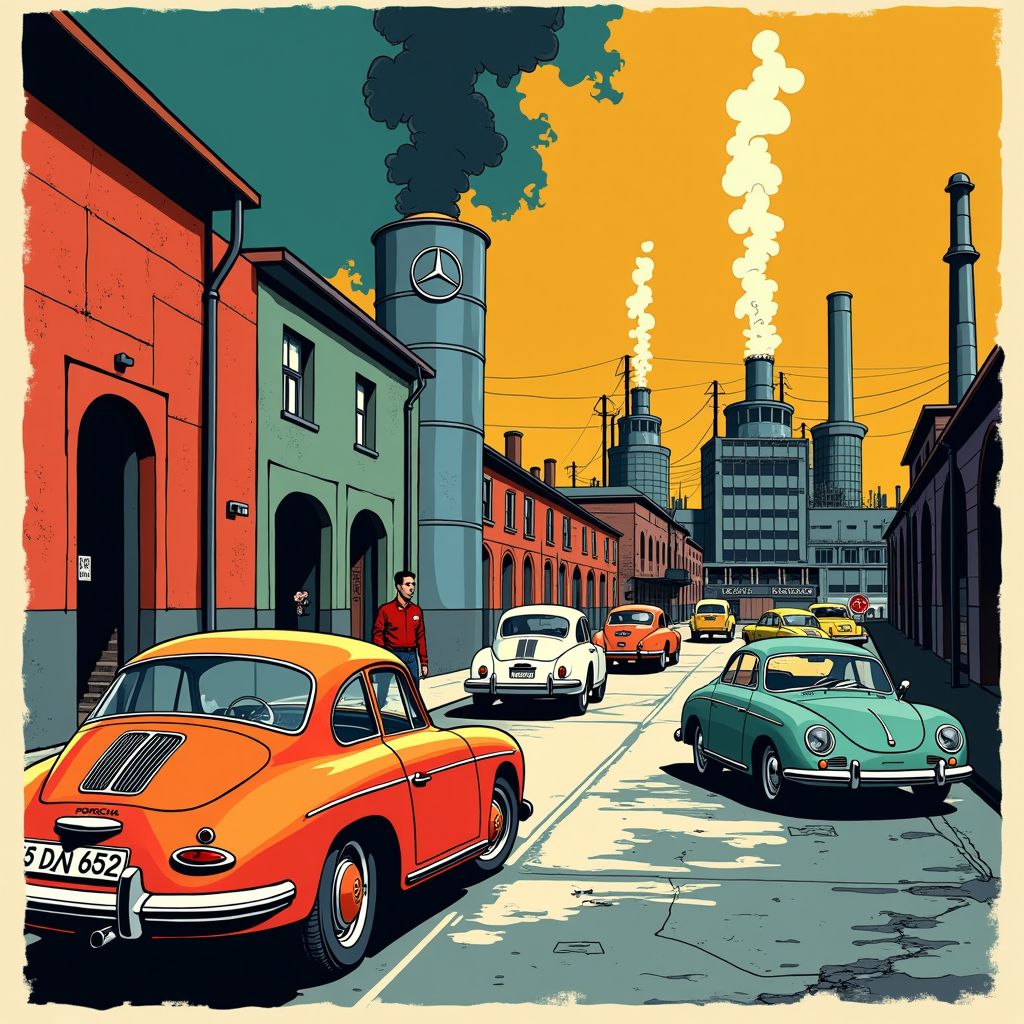
Stuttgart, zaterdag, 28 februari 2026.
The German automotive industry faces a profound crisis as relentless competition from China reshapes its future. In Stuttgart, home to Porsche and Mercedes-Benz, workers fear for their livelihoods. Profits have collapsed—Porsche’s down 96% in 2025—and thousands of jobs are being cut across major manufacturers. Companies like Bosch plan to close plants in Germany and shift production to Asia. Despite strong exports, rising production costs and slower innovation compared to China threaten the heart of ‘Made in Germany.’ Top executives now demand sweeping reforms to survive.
crisis deepens in stuttgart as chinese competition bites
Workers at Porsche in Stuttgart report growing anxiety over job security amid a sharp downturn in profits. One employee, Nico (45), stated that morale is low and questioned whether he would still receive his pension from the company [1]. The decline comes after Porsche reported a staggering 96% drop in annual profit during 2025 [2]. Workers express concern over shifting market dynamics and increasing pressure from foreign competitors, particularly from China [1].
mass layoffs signal structural upheaval in german auto sector
Major German automakers have announced significant workforce reductions. Porsche plans to eliminate 1,900 positions, while Bosch intends to cut 22,000 jobs within its mobility division by 2030 [2]. Mercedes-Benz also faces internal restructuring following a 50% decline in annual profits, which fell to 5.3 billion euros in 2025 [3]. These developments reflect broader instability across the German automotive landscape, driven by declining competitiveness against fast-moving Asian rivals [2][3].
mercedes struggles in key chinese market
Mercedes-Benz experienced a 20% year-on-year decline in vehicle sales in China during 2025 [2]. This loss of market share coincides with changing consumer preferences toward locally produced electric vehicles that offer lower prices and comparable luxury features. Huawei’s Maextro S-800, priced roughly half that of the Mercedes S-Class, outperformed the German sedan in sales [2]. Additionally, China introduced special luxury taxes on expensive imported cars starting in 2025, further dampening demand [2].
profit margins shrink under cost pressures
Bosch recorded an operating margin of just 2% in 2025 despite generating 91 billion euros in revenue [4]. This marks a notable decline from previous years, attributed to rising import tariffs and substantial provisions for restructuring activities [4]. Meanwhile, other German automotive firms face similar financial strain due to elevated labor and energy costs. Executives cite difficulty matching the production efficiency and pricing strategies of Chinese manufacturers, who benefit from control over rare earth minerals and semiconductor supply chains [2][4].
executive action meets diplomatic efforts
In late February 2026, German Chancellor Friedrich Merz traveled to Beijing accompanied by senior executives from Mercedes-Benz, Volkswagen, and BMW to discuss trade relations and market access [2]. The visit aimed to strengthen ties and address competitive imbalances. Simultaneously, industrial leaders including those from Siemens and Deutsche Bank issued a joint call for deregulation and increased private investment totaling 600 billion euros to revitalize domestic manufacturing capabilities [5].
tax revenues plummet in industrial heartland
Tax contributions from businesses in Stuttgart dropped sharply from 1.3 billion euros in 2024 to 750 million euros in 2025 [2]. -42.308 This represents a decline of approximately 42.3%, signaling weakening corporate performance in the region [2]. Lower profitability and employment reductions directly affect public finances, raising concerns about long-term fiscal sustainability in areas heavily dependent on the automotive sector [2].