Tim Cook stepped down after 15-year era at Apple, handing CEO role to hardware insider John Ternus
Cupertino, maandag, 20 april 2026.
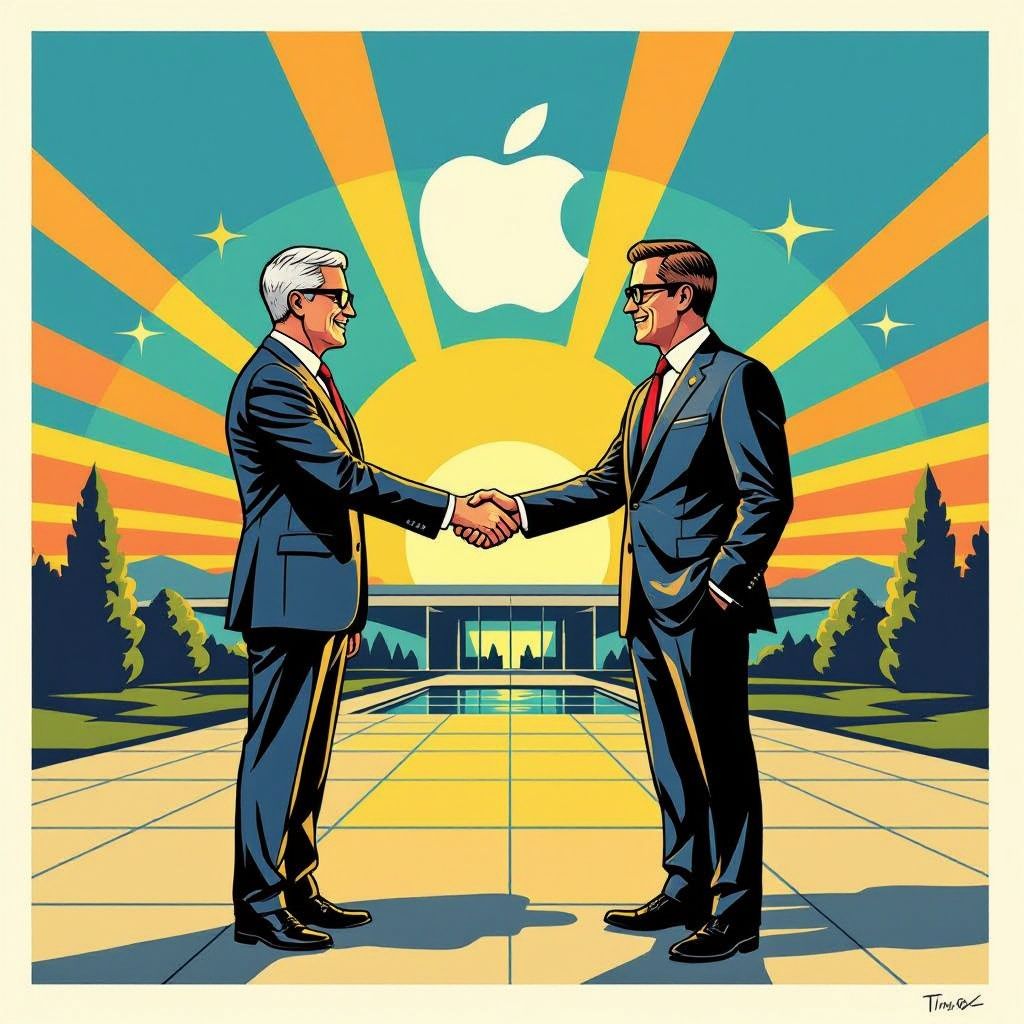
After fifteen years shaping one of tech’s most valuable companies, Tim Cook steps down as Apple CEO in September 2026. He passes the role to John Ternus, the longtime hardware engineering leader few outside Cupertino know well. Cook remains involved as executive chairman, focusing on policy and big-picture strategy. Ternus, who helped design the iPhone and Apple Watch, now leads a company valued at $4 trillion—up from $350 billion when Cook took over. Analysts see this moment as pivotal. Under Cook, Apple expanded globally and prioritized sustainability. Now, with artificial intelligence reshaping consumer tech, Ternus faces pressure to deliver new breakthroughs beyond the iPhone. His deep engineering roots suggest a shift toward bolder innovation. Insiders say he has the trust of both Cook and the late Steve Jobs.
transition at the top
Tim Cook steps down as chief executive officer of Apple on September 1, 2026, concluding a 15-year tenure at the helm of the technology giant based in Cupertino [1]. He hands over leadership to John Ternus, currently serving as senior vice president of Hardware Engineering [1]. This change marks a significant leadership shift for Apple, which has grown substantially under Cook’s direction since he assumed the role in 2011 following Steve Jobs’ passing [2]. The transition received unanimous approval from Apple’s board of directors [1].
cook’s legacy and continued involvement
During his time as CEO, Tim Cook oversaw Apple’s expansion from a market capitalization of approximately $350 billion to $4 trillion by 2026 [2]. Annual revenue rose from $108 billion in 2011 to $416 billion in 2025 [1]. The company broadened its global presence to operate in over 200 countries with more than 500 retail stores worldwide [1]. Apple introduced major products including the Apple Watch, AirPods, and Apple Vision Pro during Cook’s leadership [2]. He will remain with Apple as executive chairman of the board, focusing on strategic initiatives and global policymaking [1].
john ternus takes the helm
John Ternus assumes the role of CEO effective September 1, 2026, joining Apple’s board of directors concurrently [1]. With over 25 years at Apple, Ternus began his career there in 2001 and steadily advanced through the ranks [1]. He previously held roles leading hardware engineering and became a member of the executive team in 2021 [1]. Described by Cook as having “the mind of an engineer, the soul of an innovator, and the heart to lead with integrity and with honor,” Ternus is seen as a continuity candidate deeply familiar with Apple’s culture and operations [1].
strategic challenges ahead
Ternus inherits a company navigating rapid technological shifts driven by artificial intelligence and evolving competitive landscapes [2]. While Apple maintains strong financial performance, investors expect fresh innovation cycles beyond the iPhone ecosystem [2]. Sustainability goals achieved under Cook include a 60% reduction in carbon emissions compared to 2015 levels despite near-doubling of revenue [1]. As global scrutiny intensifies on Big Tech firms, Ternus must balance aggressive R&D with regulatory compliance and supply chain responsibility [2]. His engineering background suggests a focus on integrated hardware-software solutions rather than standalone software ventures.
board governance adjustments
Alongside the CEO transition, Arthur Levinson transitions from non-executive chairman to lead independent director on September 1, 2026 [1]. Levinson has served on Apple’s board for 15 years prior to this adjustment, providing stable oversight throughout Cook’s leadership period [1]. The move reinforces Apple’s commitment to robust corporate governance structures even as it undergoes generational leadership change [1]. No other immediate changes to the composition of the board were announced alongside these appointments [1].