Cuba braces for deeper crisis as US tightens fuel squeeze
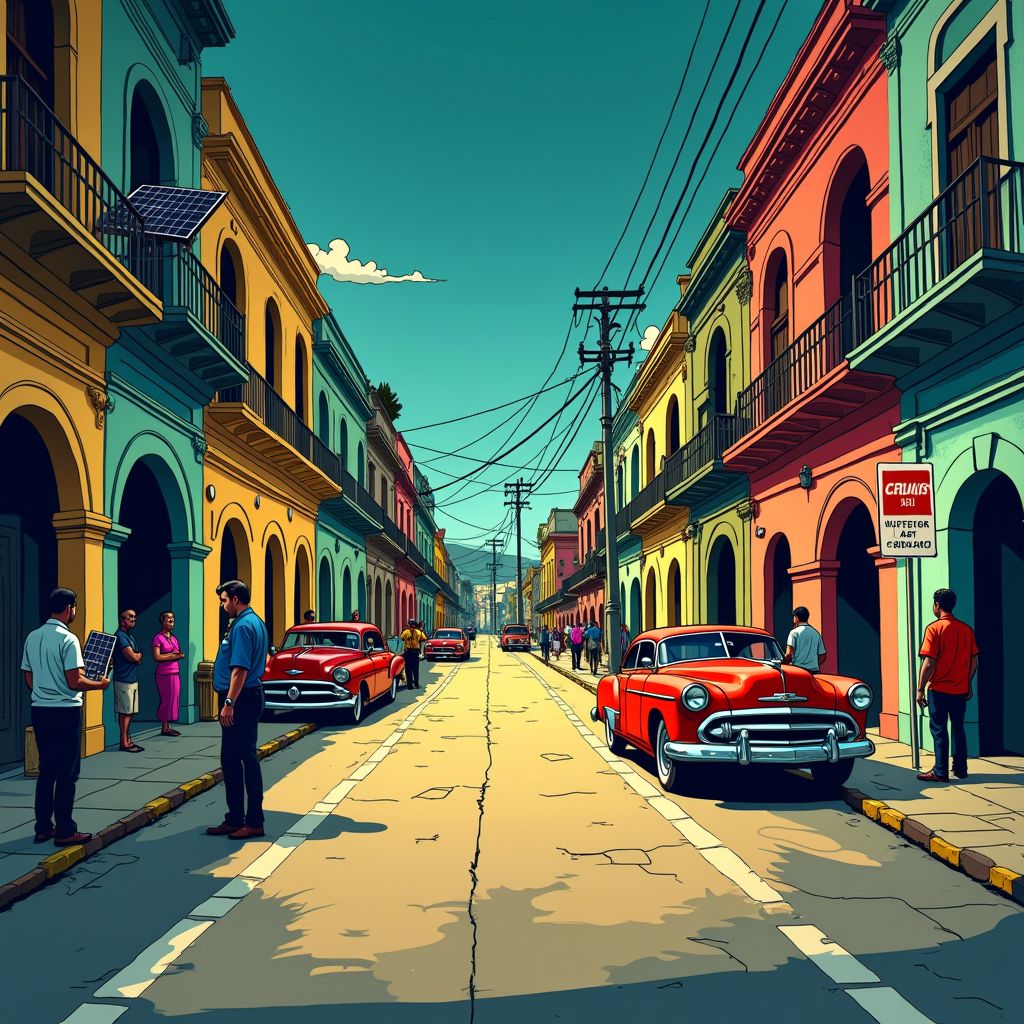
Havana, zondag, 8 februari 2026.
Cuba has entered a state of emergency, slashing workweeks and cutting transport to keep hospitals, water, and power running. This comes as the US imposes secondary sanctions, threatening any country that ships fuel to the island. With just 20 days of oil reserves left, Havana is scrambling. The government now allows citizens and businesses to sell self-generated solar power directly—a historic shift. While officials promise stability, internal warnings suggest potential collapse of vital services. Schools shift online, factories slow down, and blackouts loom across half the island. The move echoes the 1990s ‘special period,’ but today’s crisis hits harder, exposing millions to rolling outages, scarce medicines, and empty shelves. The real test begins now: how long can Cuba hold?
cuba enters emergency mode as us fuel sanctions tighten
Cuba has declared a nationwide energy emergency following intensified US sanctions targeting its fuel imports. The government announced sweeping measures to preserve dwindling oil reserves, prioritizing health care, water supply, and electricity generation [1]. With only 20 days of oil remaining at current consumption rates, officials warn of widespread disruptions [7]. The US executive order issued on February 1, 2026, enables tariffs on nations shipping fuel to Cuba, effectively isolating the island from key suppliers like Mexico [1][4]. This escalation mirrors Cold War-era pressures but arrives during heightened regional instability.
drastic reductions in transport and work schedules
State enterprises have shifted to a four-day workweek to conserve fuel, according to Deputy Prime Minister Oscar Pérez-Oliva Fraga [1][4]. Public transportation networks face severe cuts: national trains now operate once every eight days, down from every four, while intercity buses and ferries see sharply reduced service [3][5]. In Havana, bus routes are scaled back, complicating commutes for workers and patients alike [3]. These changes echo policies from the 1990s ‘special period,’ when Soviet subsidies ended abruptly [1][4]. Officials stress that administrative functions will concentrate Monday through Thursday to minimize travel needs [4].
education pivots to hybrid models amid power shortages
Schools and universities are adapting to prolonged energy constraints through compressed timetables and distance learning [3]. Primary schools remain open with flexible hours, but secondary and pre-university students transition to semi-in-person formats [3]. Higher education institutions implement blended learning, relocating many students to their home provinces where family support may ease burdens [3]. However, unreliable internet and electricity leave thousands unable to participate fully [3]. Despite disruptions, graduation requirements will be honored, though major academic events like ‘University 2026’ are postponed indefinitely [3].
historic opening for private energy sales approved
For the first time, Cuban law permits individuals and businesses generating renewable energy to sell surplus power directly to third parties [2]. Previously, all self-generated electricity had to go exclusively to the state-run Electric Union [2]. This change aims to accelerate solar adoption among households and firms seeking energy independence [2]. Authorities cite ongoing efforts to boost domestic oil output and expand solar infrastructure, including plans to distribute tens of thousands of residential solar units [5]. The policy reflects desperation as much as innovation amid tightening external pressure [2][5].
humanitarian concerns grow amid rising unrest
Human rights monitors report 953 protests across Cuba in January 2026 alone, including 395 directed explicitly against state authority [5]. Citizens express frustration through street graffiti bearing slogans like ‘Viva Trump’ and demands for invasion, signaling deep disillusionment [5]. Medical facilities struggle with erratic power, risking vaccine spoilage and interrupted treatments [7]. Food production falters due to insufficient irrigation and refrigeration [3]. Economists warn that without immediate external aid, vital systems could collapse within weeks [7]. The government denies capitulation, stating dialogue with the US must occur without preconditions [1].
Bronnen
- www.france24.com
- en.cibercuba.com
- en.cibercuba.com
- www.france24.com
- www.infobae.com
- www.dw.com
- www.youtube.com