eu boosts 'made in europe' push with new industrial accelerator act
Brussel, donderdag, 5 maart 2026.
the european commission has launched the industrial accelerator act to strengthen the eu’s manufacturing base amid growing global competition. the plan targets strategic sectors like steel, cement, electric vehicles, and renewable tech, demanding higher local production for public contracts. a key rule requires large foreign investments in green industries to ensure at least 50% of employees are based in the eu. notably, the framework excludes china from preferred partner status, signaling a shift toward greater industrial autonomy. the move aims to protect jobs and secure supply chains, but raises concerns about increased costs and potential trade tensions. the act marks a decisive step in europe’s effort to balance decarbonization with economic sovereignty.
framework targets strategic sectors for growth
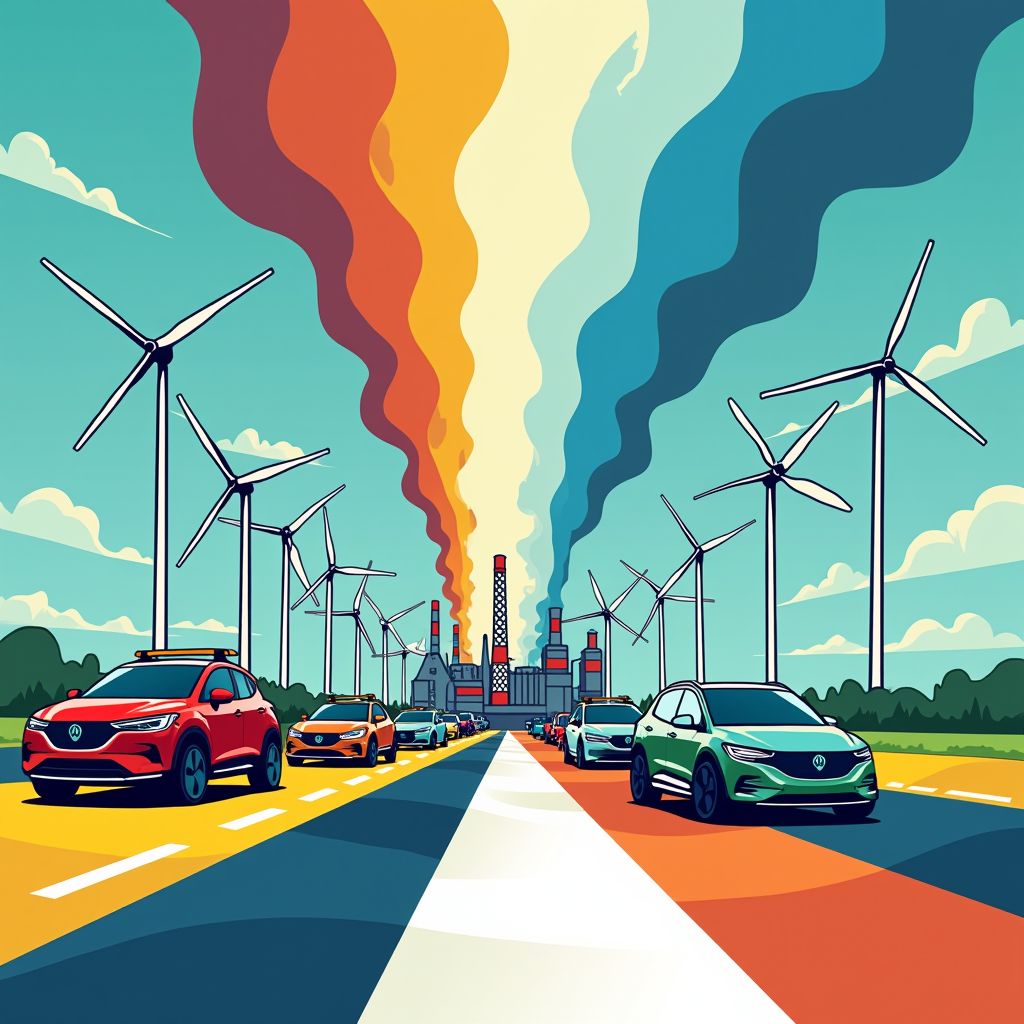
The Industrial Accelerator Act focuses on strengthening key industrial sectors deemed vital for Europe’s green transition and economic resilience. These include steel, cement, aluminum, electric vehicles, batteries, solar and wind technologies, as well as heat pumps and nuclear energy [1]. By setting targeted requirements for public procurement and investment, the EU aims to stimulate domestic demand for low-carbon products manufactured within its borders. This strategic intervention responds to concerns about deindustrialization and reliance on imported clean technologies [2]. The act specifically addresses energy-intensive industries where competitiveness has been challenged by high energy prices and stringent environmental regulations compared to other regions [3].
local content rules shape public spending
A central mechanism of the Industrial Accelerator Act is the imposition of ‘Made in EU’ criteria for government tenders and subsidy programs. Public procurement accounts for approximately 15% of the EU’s GDP, providing significant leverage to steer market demand [3]. Under the new rules, public projects must utilize carbon-light materials such as steel, aluminum, cement, and concrete produced within qualifying territories [4]. Similarly, support schemes for electric vehicles and sustainable energy infrastructure require a substantial portion of components to be manufactured locally [5]. This approach mirrors policies like the US Buy American Act, aiming to convert public expenditure into tangible benefits for European industry and employment [6].
foreign investment faces new conditions
Large-scale foreign direct investments in critical EU industries now face stricter oversight under the Industrial Accelerator Act. Projects exceeding 100 million euros in strategic sectors must meet specific benchmarks to gain approval [7]. A key requirement mandates that at least 50% of the workforce involved in such ventures consists of employees based in the European Union [8]. Additionally, proposals may need to demonstrate technology transfer and knowledge-sharing commitments to European partners [1]. While the legislation does not explicitly name countries, internal documents indicate it primarily targets nations whose companies dominate global supply chains in areas like battery storage, EVs, and photovoltaics [1]. Notably, China is excluded from the list of preferred international partners for cooperation [1].
balancing ambition with practical challenges
While designed to bolster European industrial capacity, the Industrial Accelerator Act faces criticism regarding its feasibility and potential consequences. Industry groups warn that rigid local content rules could increase production costs, particularly in automotive supply chains still dependent on external components like batteries [1]. There are also fears that the policy might provoke retaliatory measures, disrupting global trade relations [1]. Some experts question whether labeling goods from free-trade agreement partners like Vietnam as ‘European’ dilutes the initiative’s intended impact [6]. Furthermore, there is concern that focusing on less sustainable technologies, such as plug-in hybrid vehicles, undermines the climate goals intertwined with the industrial strategy [6]. Ensuring genuine emissions reductions rather than merely shifting them remains a paramount challenge [6].
long-term vision backed by structural reform
The overarching objective of the Industrial Accelerator Act is to raise the contribution of the EU’s manufacturing sector to 20% of gross domestic product by 2035, up from 14.3% in 2024 [3]. Achieving this necessitates not just financial incentives but also streamlined regulatory processes [5]. To facilitate rapid deployment of decarbonization projects, the act introduces simplified permitting procedures through a single digital gateway for industrial applications [5]. Proposed industrial acceleration zones aim to foster clusters of clean production and resource sharing among businesses [5]. The success of this agenda hinges on transforming current vulnerabilities—such as dependence on foreign energy and raw materials—into opportunities for building resilient, sovereign value chains essential for both security and sustainability [6].
Bronnen
- www.guancha.cn
- www.energie-nederland.nl
- www.duurzaam-ondernemen.nl
- www.change.inc
- nl.linkedin.com
- www.volkskrant.nl