emotionele viering op de dam na dood van khamenei
Amsterdam, zondag, 1 maart 2026.
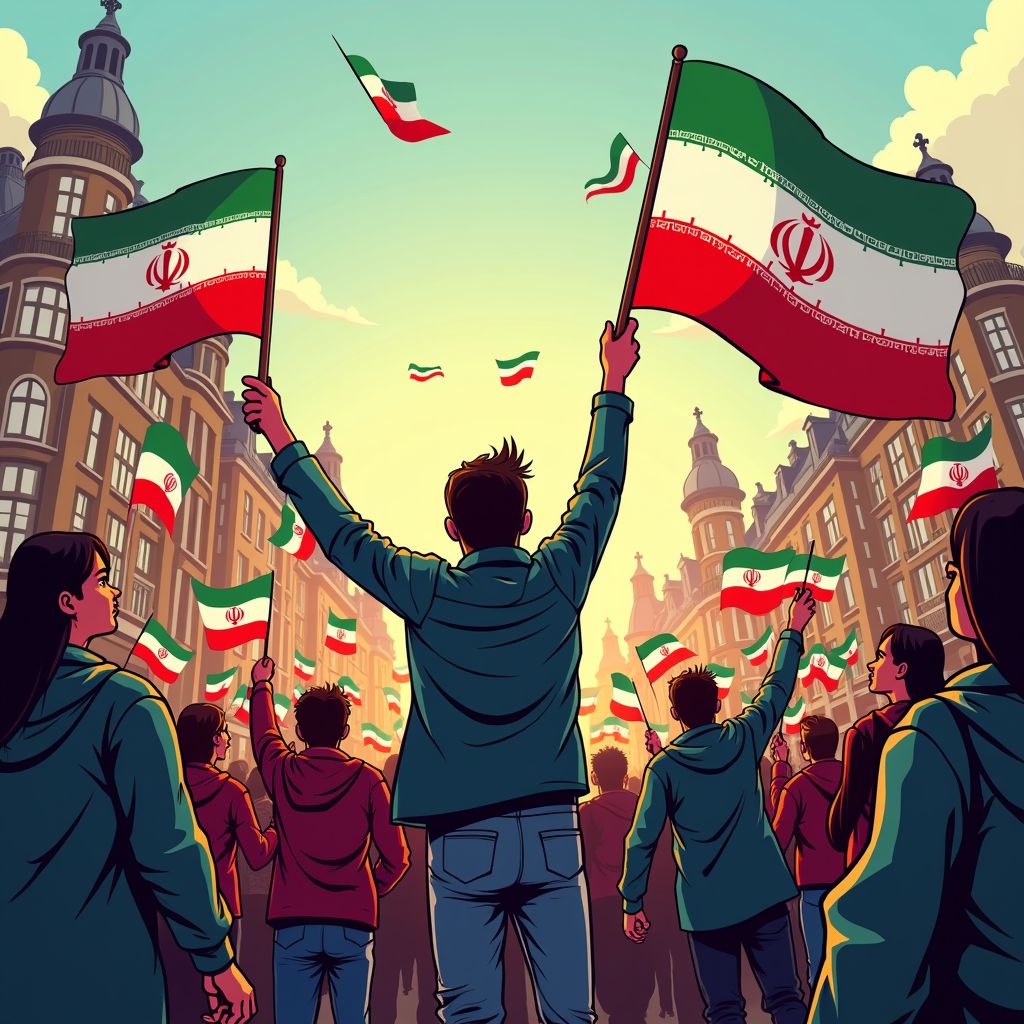
Rond driehonderd Iraanse Nederlanders verzamelden zondag op de Dam in Amsterdam om de dood van ayatollah Ali Khamenei te vieren. Voor veel exil-Iraniërs markeert dit het begin van het einde van het islamitische regime. De sfeer was intens emotioneel, met zingen, dansen en het wapperen van oude Iraanse vlaggen. Sommige demonstranten juichen Reza Pahlavi toe als toekomstig leider. Mensen spraken van bevrijding en hoop op democratische verandering. Intussen is het internet in Iran grotendeels uitgeschakeld, wat het contact met familie bemoeilijkt. De viering onderstreept de diepe betrokkenheid bij het vaderland, ondanks de afstand.
spontaneous celebrations erupt on amsterdam’s dam
Over three hundred Iranian Dutch gathered on the Dam in Amsterdam on Sunday afternoon to celebrate the reported death of Iran’s Supreme Leader, Ayatollah Ali Khamenei [1]. The event marked a pivotal emotional release for many exiled Iranians who see his passing as the beginning of the end for the Islamic Republic [1]. Participants waved pre-revolutionary Iranian flags and chanted slogans such as ‘Hey hey, Khamenei is flown!’ [1]. Emotional scenes unfolded as attendees sang, danced, and embraced each other amid shared hopes for democratic change in Iran [1][2].
symbolism of monarchy and resistance
Many demonstrators expressed support for Reza Pahlavi, son of the last Shah of Iran, as a potential future leader [1]. His name echoed through chants including ‘the only alternative is Reza Pahlavi!’ during the gathering [1]. As the most visible figure opposing the current regime from abroad, Pahlavi has become a symbolic focal point for opposition movements [1]. Though some attendees acknowledged political divisions among exiles, there was broad agreement that Khamenei’s demise signaled irreversible transformation [1]. The display of historical national symbols reinforced collective identity beyond religious rule [1].
information blackouts complicate communication
Despite the celebratory atmosphere, participants reported being unable to contact family members inside Iran due to widespread communications disruptions [1]. Internet connectivity across Iran dropped sharply following the attacks, operating at just four percent of normal capacity according to network monitoring group NetBlocks [3]. Mobile networks were also severely restricted, limiting access to real-time updates or personal coordination [3]. One attendee described feeling both joy and anxiety: ‘We’re free here—but what about our loved ones under blackout?’ [1]. These technical barriers underscore the isolation faced by citizens amidst escalating conflict [3].
regional tensions escalate after leadership strike
The U.S. and Israeli military operations targeting senior Iranian figures began on February 28, 2026, according to official statements [4]. Among those confirmed killed alongside Khamenei were top advisors and commanders, including Ali Shamkhani and Mohammad Pakpour [4]. Iran responded hours later with missile strikes toward Israel, resulting in casualties in Jerusalem and Tel Aviv [5]. Regional airspace closures affected commercial aviation, grounding flights from Schiphol bound for Gulf states until further notice [5]. European Union foreign policy chief Kaja Kallas condemned Tehran’s retaliatory actions as unjustifiable aggression [5].
not all iranian diaspora seek return of monarchy
While monarchists celebrated on the Dam, others within the Iranian Dutch community advocate for a secular republic rather than restoration of the Pahlavi dynasty [1]. Protests held simultaneously in The Hague drew hundreds calling for democratic reform without royal symbolism [1]. Some argue that constitutional monarchy lacks legitimacy in modern governance debates [1]. However, anti-regime unity remains strong despite ideological differences, particularly regarding human rights abuses under clerical rule [1]. Activists emphasize that true liberation means establishing institutions accountable to the people—not replacing one authority with another [1].