Onzekerheid rond gezondheid van Iraanse opperste leider na grote aanval
Teheran, zaterdag, 28 februari 2026.
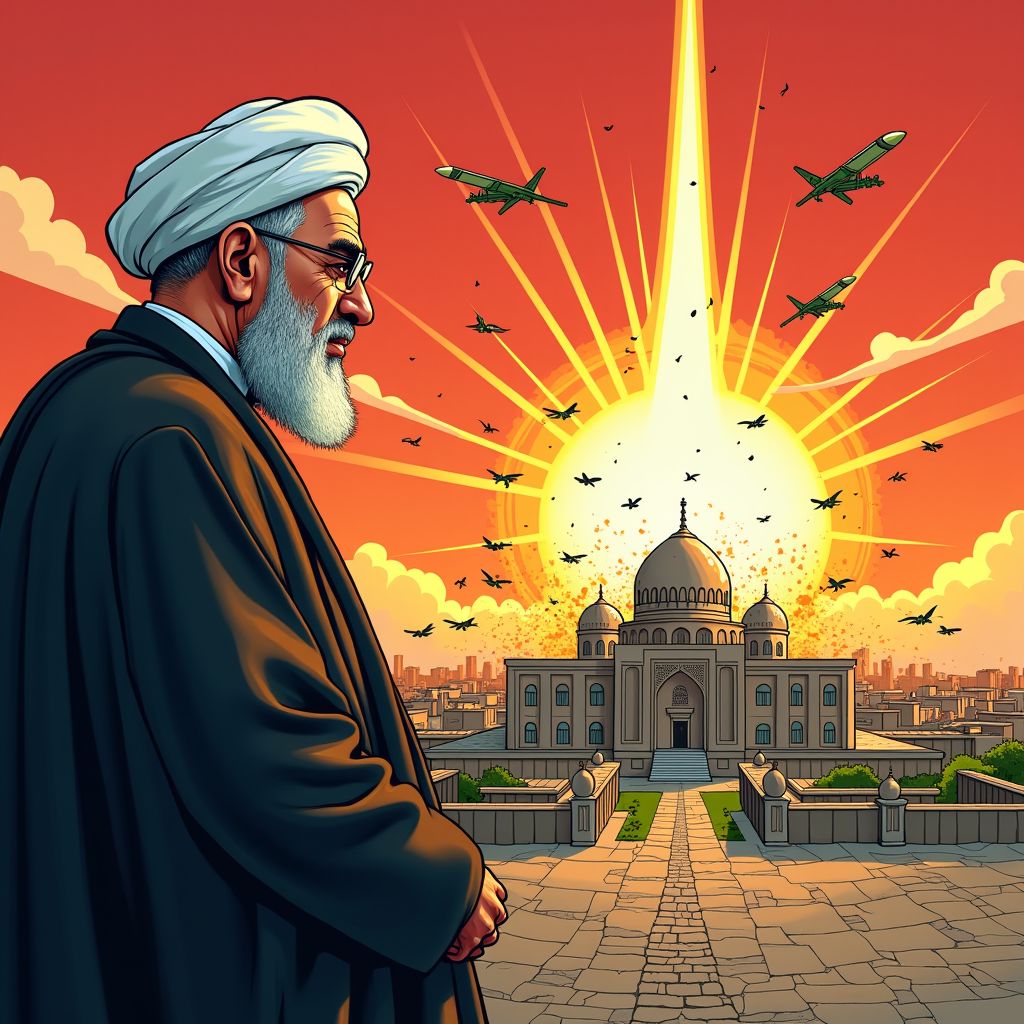
Geruchten doen de ronde over het overlijden van Ayatollah Ali Khamenei, de opperste leider van Iran, na een gezamenlijke luchtaanval van Israël en de Verenigde Staten op militaire doelen in Iran. Hoewel Israëlische veiligheidsbronnen denken dat Khamenei mogelijk is omgekomen bij een aanval op zijn compound in Teheran, ontkent het Iraanse regime dit. Minister Abbas Araghchi verklaarde: “Zover ik weet is hij nog in leven.” Satellietbeelden tonen echter zware schade aan het complex. Intussen kondigde Iran een “beslissende respons” aan en lanceerde raketaanvallen richting Israël en Amerikaanse bases in de Golfregio. De internationale gemeenschap reageert geschokt, terwijl de situatie snel escalleert.
uncertainty surrounds iranian supreme leader’s condition after joint israeli-us strike
Iran’s supreme leader Ayatollah Ali Khamenei has not been seen publicly since a joint Israeli-US airstrike targeted key military installations across Iran on February 28, 2026 [1]. While Iranian foreign minister Abbas Araghchi stated Khamenei remains alive “as far as I know,” there has been no official medical confirmation [2]. Satellite imagery analyzed by Reuters reveals extensive damage to the supreme leader’s known residence in Tehran, raising questions about his wellbeing [3]. The lack of verified communication from Khamenei himself has intensified speculation amid ongoing hostilities [alert! ‘no independent verification of Khamenei’s condition available’].
coordinated military action triggers regional escalation
The overnight strikes involved coordinated air assaults by Israel and the United States on multiple Iranian military targets, including facilities in Tehran, Qom, Isfahan, and Kermanshah [4]. According to Israeli officials, the operation codenamed ‘Shield of Judah’ specifically targeted Iran’s ballistic missile infrastructure and intelligence headquarters [5]. In response, Iran launched waves of drones and missiles towards Israeli territory and American military positions in Bahrain, Qatar, and the UAE [6]. Several projectiles were intercepted, though minor damage and one fatality were reported in Abu Dhabi [7]. Regional airspace remains severely restricted due to continued risks [8].
international reactions highlight deep divisions
Global responses to the military escalation have revealed stark divides among world powers. Russian foreign ministry denounced the strikes as “a preplanned and unprovoked act of armed aggression” against a UN member state [9]. China echoed similar concerns, urging restraint and renewed diplomatic channels [10]. Conversely, Ukrainian president Volodymyr Zelenskyy voiced support, accusing Iran of enabling Russian warfare through drone shipments [11]. European leaders expressed alarm, with French junior defense minister Alice Rufo declaring Europe “is in a situation of war” [12]. Meanwhile, Oman and Pakistan called urgently for de-escalation, criticizing violations of international law [13].
internal dynamics suggest potential power shifts
Within Iran, conflicting signals emerge regarding internal stability. The Revolutionary Guards vowed a “crushing” counter-response while simultaneously instructing civilians in major urban centers to seek shelter [14]. Unconfirmed reports indicate the deaths of high-ranking officials, including defense minister Amir Nasirzadeh and IRGC commander Mohammed Pakpour [15]. Despite severe internet disruptions limiting information flow, grassroots opposition voices have surfaced online, encouraged by a newly launched Farsi-language Telegram channel attributed to Mossad [16]. Former Iranian officials abroad have amplified calls for uprising, aligning with statements from US president Donald Trump urging Iranians to “seize control of your destiny” [17].