Gasprijs schiet omhoog na escalatie in Midden-Oosten
Rotterdam, maandag, 2 maart 2026.
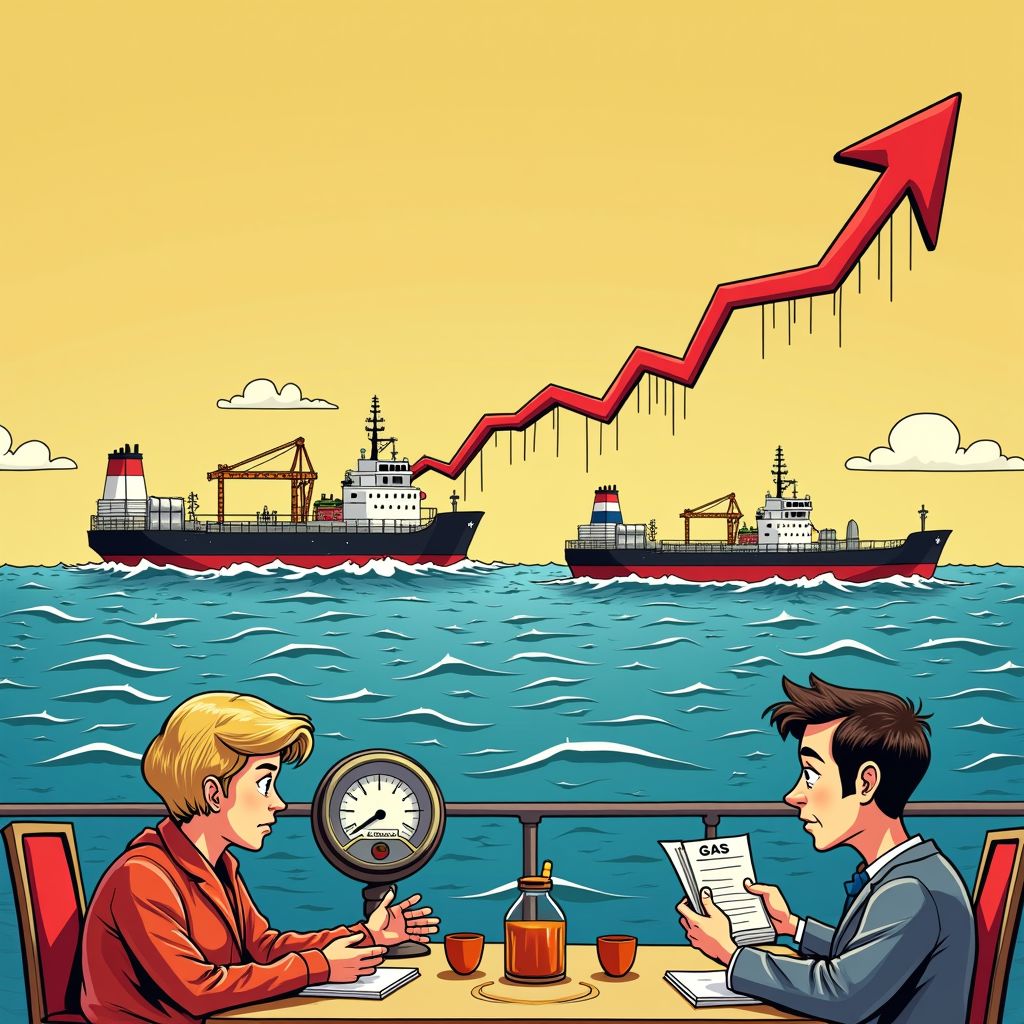
De Europese gasprijs is maandag met ruim 25 procent gestegen tot ongeveer 40 euro per megawattuur. Deze sprong komt door de toenemende spanningen tussen Iran, Israël en de Verenigde Staten. Militaire acties in de regio hebben geleid tot een stopzetting van scheepvaart door de Straat van Hormuz. Die waterweg is cruciaal voor de mondiale energietoevoer. Ruim 20 procent van het wereldwijde LNG-verkeer gaat via dit punt. Qatar, een sleutelspeler in de Europese gaslevering, heeft tijdelijk alle zendingen stilgelegd. Experts waarschuwen dat een langdurige blokkade de gasprijs kan laten verdubbelen. Nederlandse opslag is momenteel voor slechts elf procent gevuld. Dat versterkt de kwetsbaarheid van de Europese gasmarkt. Huishoudens en bedrijven maken zich klaar voor stijgende energiekosten.
sharp rise in european gas prices amid middle east escalation
The European gas price surged by more than 25 percent on Monday, reaching approximately €40 per megawatt-hour on the TTF trading hub in Rotterdam [1]. This spike followed military strikes by the United States and Israel on Iranian targets, prompting retaliatory actions from Iran [2]. Shipping companies including Maersk, MSC, Hapag-Lloyd, and CMA CGM suspended transit through the Strait of Hormuz, a critical energy chokepoint [3]. About 20 percent of global liquefied natural gas (LNG) shipments pass through this narrow passage [4]. The disruption has triggered immediate concerns over supply reliability across Europe.
energy market reacts to hormuz shipping halt
Crude oil prices also climbed sharply, with Brent crude rising 13 percent to $82 per barrel on March 2, 2026 [2]. The U.S. and Israeli attacks, which reportedly killed Iran’s Supreme Leader Ayatollah Khamenei, intensified regional instability [5]. In response, Iran launched missile attacks on military sites across the Gulf region [6]. Qatar, responsible for exporting nearly 20 percent of the world’s LNG via the Strait of Hormuz, temporarily halted all maritime shipments [2]. Market analysts warn that prolonged closure could push European gas prices above €100 per megawatt-hour [7].
low storage levels amplify europe’s vulnerability
The current crisis comes at a time when European gas inventories are exceptionally low [2]. Dutch underground storage facilities are filled to just 11 percent of capacity, according to Gasunie [8]. Normally, these reserves help cushion external shocks during peak demand periods [GPT]. With limited domestic buffering capability, Europe relies heavily on continuous LNG imports [7]. Rabobank energy analyst Florence Schmit emphasized Qatar’s pivotal role in supplying both Asian and European markets [1]. Any infrastructure damage or sustained shipping delays could have dramatic consequences on global pricing dynamics [1].
economic fallout looms for households and businesses
The rising wholesale cost of gas directly impacts consumer energy bills in the Netherlands and beyond [3]. Under variable rate contracts, customers face immediate exposure to price spikes such as the jump to around 39 cents per cubic meter [3]. Fixed-rate agreements offer temporary protection but may lead to higher renewals soon after [3]. Analysts at ING and Rabobank project potential doubling of current rates if disruptions persist [8]. Even partial blockades might raise gas prices to €50 per megawatt-hour, while full closures could send them past €100 [3]. Businesses, particularly in manufacturing and transport, anticipate increased operating costs [8].
long-term risks and financial market responses
Goldman Sachs analysts caution that a one-month closure of the Strait of Hormuz could more than double European gas prices [1]. Although U.S. liquefied natural gas exports remain stable, there is little spare capacity to compensate for lost Qatari volumes [2]. The Organization of Petroleum Exporting Countries (OPEC+) plans to increase oil production starting April 2026, aiming to stabilize markets [2]. However, experts doubt this will offset panic-driven speculation [2]. Financial instruments tied to energy futures show heightened volatility, reflecting deepening investor anxiety [9]. According to Tobias Keller of UniCredit, there are no credible alternative routes for rerouting Hormuz-dependent flows [8].
Bronnen
- www.ad.nl
- www.nu.nl
- www.energievergelijk.nl
- www.volkskrant.nl
- www.tijd.be
- www.vrt.be
- www.debelegger.nl
- www.energievergelijk.nl
- www.barchart.com