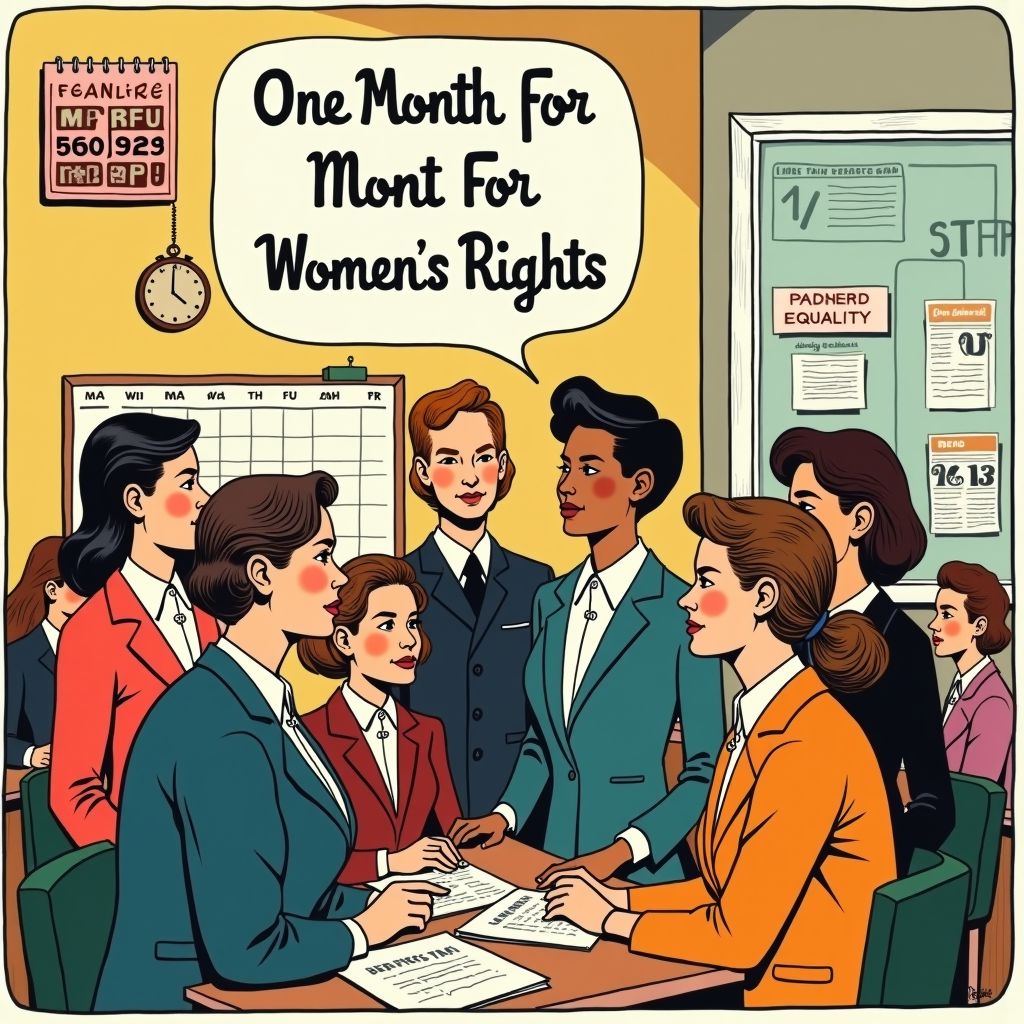
a full month for women's rights starts now
Amsterdam, zaterdag, 7 maart 2026.
the current focus on international women’s day is too brief to drive lasting change. experts argue that a single day fails to engage men meaningfully in the equality conversation. data shows 91% of women face sexual harassment, yet awareness remains low among men. drawing inspiration from pride month and black history month, advocates propose dedicating all of march to gender equality. this would include education campaigns, workplace training and sustained media coverage. the goal is to move beyond symbolism and address systemic barriers through deeper, longer-term engagement across society. schools and institutions are already taking steps with new educational programs on gender issues.
a call for extended recognition of women’s rights
A growing movement urges shifting focus from a single day to an entire month dedicated to women’s rights. Experts argue that International Women’s Day on 8 March is insufficient for meaningful societal change [1]. The current format often fails to actively involve men in discussions around gender equality [1]. Research indicates 91% of women experience sexual harassment, highlighting a persistent issue needing broader awareness [2]. Observance limited to one day risks reducing structural challenges to symbolic gestures rather than driving deep-rooted transformation [1][2].
inspiration from established thematic months
Advocates point to existing models such as Black History Month in February and Pride Month in June [1]. These observances demonstrate how prolonged attention fosters deeper understanding and engagement [1]. Applying a similar framework to gender equality could strengthen impact. A proposed International Women’s Month during March aims to institutionalize ongoing dialogue [1]. This approach aligns with global trends where some regions already recognize March as a period of intensified focus on women’s issues [1].
current initiatives paving the way
Educational institutions and cultural organizations are laying groundwork for expanded programming. Since 4 February 2026, the Netherlands Institute for Sound and Vision has offered teaching materials on gender themes [1]. Events like the Feminist Festival in Wageningen span multiple days, combining talks and performances [3]. The Stadsschouwburg Utrecht links its activities to both International Women’s Day and a wider monthly concept [3]. Such efforts reflect early adoption of the month-long engagement model advocated by opinion leaders [1][3].
institutional support and calls to action
Media and policy-makers are being called upon to amplify attention beyond annual ceremonies [1]. Proposed actions include nationwide education campaigns, workplace workshops, and sustained media coverage throughout March [1]. Organizations like Oxfam Novib, Amnesty, and the Dutch Women’s Council participate in related events [3]. Political groups such as D66 Zevenaar host forums addressing invisible barriers women face professionally and socially [4]. These initiatives underscore demand for continuous commitment rather than isolated commemorations [1][4].
global context reinforces urgency
The United Nations Security Council emphasized in early March 2026 that access to justice for women is increasingly critical due to conflicts, democratic erosion, and climate crises [1]. While International Women’s Day originated in labor protests for better working conditions and suffrage, modern challenges persist [5]. Despite progress, disparities remain evident in pay gaps, leadership representation, and personal security [4][2]. Prolonged advocacy periods may help dismantle unconscious biases shaping perceptions and opportunities for women daily [1][4].