top dutch leaders face parliament on europe's future
Den Haag, donderdag, 25 juni 2026.
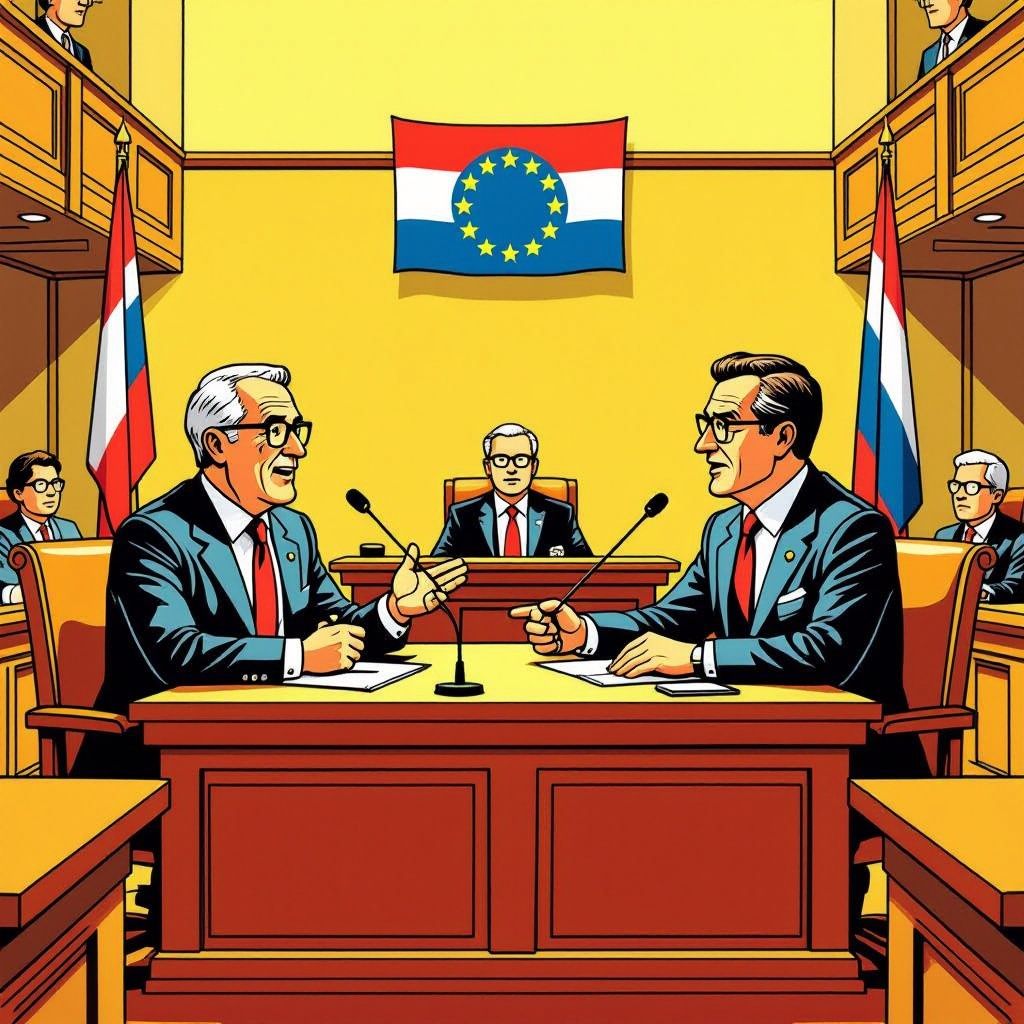
the dutch parliament held a high-level debate on the state of the european union on june 11. prime minister rob jetten and foreign minister tom berendsen attended alongside members of the european parliament. this rare joint session signals deep national interest in eu direction. citizens could watch live, reinforcing transparency. the discussion centered on critical eu priorities like sustainable growth, defense cooperation, and protecting democracy. tensions simmer over proposed budget increases, with concerns about fairness and oversight. the presence of top officials underscores how closely the netherlands monitors bloc decisions affecting its economy and sovereignty. europe’s path forward is being watched from the heart of amsterdam’s political arena.
high-level debate on eu’s future
On 11 June 2026, the Dutch parliament debated the state of the European Union. Prime Minister Rob Jetten and Foreign Minister Tom Berendsen represented the cabinet [1]. The annual debate included participation from Dutch Members of the European Parliament, a rare occurrence limited to this specific session [1]. Discussions focused on the Commission’s seven strategic priorities such as sustainable competitiveness and European defence [1]. Citizens followed proceedings live via Debat Direct starting at 16.45 CET [1].
budget disputes take center stage
A major point of contention was the proposed EU budget for 2028–2034. The draft suggests a 40% increase compared to the current multiannual financial framework [4]. Netherlands contributes approximately €18 billion annually, receiving around €1.4 billion in rebates by 2030 [4]. This results in a net contribution of roughly €16.6 billion per year [4]. Minister Eelco Heinen labeled Brussels’ proposal of a €2,000 billion budget as a ‘no-go’ for the Netherlands [5].
institutional roles and legal foundations
The European Court of Justice plays a crucial role in interpreting EU law uniformly across member states [2]. President Koen Lenaerts leads the court since 2015 and oversees a staff of 2,500 managing a €600 million annual budget [2]. He emphasizes that the EU is not a state but operates based on shared competences under treaties [2]. Legal harmonization remains challenging due to differing national interpretations, especially concerning religious symbols in workplaces [2].
environmental policy and domestic pressures
Environmental regulations featured prominently despite not being central to the EU debate. The Kaderrichtlijn Water achieved 87% of its objectives, a 4 percentage point rise from the previous year [3]. Minister Vincent Karremans opposes weakening environmental standards including restrictions on PFAS chemicals [3]. However, funding gaps persist. An estimated €250 million shortfall threatens flood protection programs [3]. These issues intersect with broader EU sustainability goals [3].
political dynamics and coalition positions
Domestic politics shape the Netherlands’ stance toward the EU. The governing coalition includes D66, VVD, and CDA, which advocate for fiscal responsibility in European spending [6]. There is broad parliamentary support for reducing regulatory burdens on businesses linked to EU reporting requirements [4]. At the same time, debates continue over social policies like women’s health where some MPs cite insufficient funding [6]. Matthias Diependaele’s meeting with the prime minister highlights ongoing coordination among senior figures [7].
Bronnen
- www.tweedekamer.nl
- denborluut.be
- unievanwaterschappen.nl
- www.volkskrant.nl
- www.instagram.com
- www.zeelandnet.nl
- www.instagram.com