amsterdam braces for king's day amid growing safety concerns
Amsterdam, maandag, 27 april 2026.
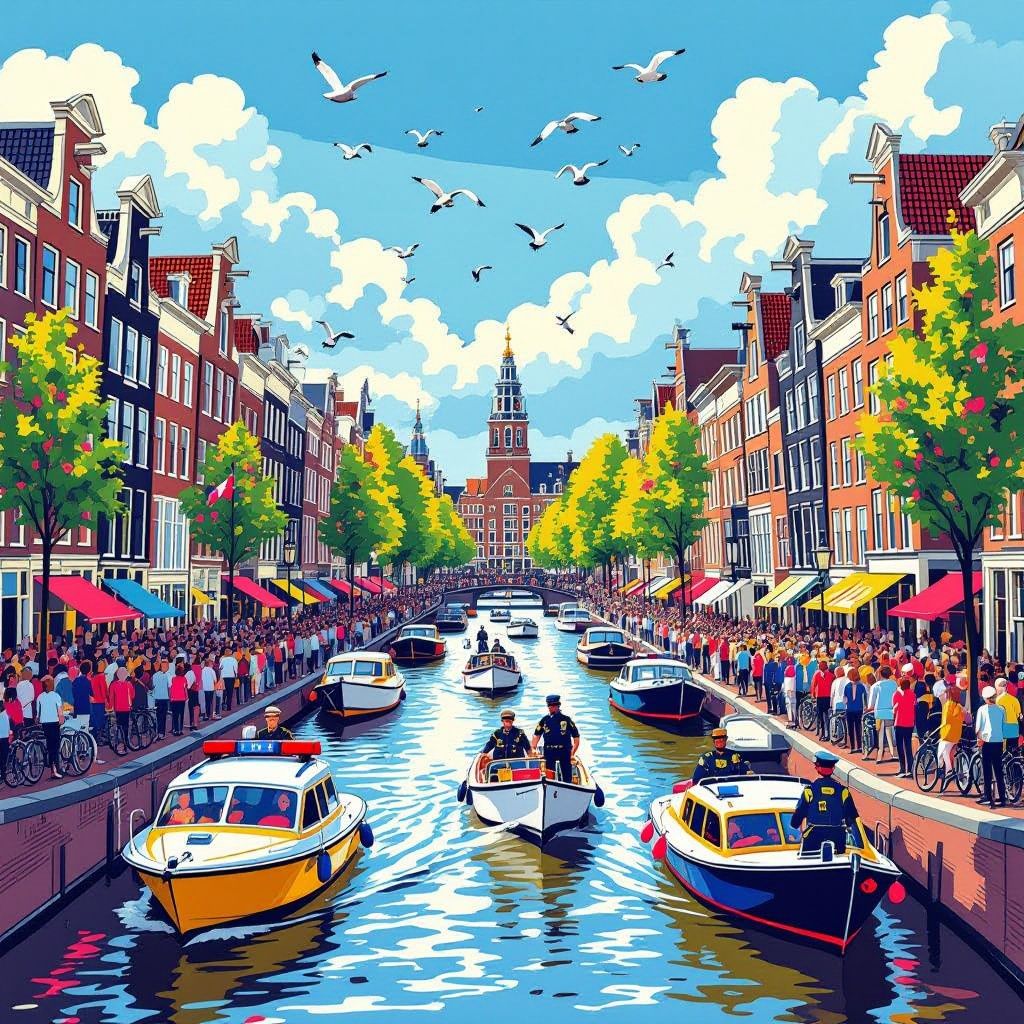
amsterdam faces mounting pressure to rein in king’s day excesses as the city struggles with its reputation for unchecked revelry. despite tighter rules on alcohol, boats and public behaviour, incidents of violence and medical emergencies among minors have surged. in 2025, a sexual assault on the keizersgracht shocked the nation, highlighting how quickly festivities spiral out of control. emergency services were overwhelmed last year, with rising ambulance calls and underage drug use. the mayor admits the event is no longer reliably safe or festive. new measures include strict passenger limits on canal boats, pop-up medical teams on bicycles, and extended festivals outside the centre. monday’s holiday falls on a workday, raising hopes that fewer people will drink heavily. but many wonder if stronger enforcement comes too late to restore order to the streets.
a persistent safety dilemma
Amsterdam continues to battle its reputation for disorder during King’s Day celebrations. Despite repeated efforts, the city faces recurring issues with public safety and excessive behavior. Emergency services were overwhelmed last year due to overcrowding and widespread alcohol and drug consumption, particularly affecting minors who required urgent medical care [1]. Incidents of public violence have sharply increased, doubling from 28 cases in 2023 to 57 in 2925 [2]. The city’s struggle to maintain control culminated in a notorious sexual assault on the Keizersgracht in 2025, which was captured on video and spread online, drawing national condemnation [2].
stricter rules for 2026
In response, authorities have implemented tougher regulations for King’s Day 2026. Canal boats are now limited to twelve passengers plus the skipper, with violations punishable by fines ranging from €80 to €800 depending on vessel type [2]. Law enforcement will conduct inspections along the Amstel River before vessels enter the central canals [2]. There is also heightened monitoring of illegal alcohol sales and unauthorized parties in public spaces [3]. To reduce strain on emergency crews, additional paramedics on bicycles are being deployed to respond faster to incidents [2]. Authorities hope these steps improve crowd safety and prevent further degradation of the event’s character [3].
shifting the festival dynamic
City officials acknowledge that King’s Day has evolved into an unregulated large-scale outdoor festival concentrated in Amsterdam’s historic center [2]. Mayor Femke Halsema stated openly that the day is “not everywhere and always safe, not always festive and not always Amsterdam” [2]. As part of a broader strategy, popular fringe festivals are being expanded on the urban outskirts to disperse crowds [2]. Venues like the Kingsland Festival at the Olympic Stadium and the Loveland van Oranje in Meerpark offer organized alternatives [4]. Some business owners support this shift, citing problems with public urination, hostile atmospheres late at night, and disproportionate burdens on local neighborhoods [2].
businesses caught in the crossfire
Local hospitality businesses face difficult choices each year. While some benefit from the influx of visitors, others choose to close due to safety risks and loss of control over their surroundings [2]. Jort Vos, co-owner of café De Blaffende Vis, noted the irony of wanting celebration without guests bringing their own drinks or drugs—yet lacking authority to enforce rules in public space [2]. Floris Burgers, owner of R. de Rosa in Jordaan, confirmed his decision to keep doors shut again this year, echoing concerns about unruly behavior and resident distress [2]. For many entrepreneurs, the costs outweigh the benefits, especially when they cannot manage conduct just outside their premises [2].
hope lies in scheduling change
With King’s Day falling on a Monday in 2026, city officials express cautious optimism about reduced alcohol consumption [2]. Unlike previous years when the holiday fell on Saturdays, this year’s timing means most attendees must return to work the following day [2]. Mick Werkendam, responsible for crowd management, believes this structural difference could naturally temper excessive drinking and shorten celebration hours [2]. However, he warns that stationary boats in the city center remain challenging to monitor and may require targeted intervention teams [2]. Whether the weekday timing will fundamentally alter behavior remains uncertain, but it represents a rare external variable working in favor of restraint [2].